Other projects (35)
Design of the Polish pavilion for the “Expo 58” Fair in Brussels (team: W. Borowczyk, R. Cieślewicz, J. Czyż, D. Poniż, A. Scholtz, A. Szapocznikow). Despite winning an open nationwide competition, the project was never realized. Poland abstained from participation in the exhibition due to excessive costs. The teams, that prepared the two best proposals out of 102 submitted entries, received equal awards.
Bibliography:
S. Staszewski, „Z czym do Brukseli”, Przegląd Kulturalny, 1956, no. 25.
A.W. Wys., „Kierunek – „Bruksela 58”. 102 prace polskich architektów i plastyków”, Życie Warszawy, 1956, no. 14.
T. Kowalski, „Plakaty Romana Cieślewicza”, Wiadomości Filmowe, 1958, no. 3.
„Przed Światową Wystawą w Brukseli”, Projekt, 1956, no. 2, p. 65–68.
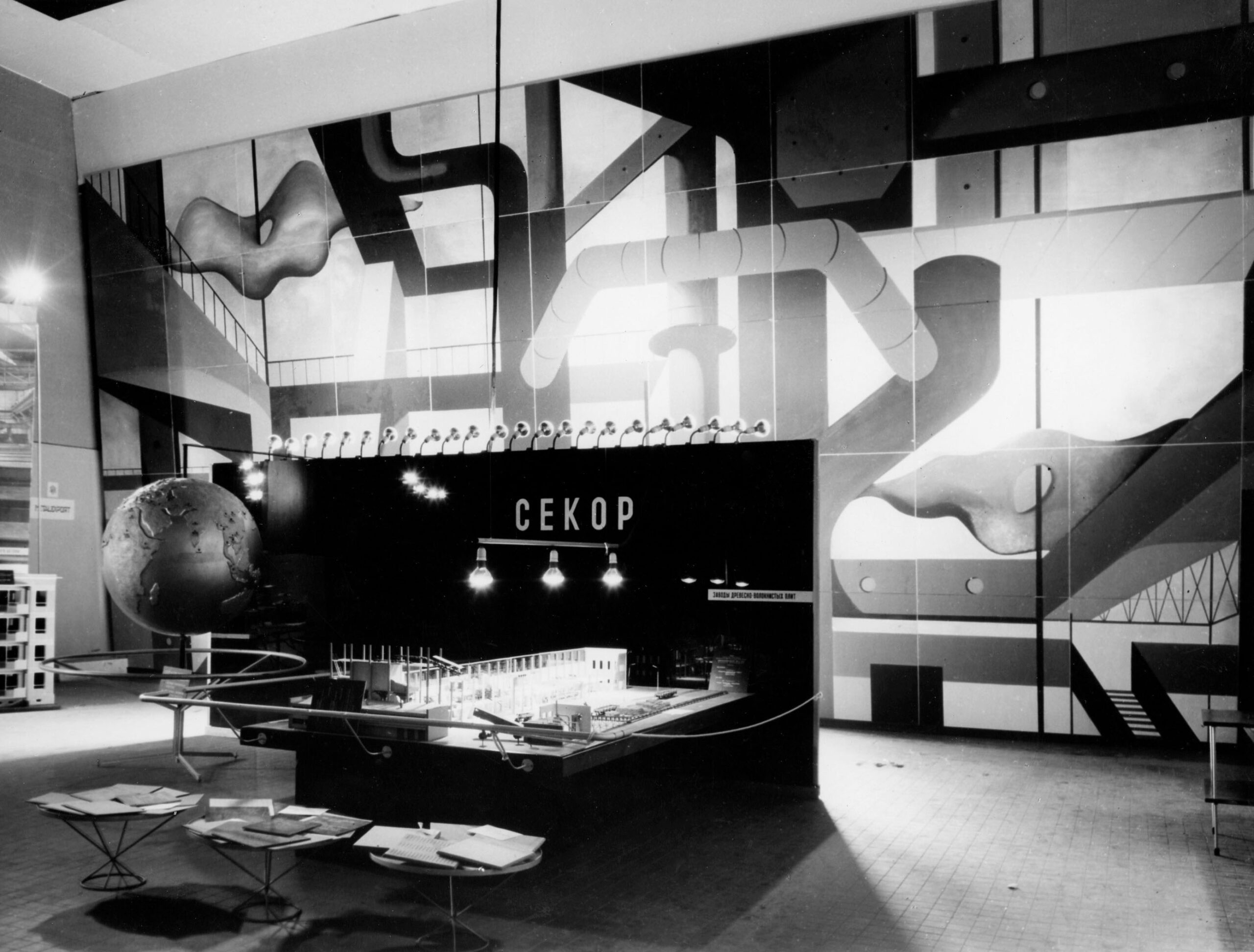
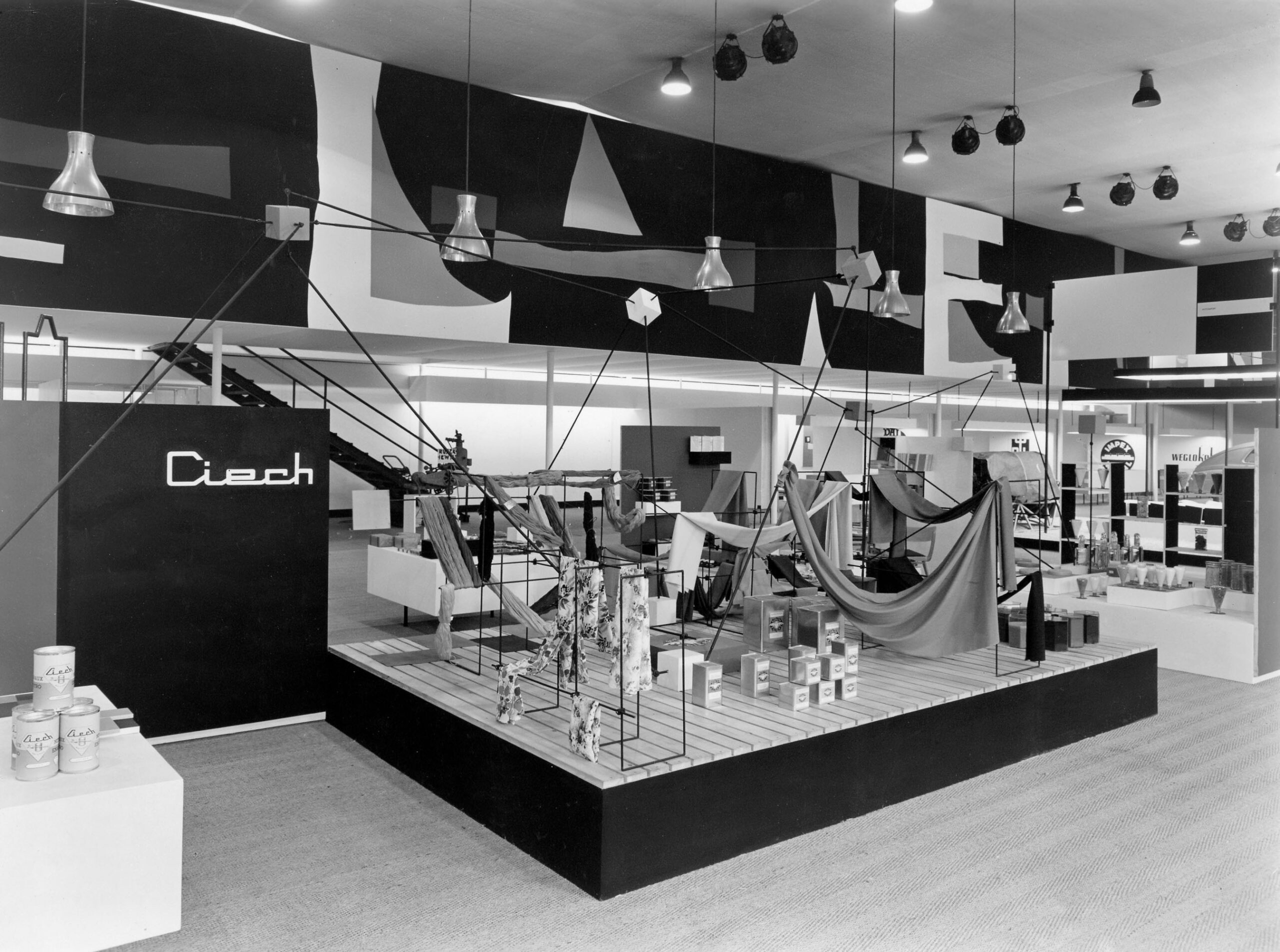
Pavilion of Polish industry at the Leipzig International Fair (team: R. Cieślewicz, J. Muniak).
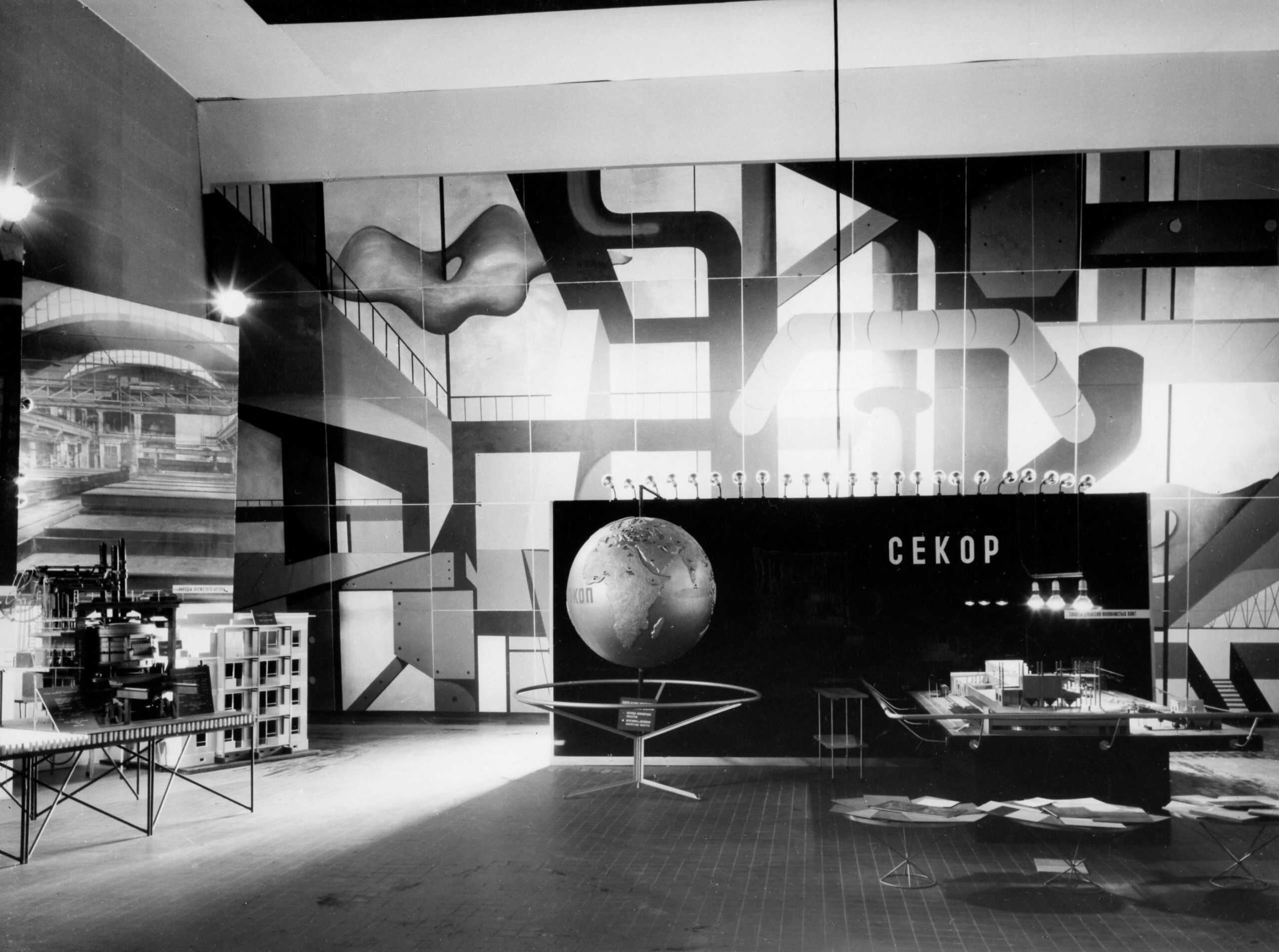
Design of a monument to Aschwitz victims for the international competition (team: J. Chudzik, R. Cieślewicz, B. Malmurowicz, A. Szapocznikow) advanced to the second stage as one of seven (out of 426 submitted projects). It was not realized.
Design for the national competition for the Monument to the Heroes of Warsaw
(team: J. Chudzik, R. Cieślewicz, T. Łodziana, A. Skopiński); received a second-degree distinction. It was not realized.
Bibliography:
„List otwarty do Społecznego Komitetu Budowy Pomnika Bohaterów Warszawy”, Życie Literackie, 1960, no. 9.
Pavilion of sea transportation at the Poznań International Fair (team: R. Cieślewicz, A. Gucewicz, A. Strumiłło).
„Elektrim” Pavilion at a fair of Polish industry in Beijing.
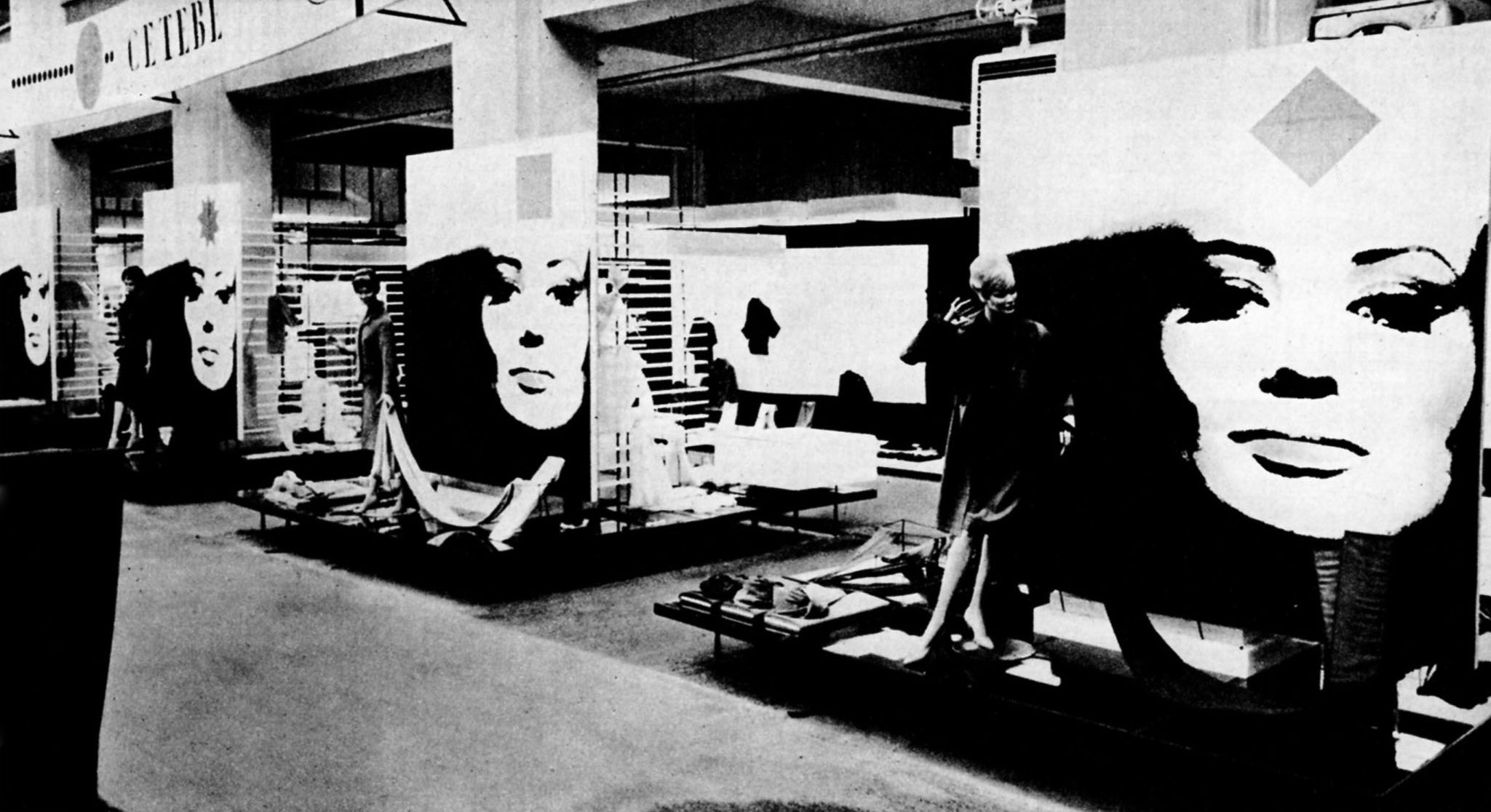
„Ce-Te-Be” Pavilion at the Poznań International Fair (team: R. Cieślewicz, A. Gucewicz). The design made use of large-format photo close-ups of a woman’s face.
Bibliography:
U. Czartoryska, Przygody plastyczne fotografii, Warszawa 1965, ill. 89 p. 134.
Five decorative panneaux for the Italian company “Italsider” in the production halls of its steelworks in Bagnoli, Piombino, Lovere, Cornigliano, and Taranto. The designs of the panneaux representing workers’ heads made in photomontage technique in dimensions of 21 × 30 cm, enlarged to 230 × 150 cm, and were displayed in this form in particular factories.
Bibliography:
M. Rouard-Snowman, Roman Cieslewicz: Master of Graphic Design, Paris 1993, p. 38–39.
Decoration for a fashion show “Le petits pois” (photo: A. Carrara) – Elle no. 1151
Decoration for a fashion show “Zone bleu kobalt” (photo: A. Carrara) – Elle no. 1153
Decoration for a fashion show “Les maillots de bain” (photo: A. Carrara) – Elle no. 1167
Decoration for a fashion show “Collection d’hivier 1970” (photo: H. Newton) – Elle no. 1211
Decoration for a fashion show “Collection homme-wear” (photo: H. Newton) – Elle no. 1211
Decoration for a fashion show „Collection homme-wear” for Indreco (realized by the M.A.F.I.A. advertising agency, Paris)
Design of a tourist complex on the Plitvine Bay on the Croatian island of Korčula in Yugoslavia (team: R. Cieślewicz, Z. Parandowski, J. Dzierżko, A. Szapocznikow, R. Porro); created as part of the “Rencontre internationale” symposium in Vela Luka.
Decoration for a fashion show “Les robes-bonbons-Harry Lans” – Elle no. 1322 (realized by the M.A.F.I.A. advertising agency, Paris)
Stage design for ballet Padanses, Dirk Sanders (Compagnie du Ballet Contemporain, Théâtre de la Ville, Paris)
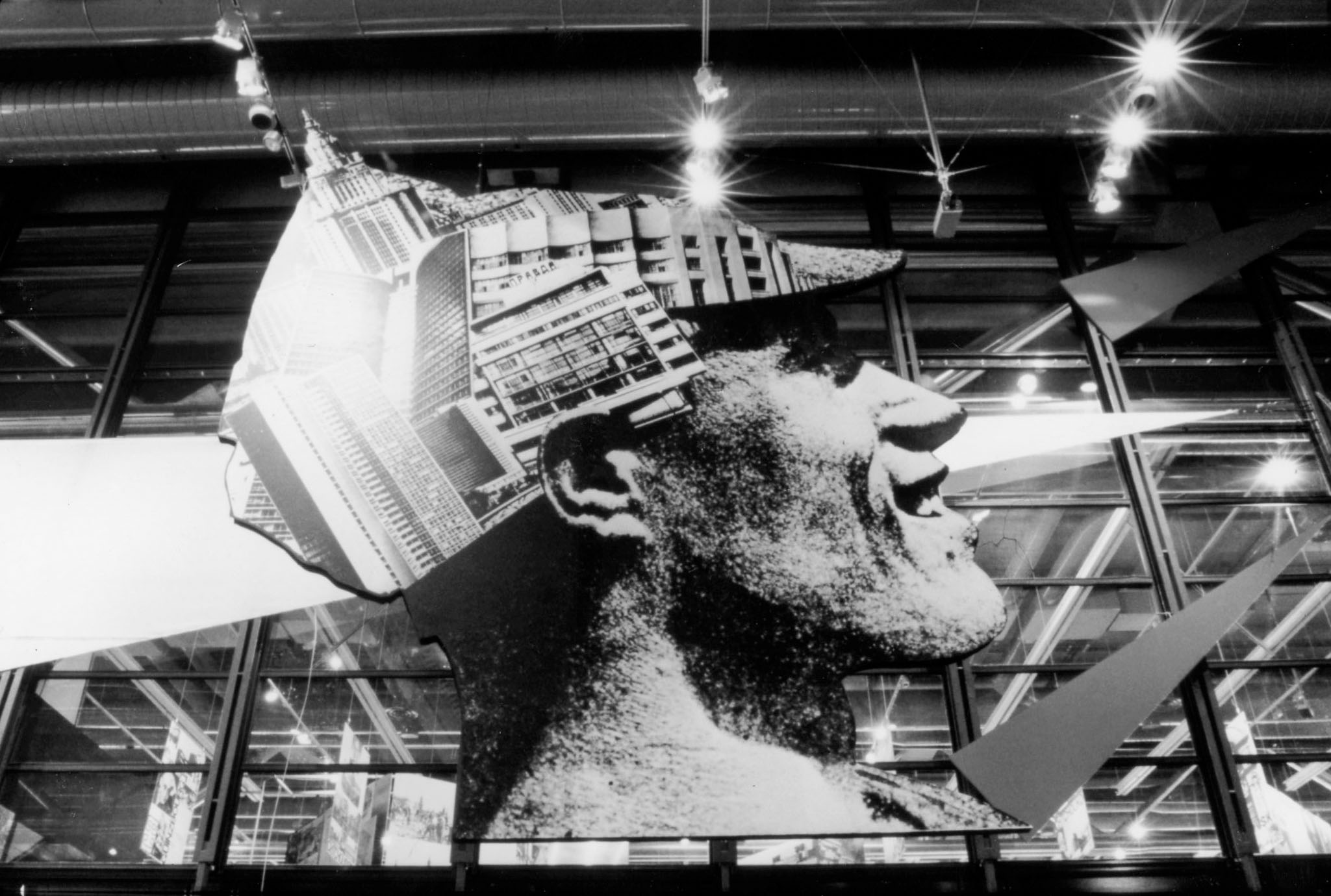
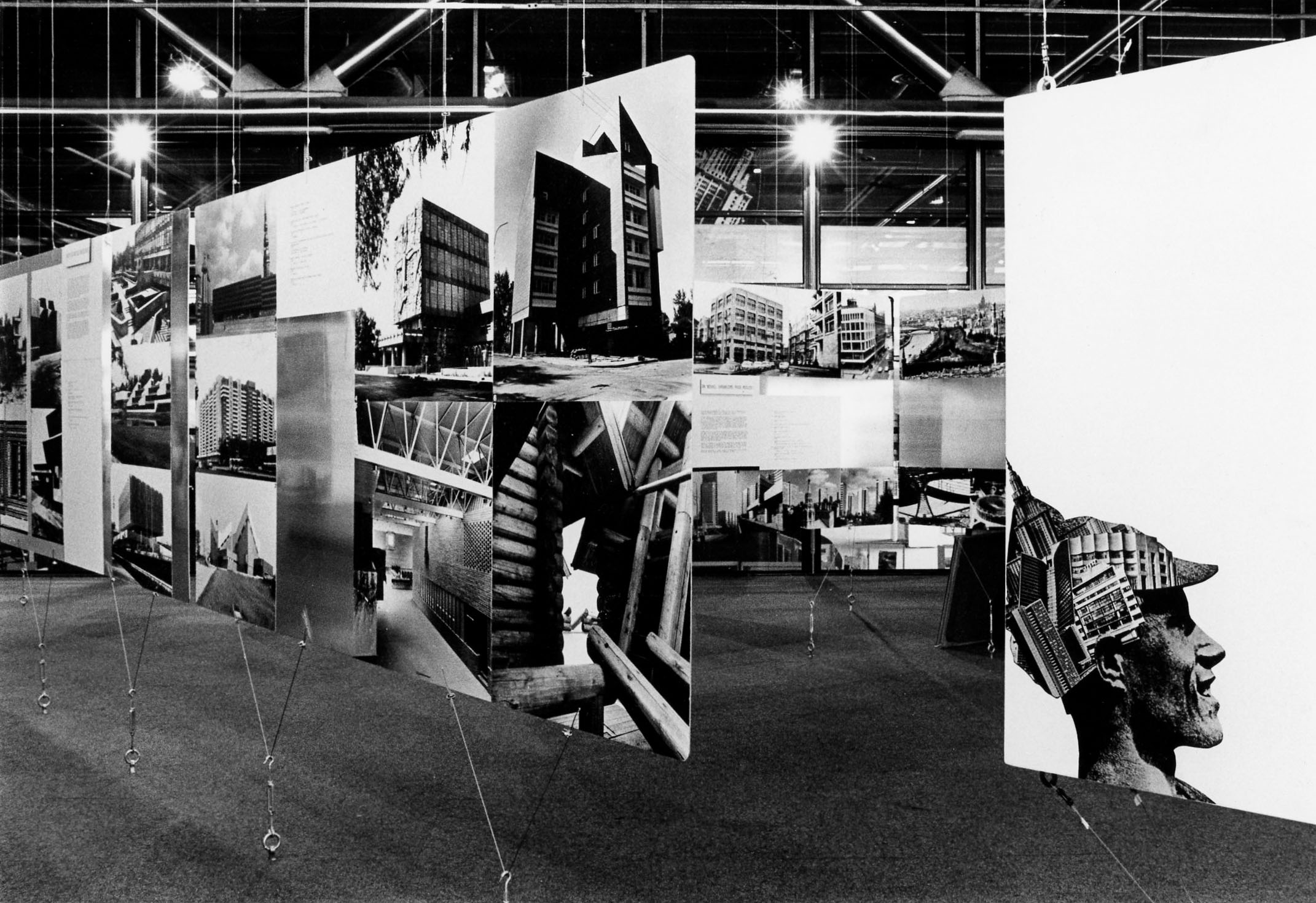
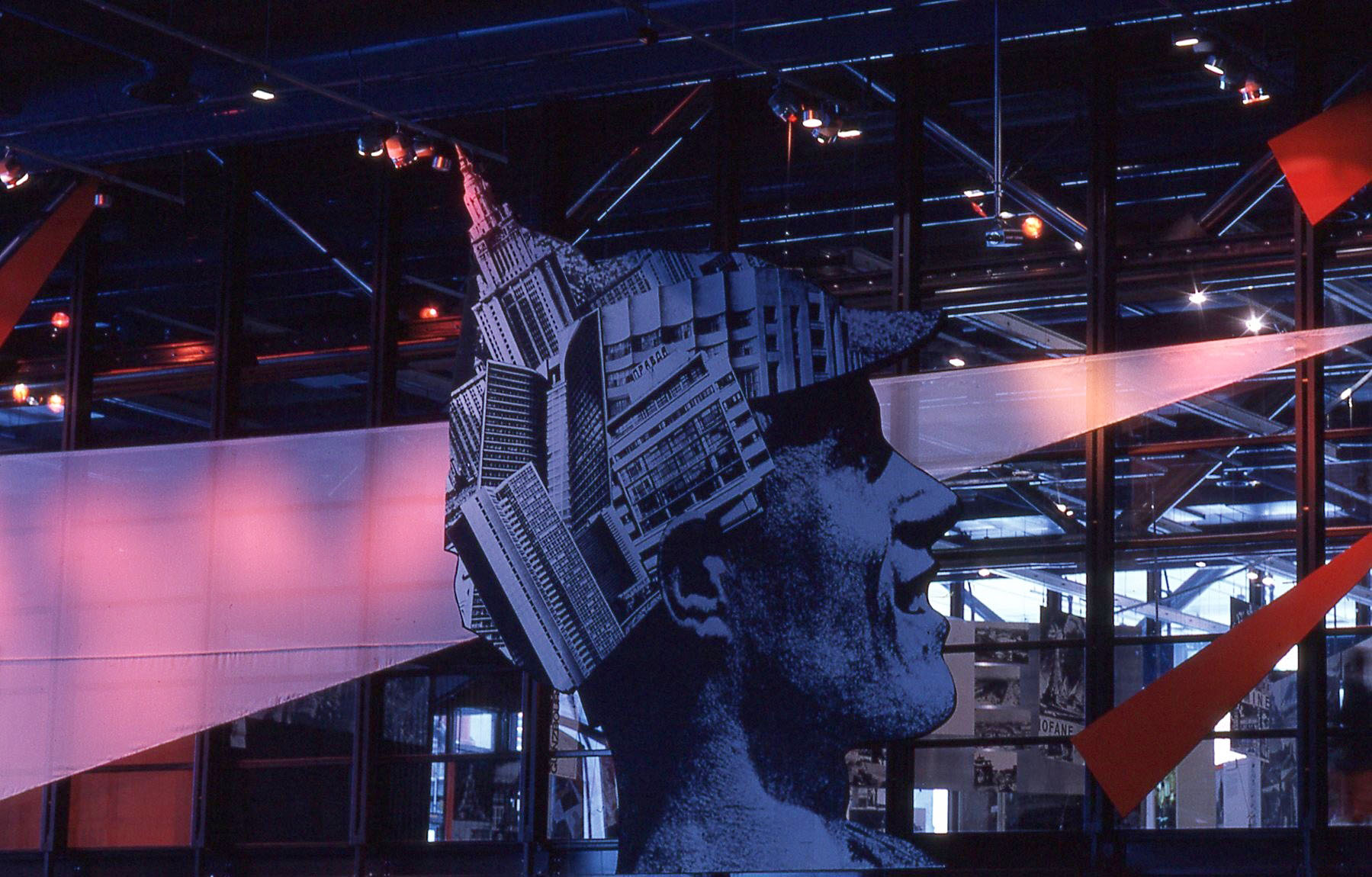
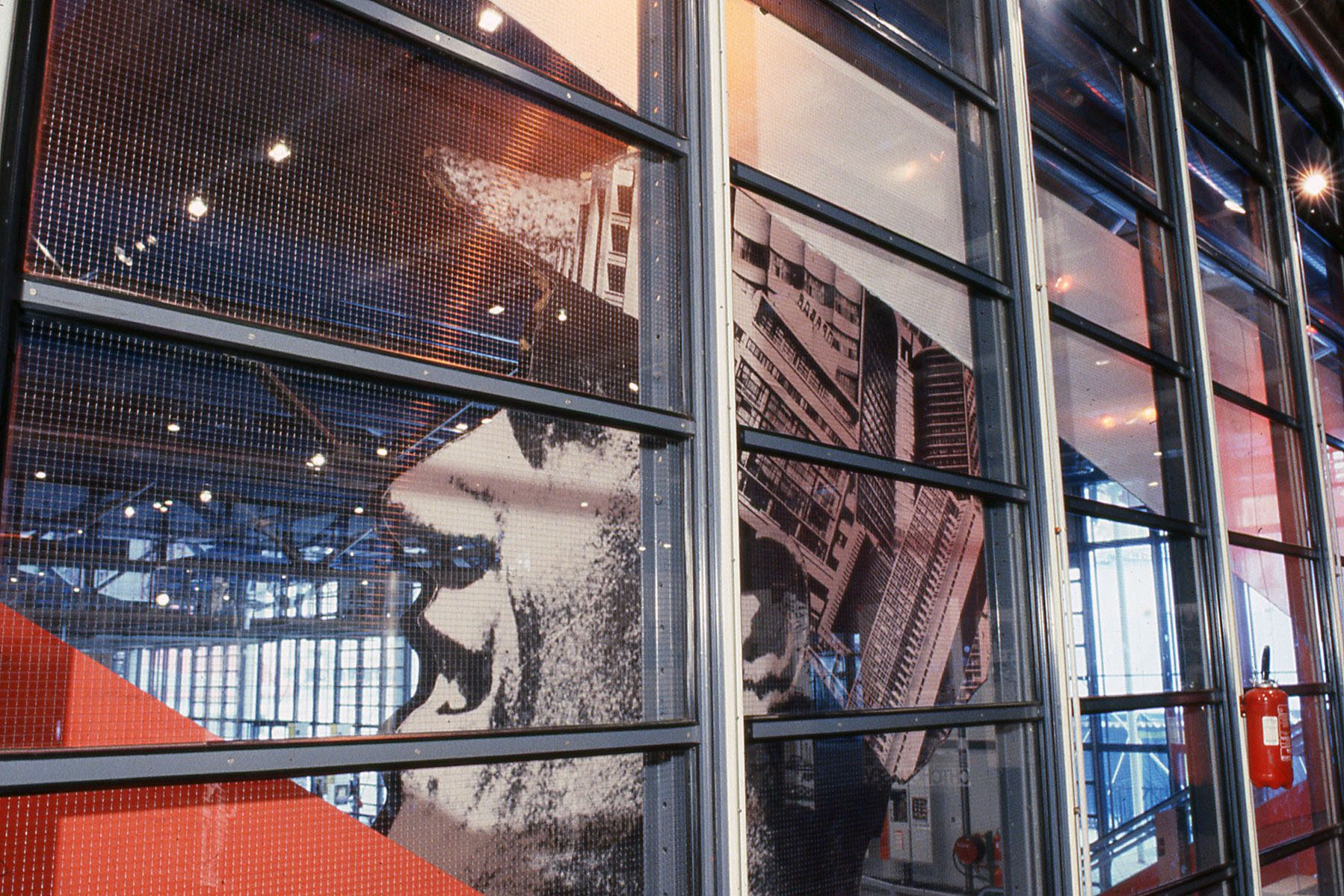
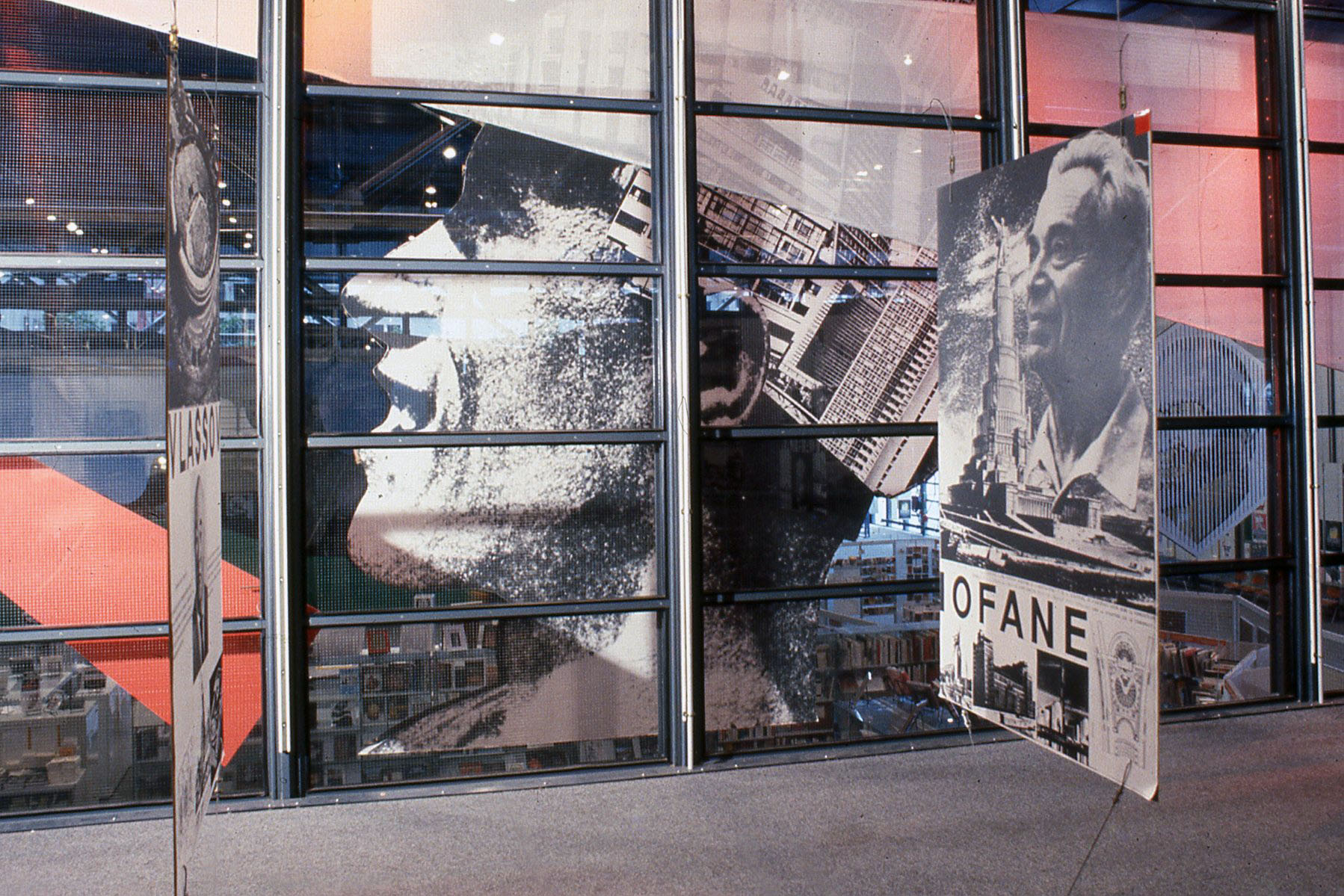
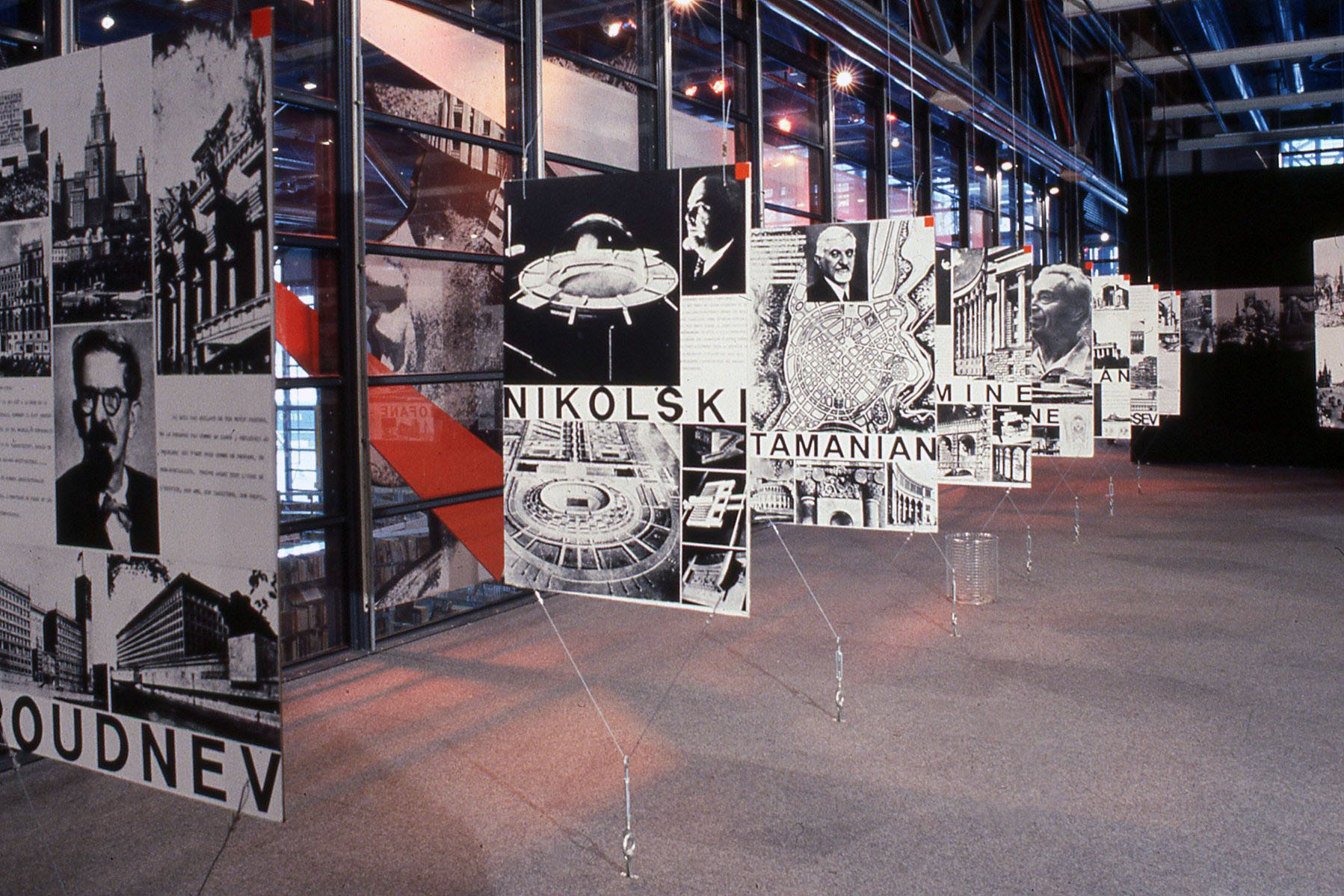
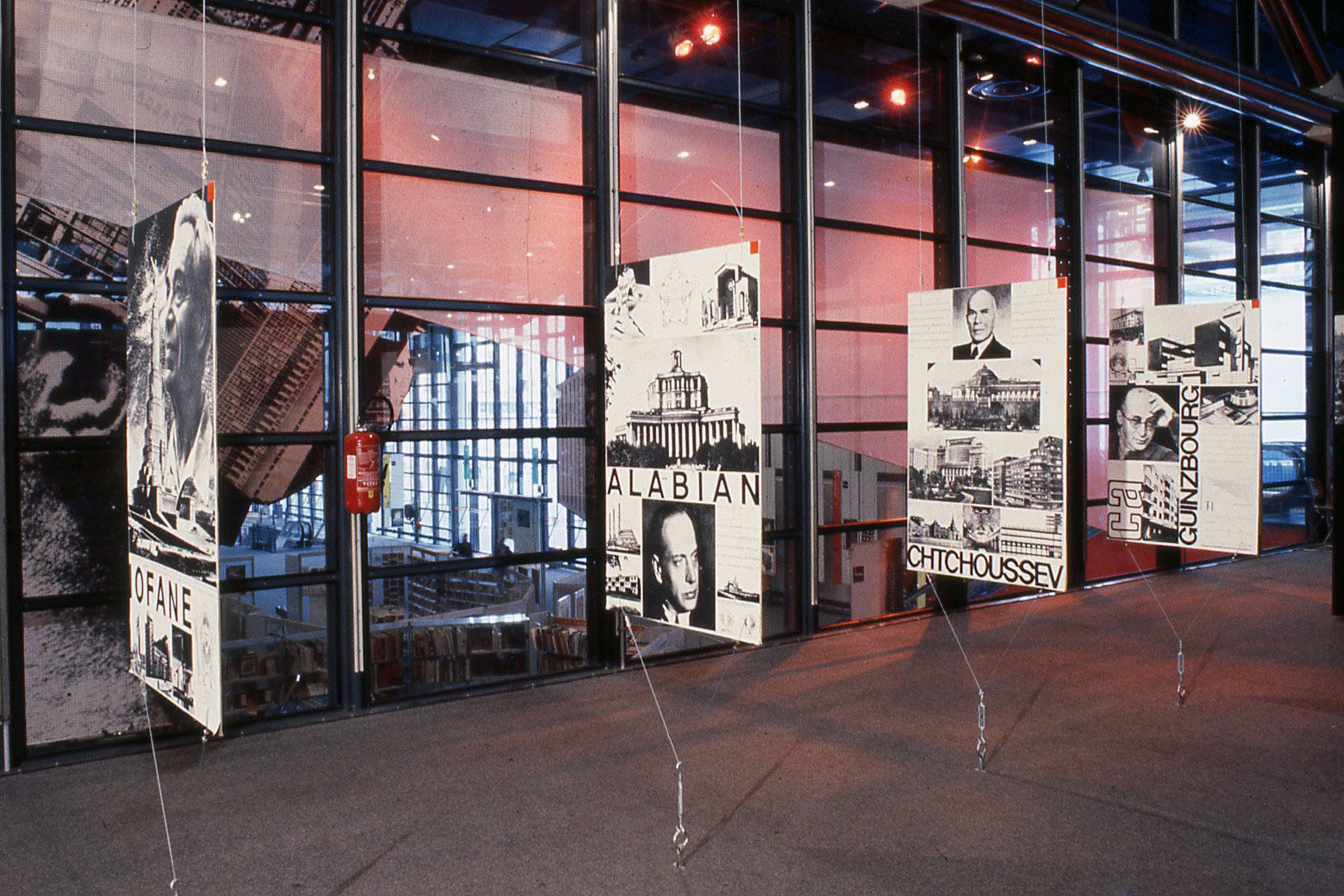
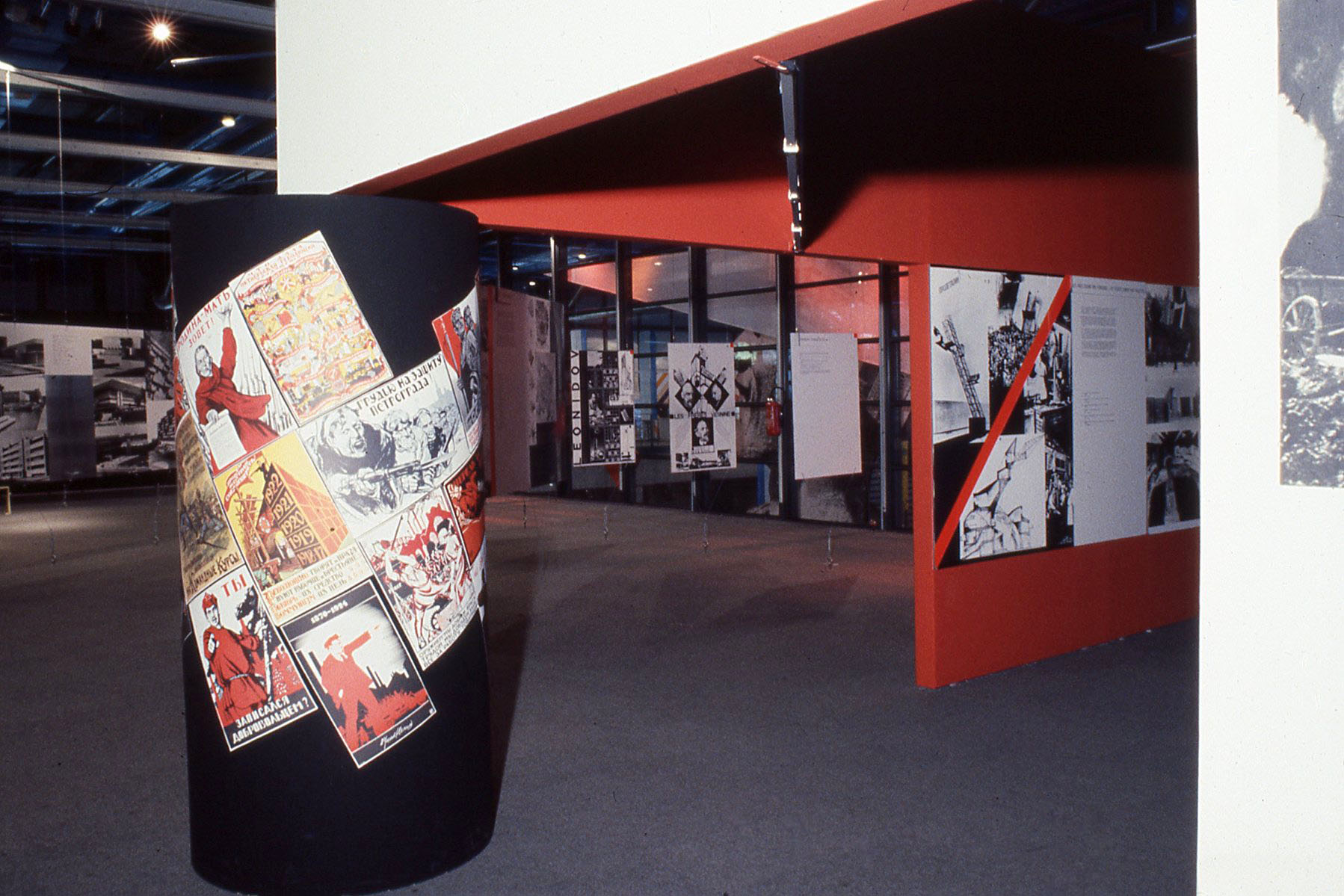
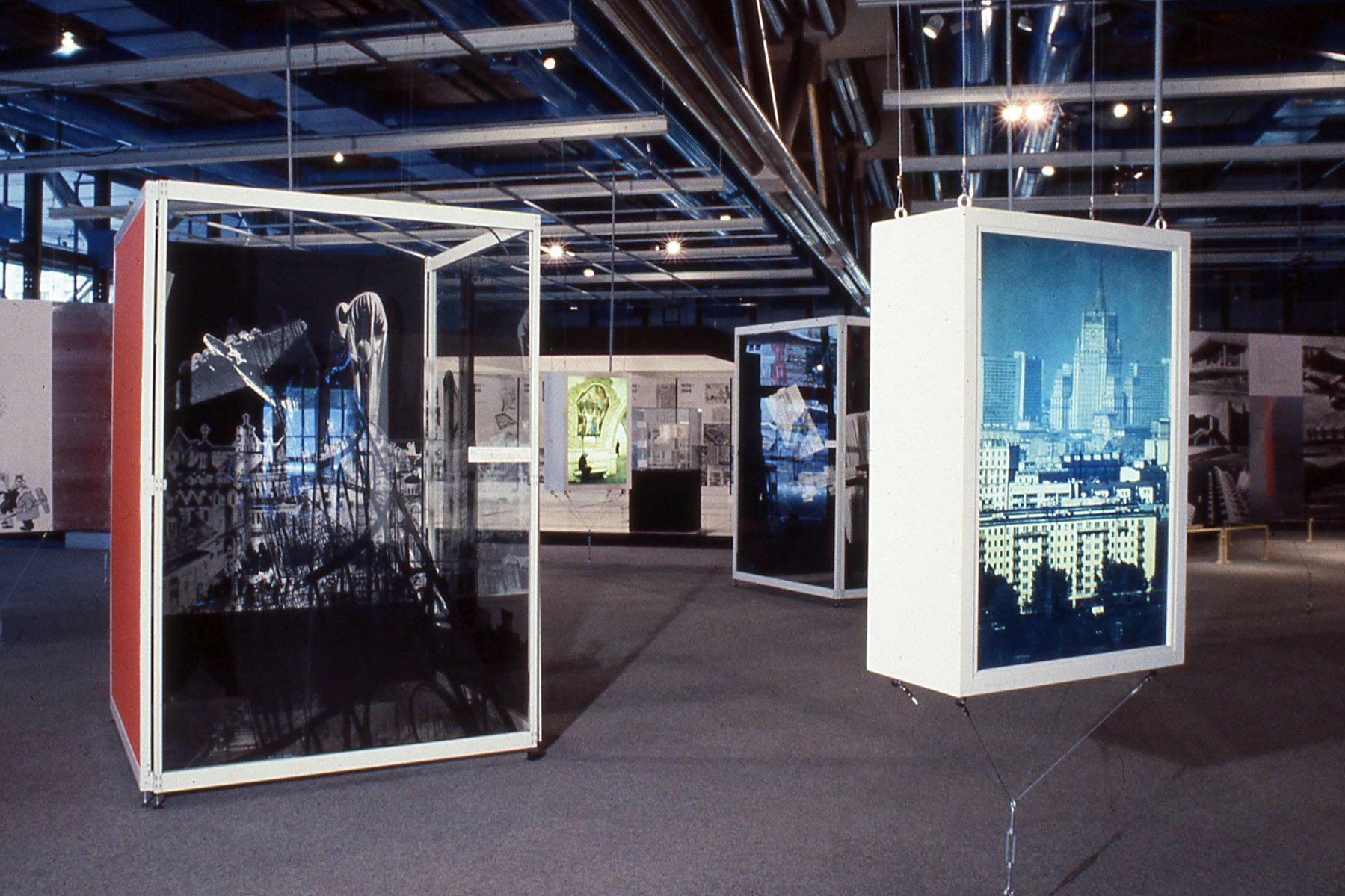
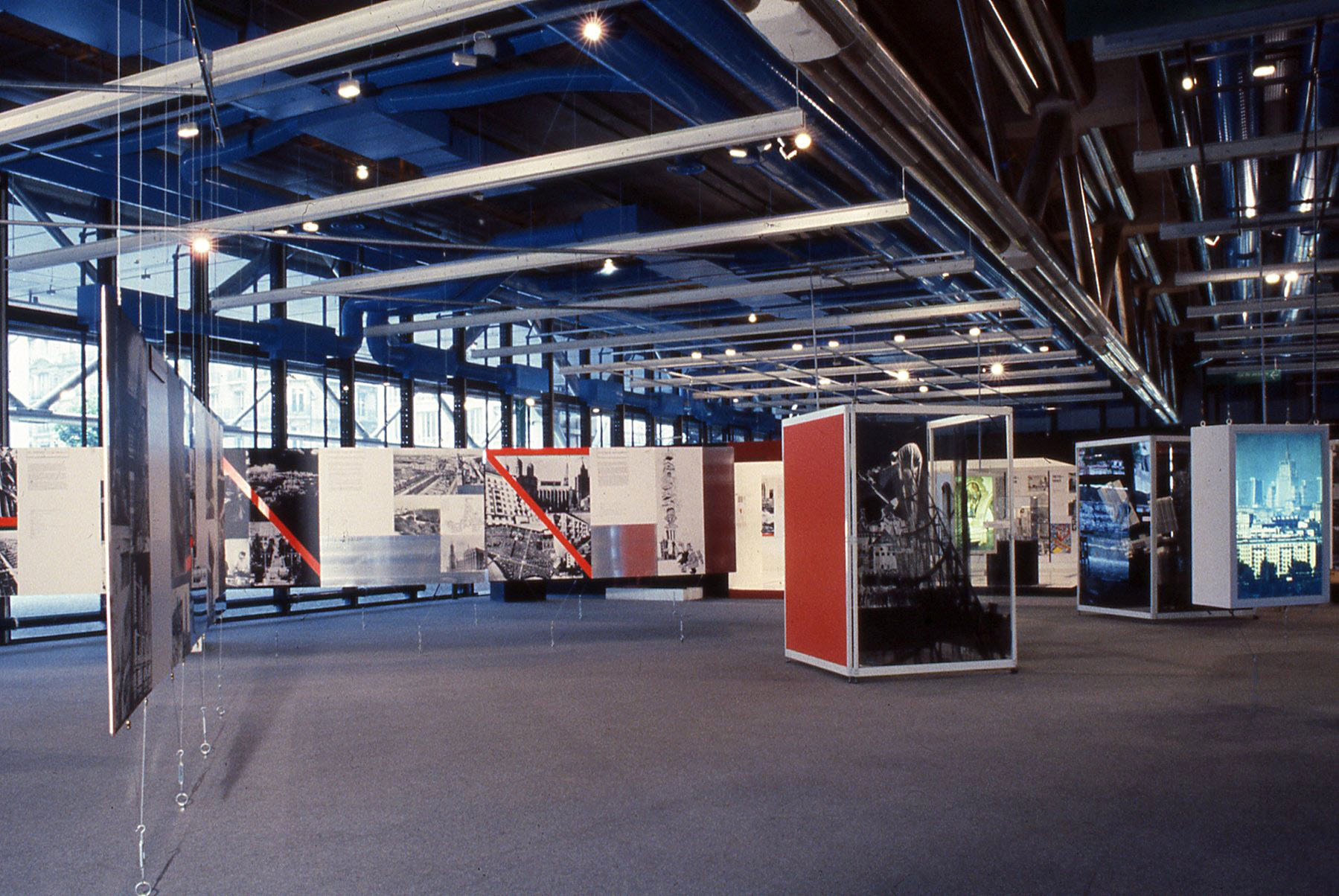
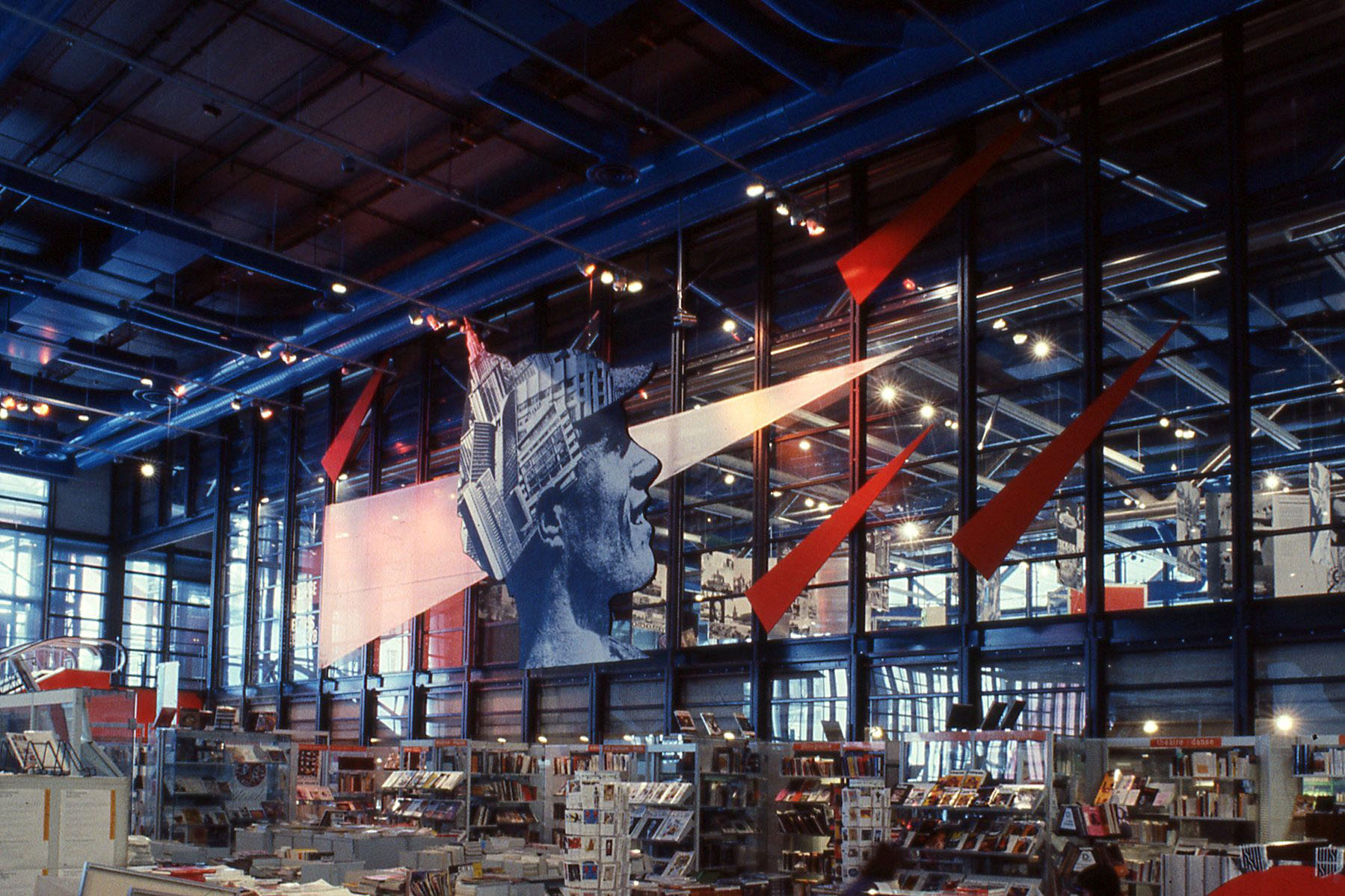
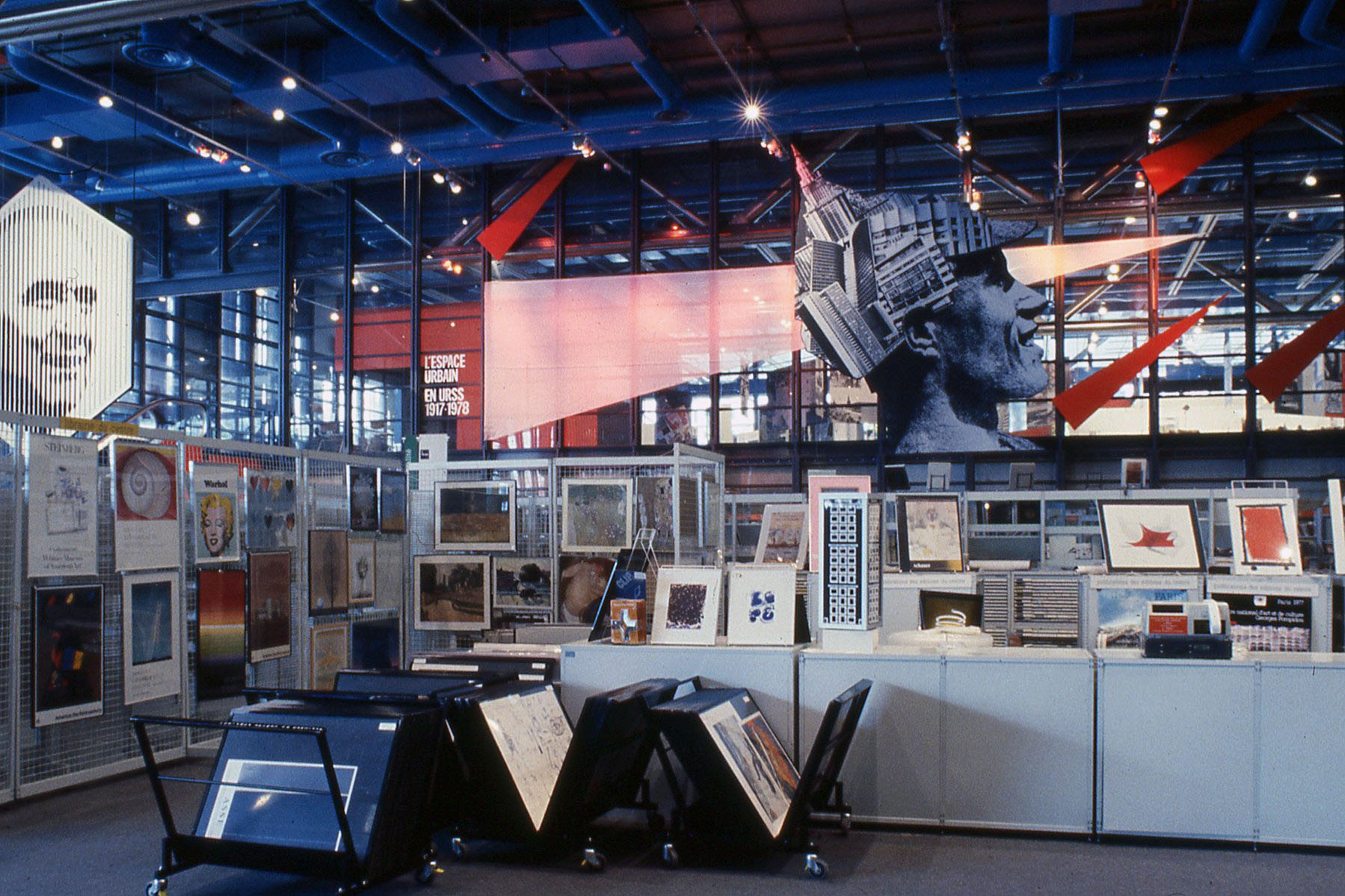
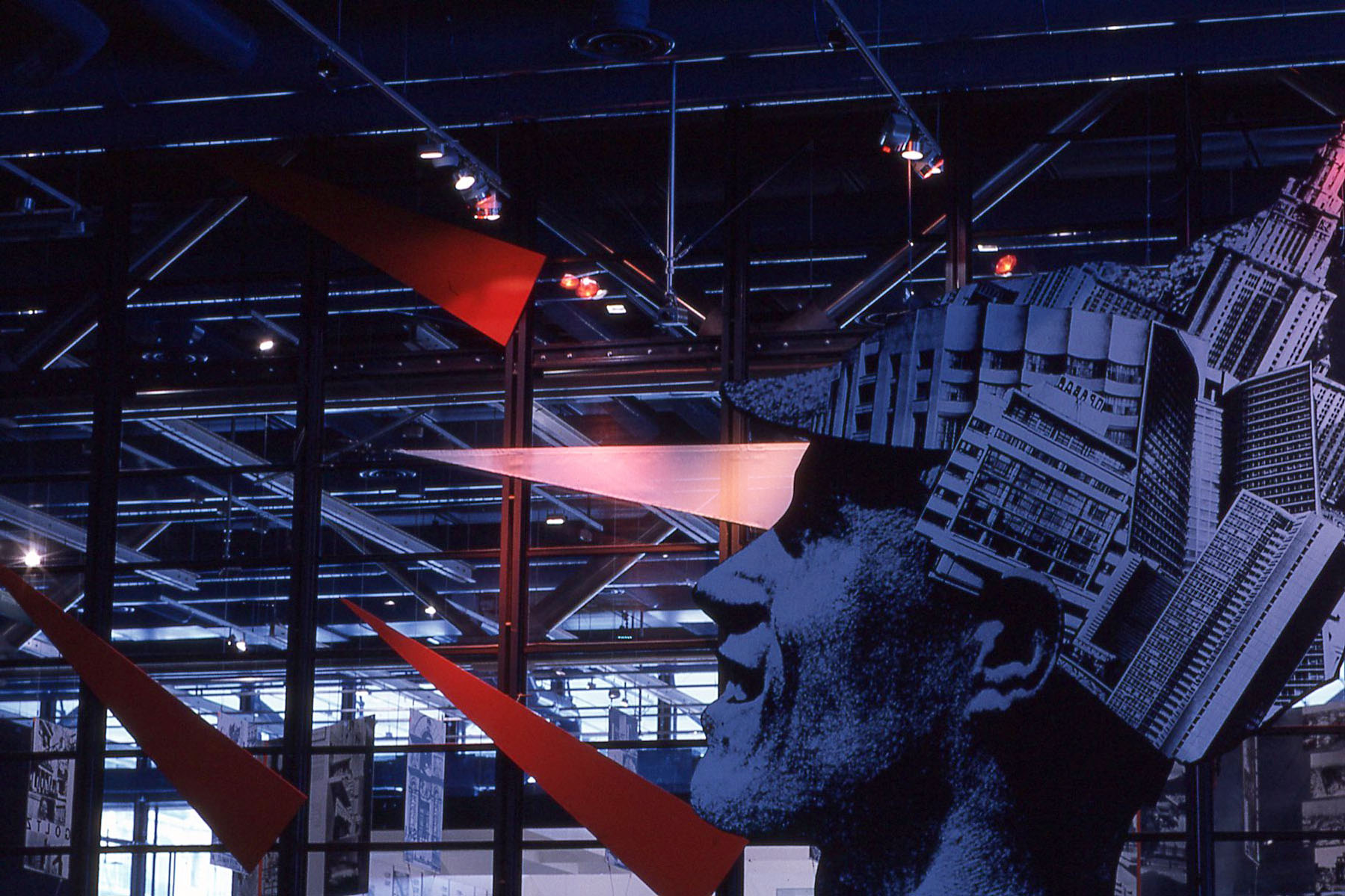
Exhibition arrangement for L’Espace urbain en URSS, 1917–1978 at the Centre National d’Art et de Culture Georges Pompidou in Paris (together with architect Jean Louis Cohen). The decorations, executed in collage technique, included elements from works by Aleksander Rodchenko.
Bibliography:
M. Rouard-Snowman, Roman Cieslewicz: Master of Graphic Design, Paris 1993, p. 126–127.
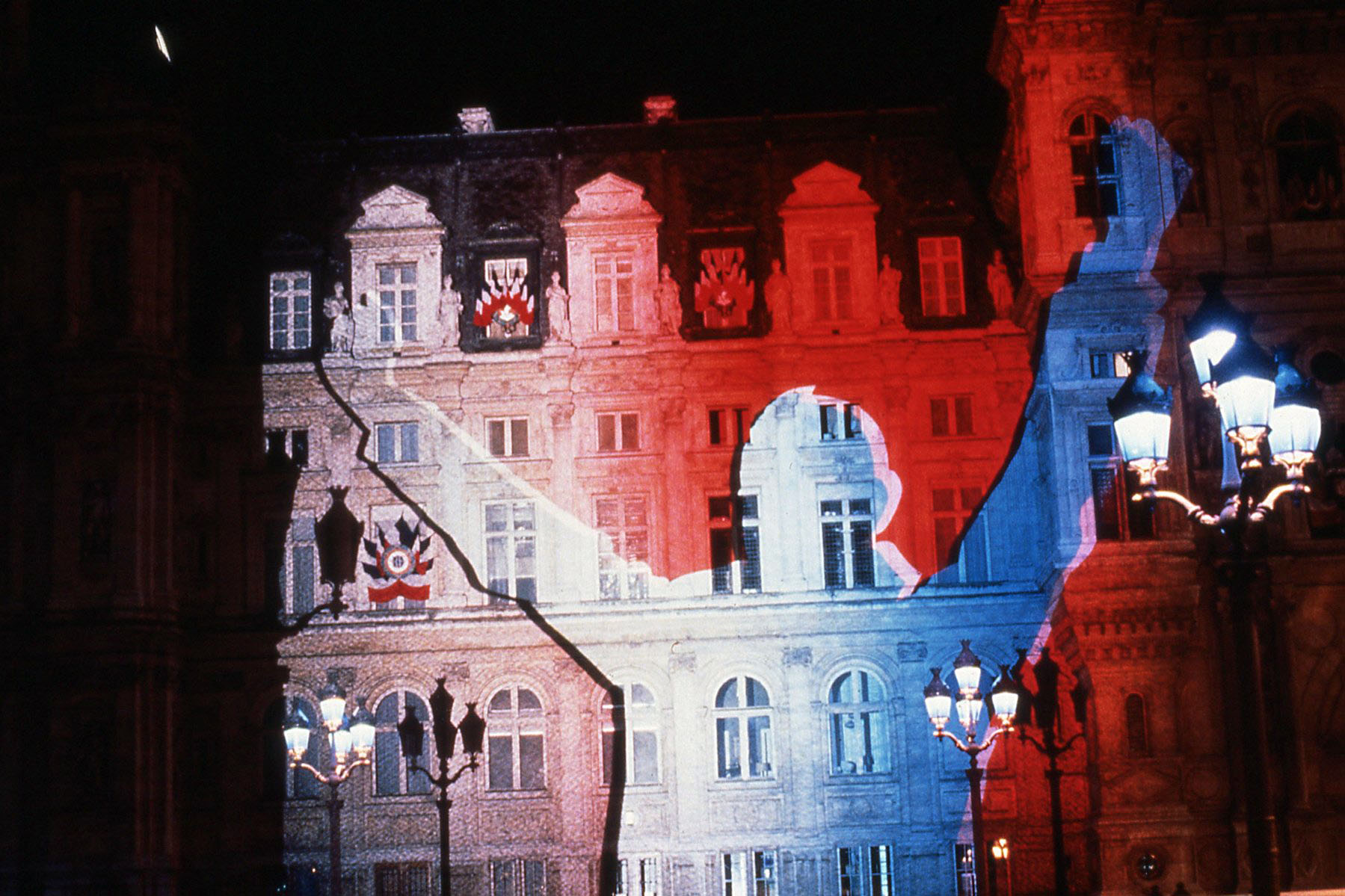
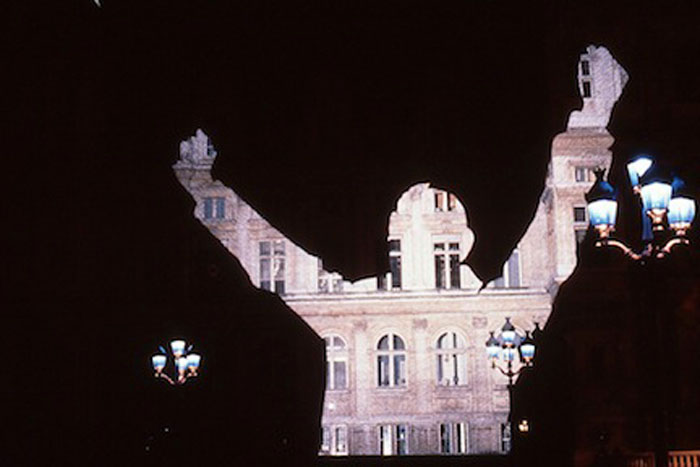
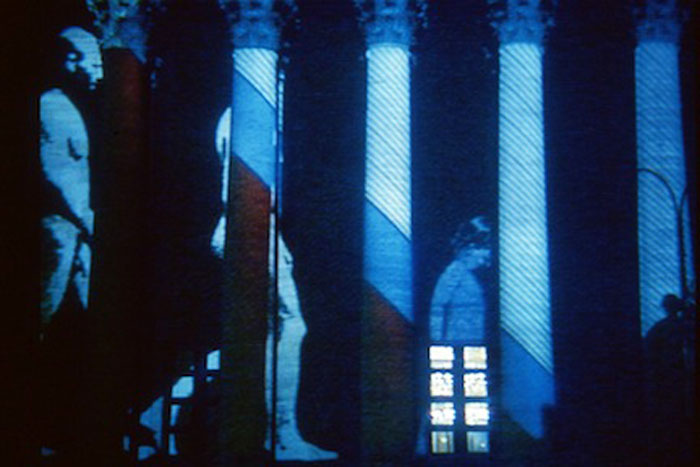
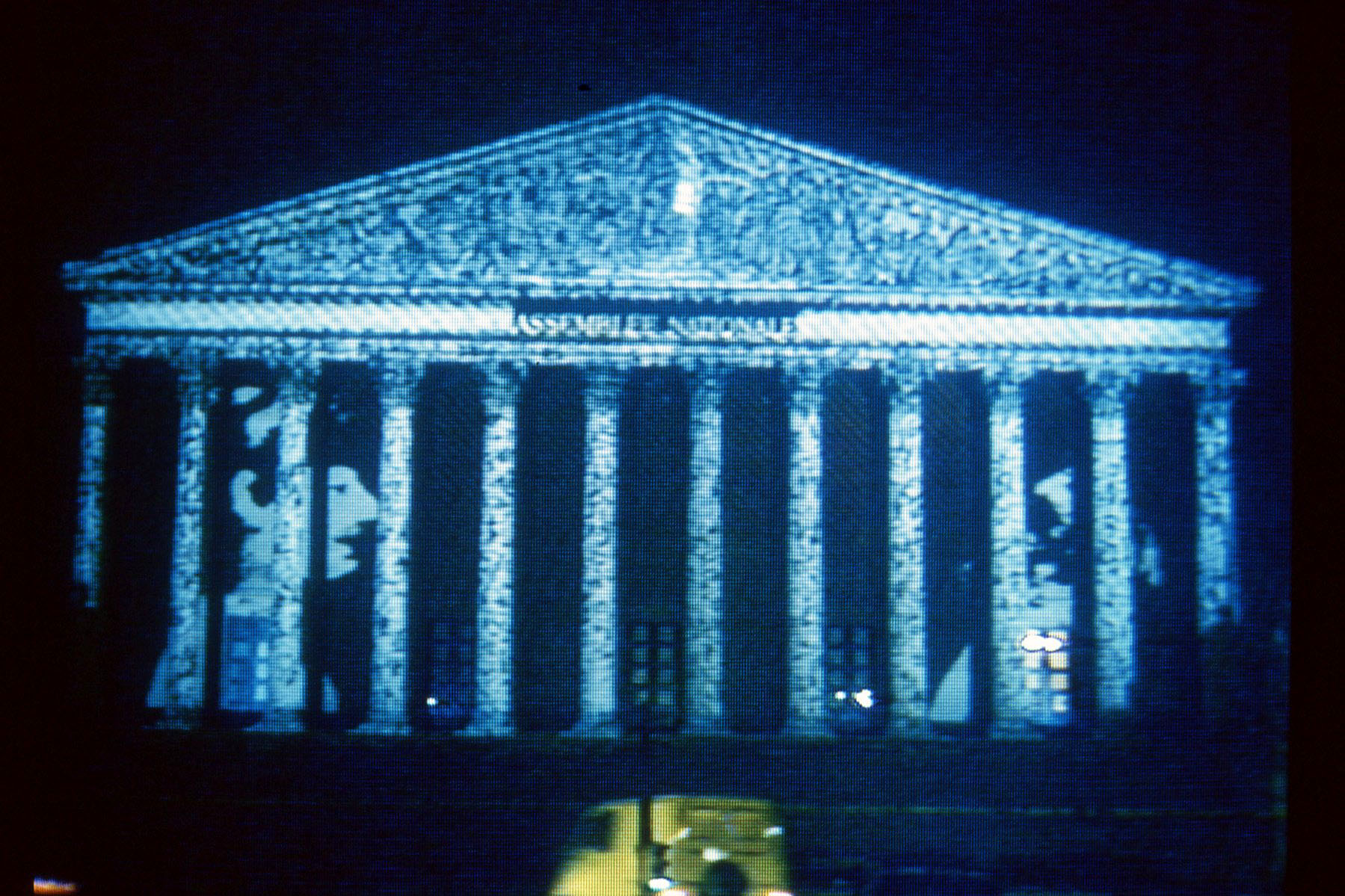
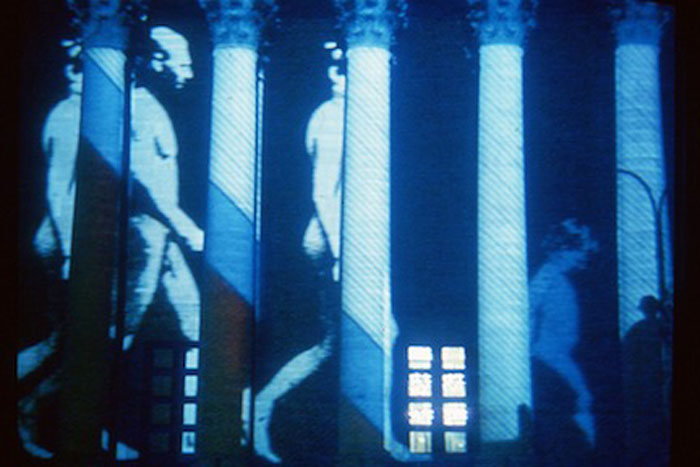
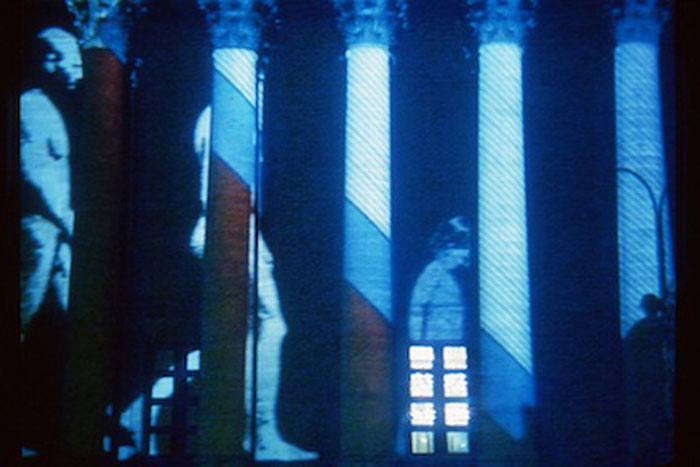
Decoration design of the Assemblée Natonale building commissioned by the National Assembly and the French Ministry of Culture to commemorate the bicentennial of the French Revolution (team: R. Cieślewicz, E. Pignon, Cueco, Erro). The animated decoration was projected onto the building’s facade. The original designs in A4 format created by Cieślewicz were transformed into animation by the company Contrejour. Naked walking figures of a woman, man, and child were shown first individually, then together, and finally layered in dynamic visual sequences. Only three colors were used (blue, white, red) in reference to the French national colors.
Bibliography:
M. Rouard-Snowman, Roman Cieslewicz: Master of Graphic Design, Paris 1993, p. 127.
F. Barré, Roman Cieslewicz (La collection design & designer 021), Paris 2004, p. 74.
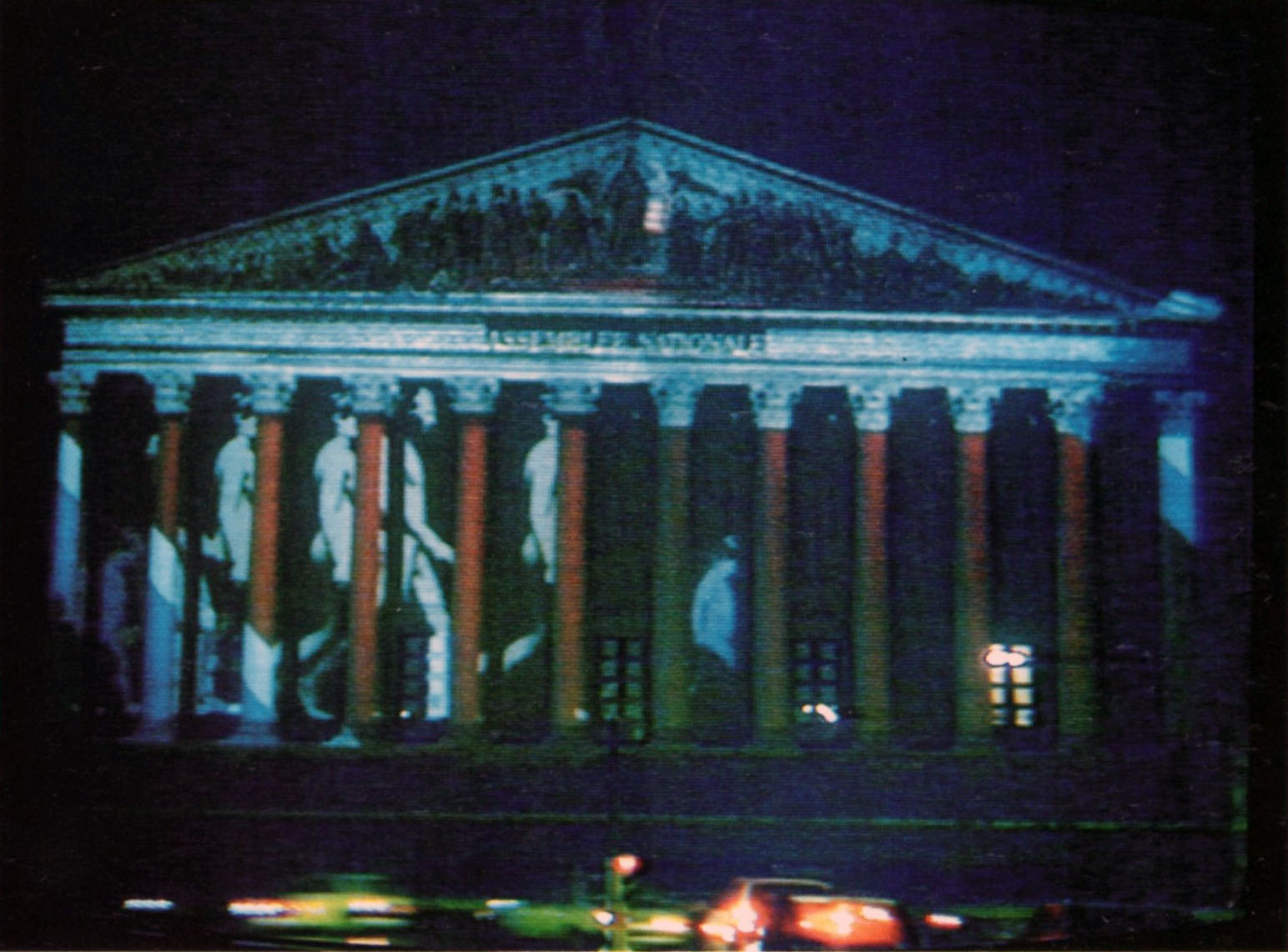
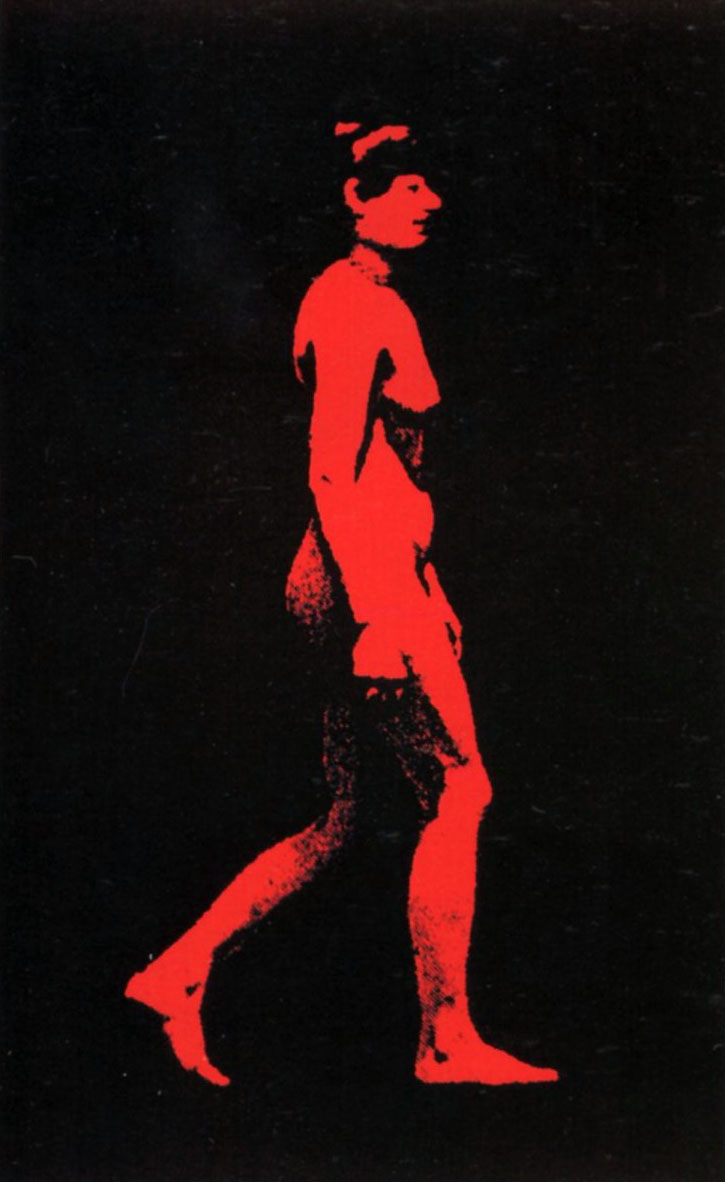
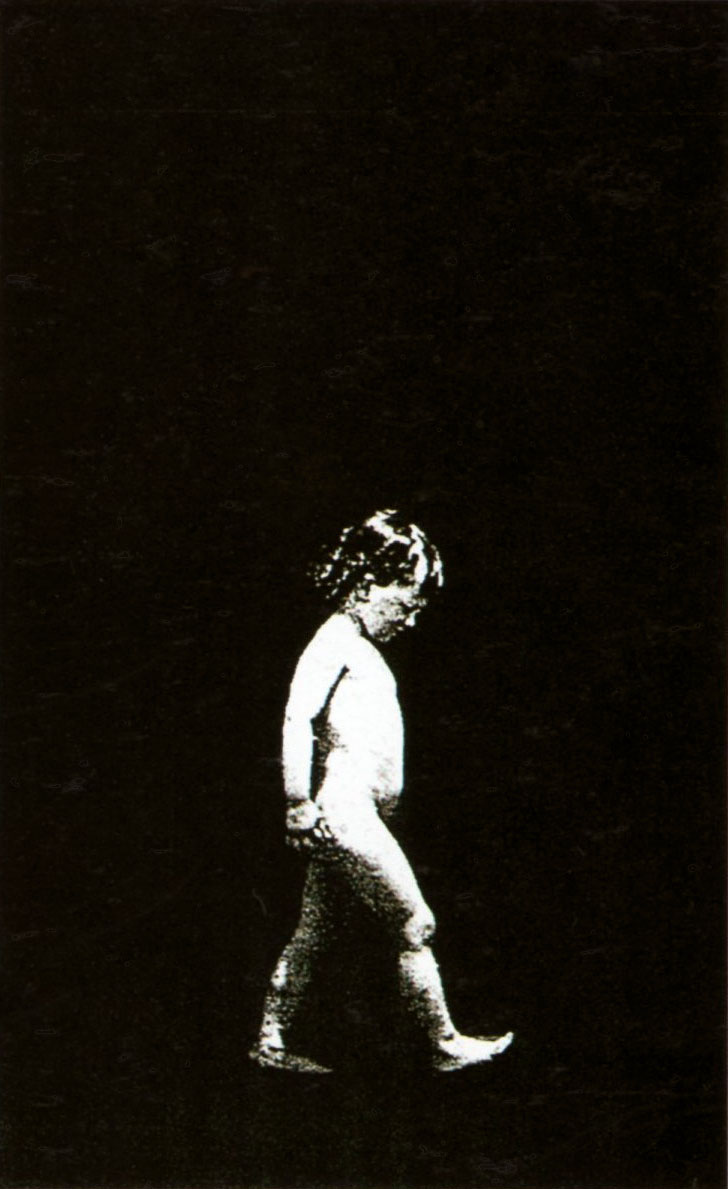
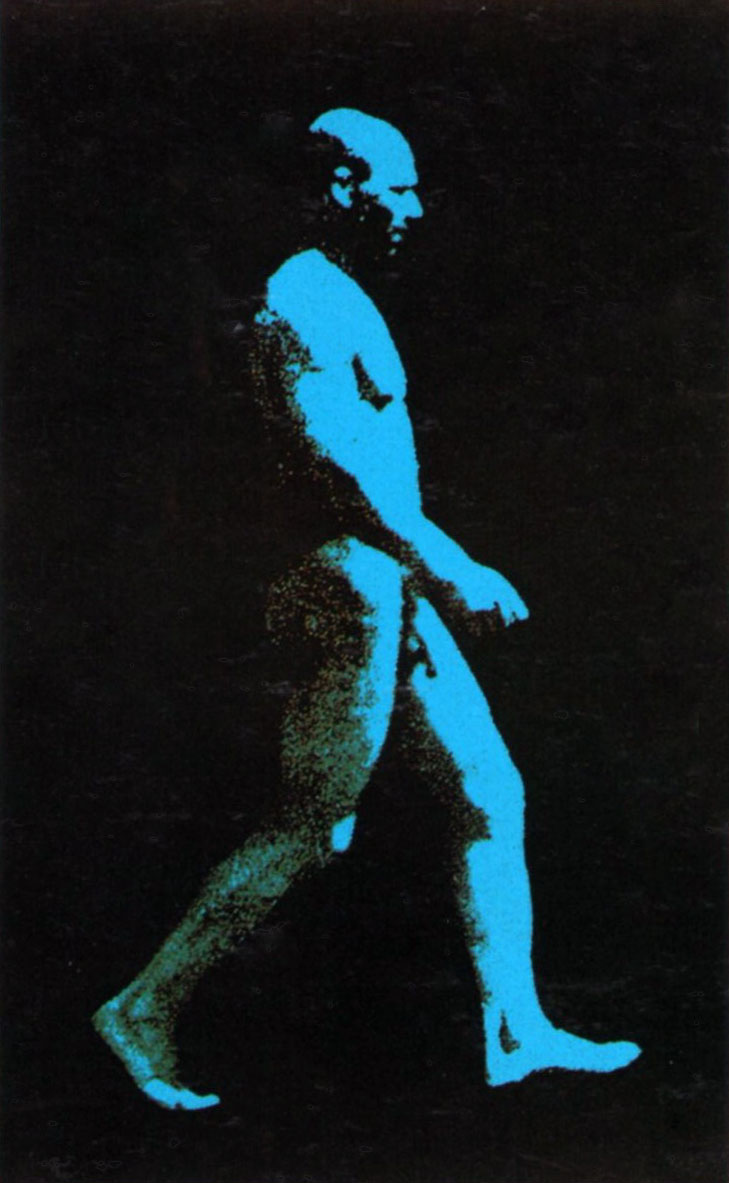
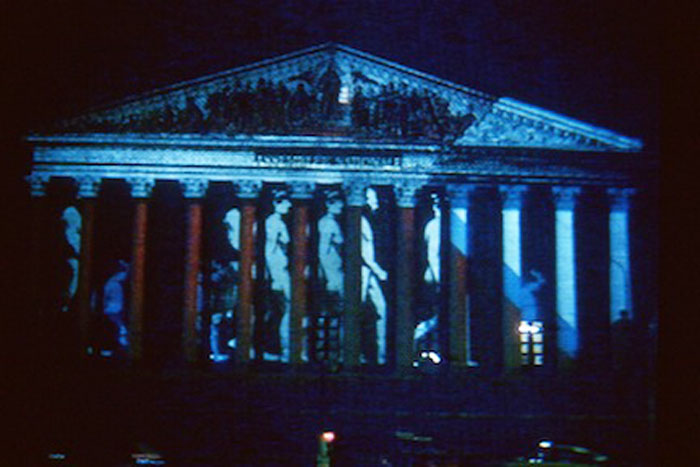
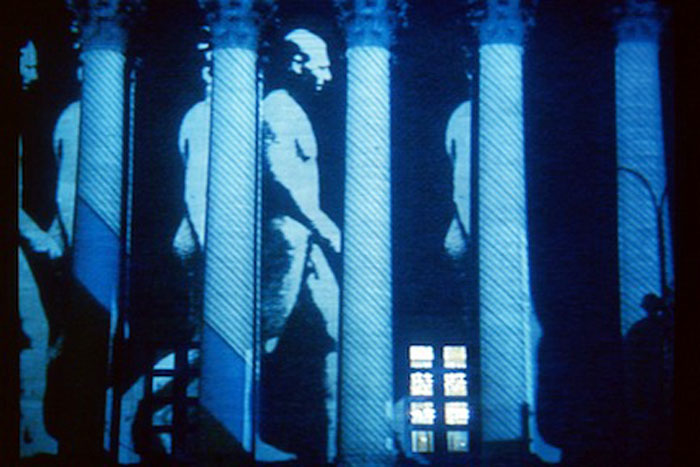
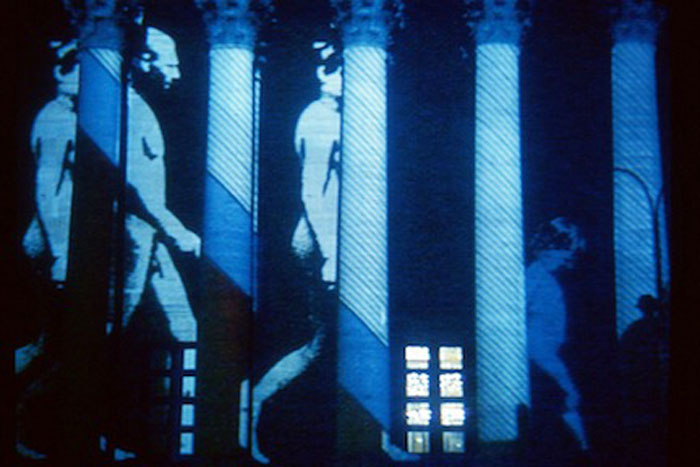
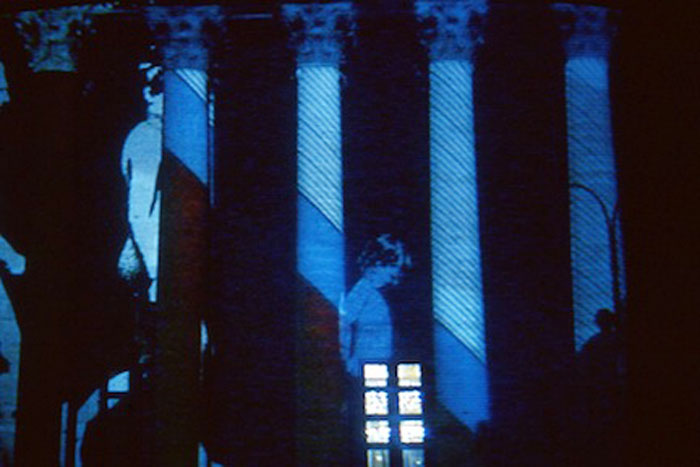
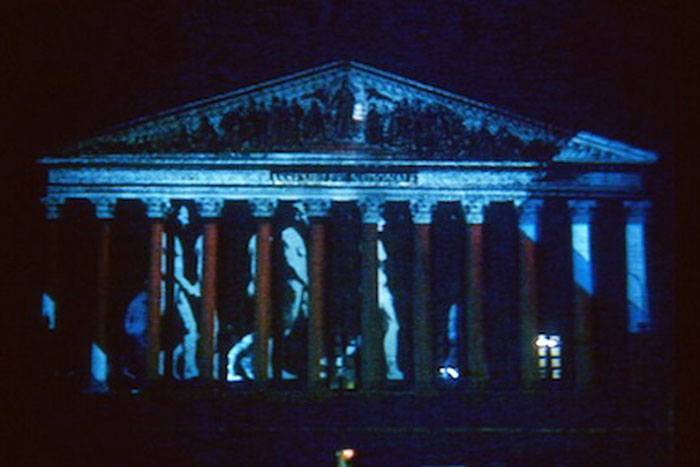
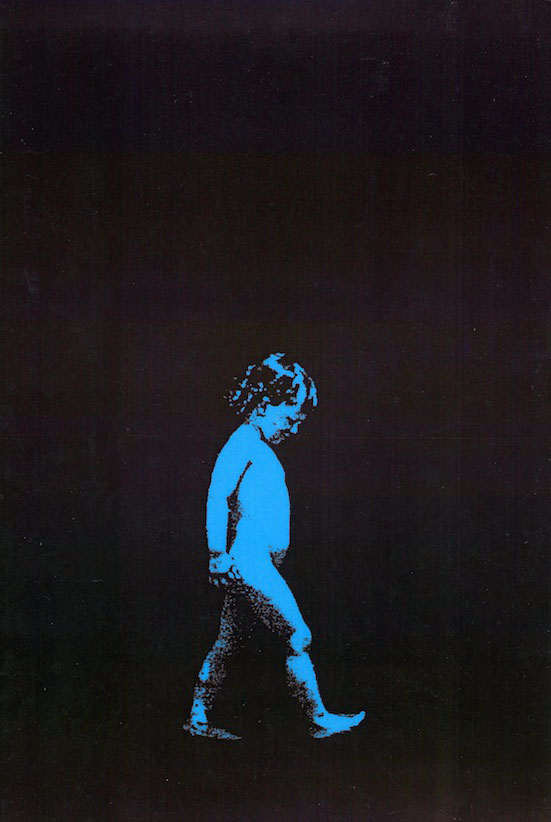
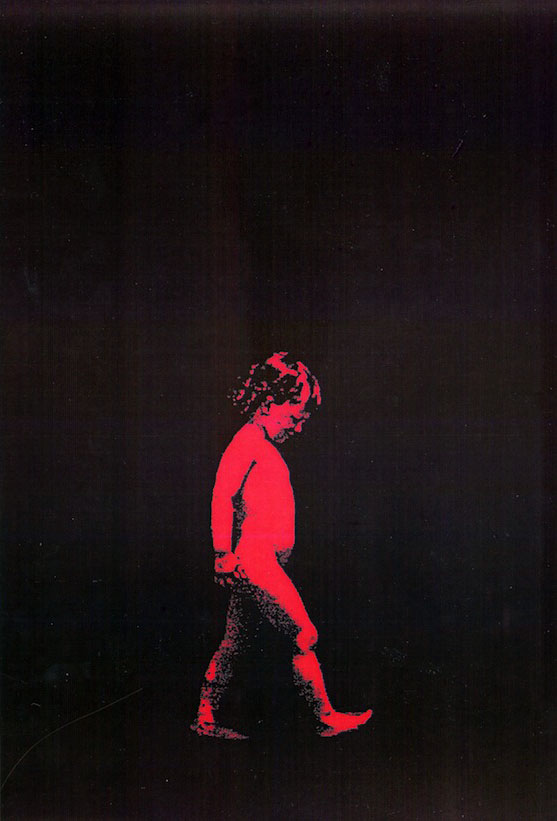
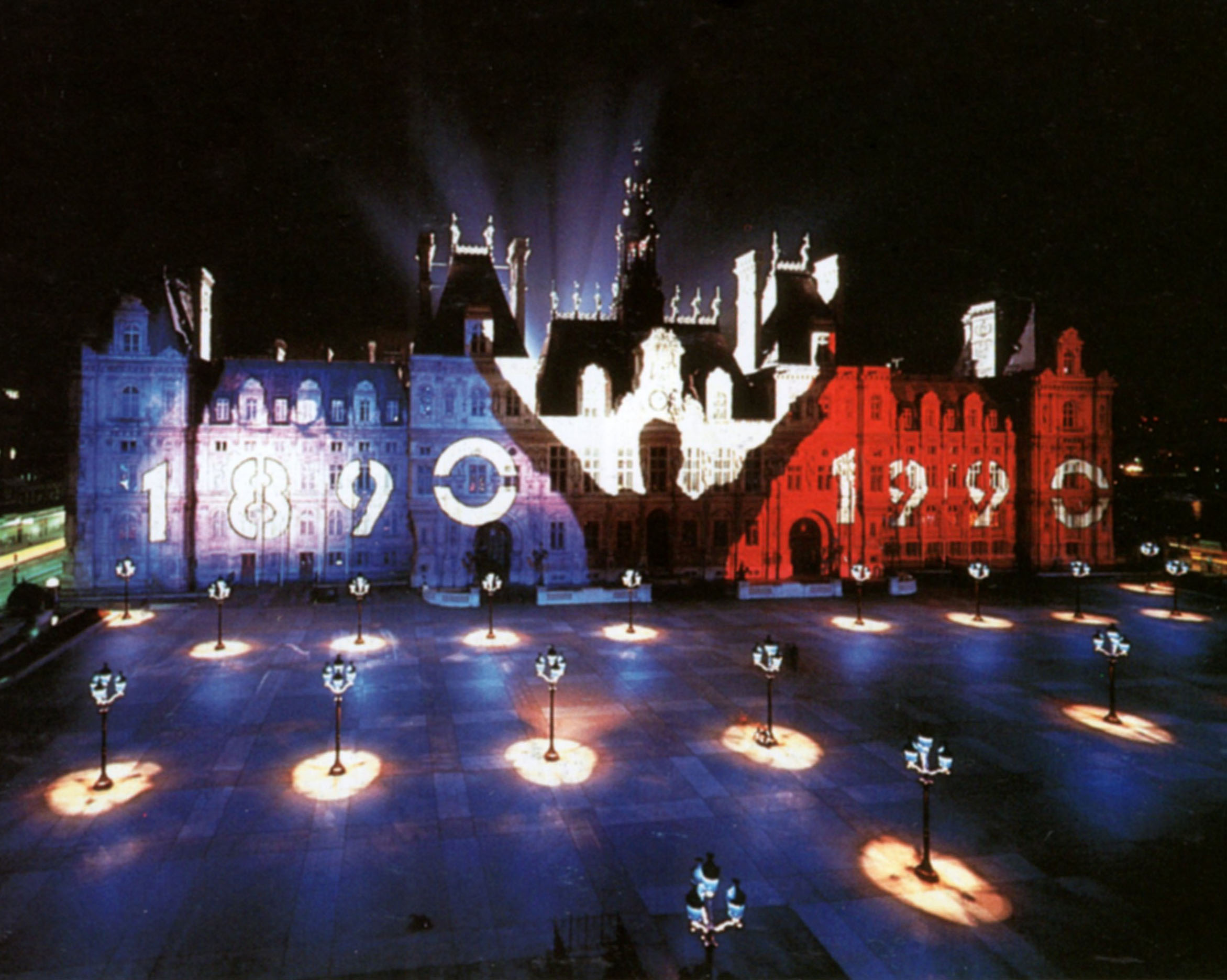
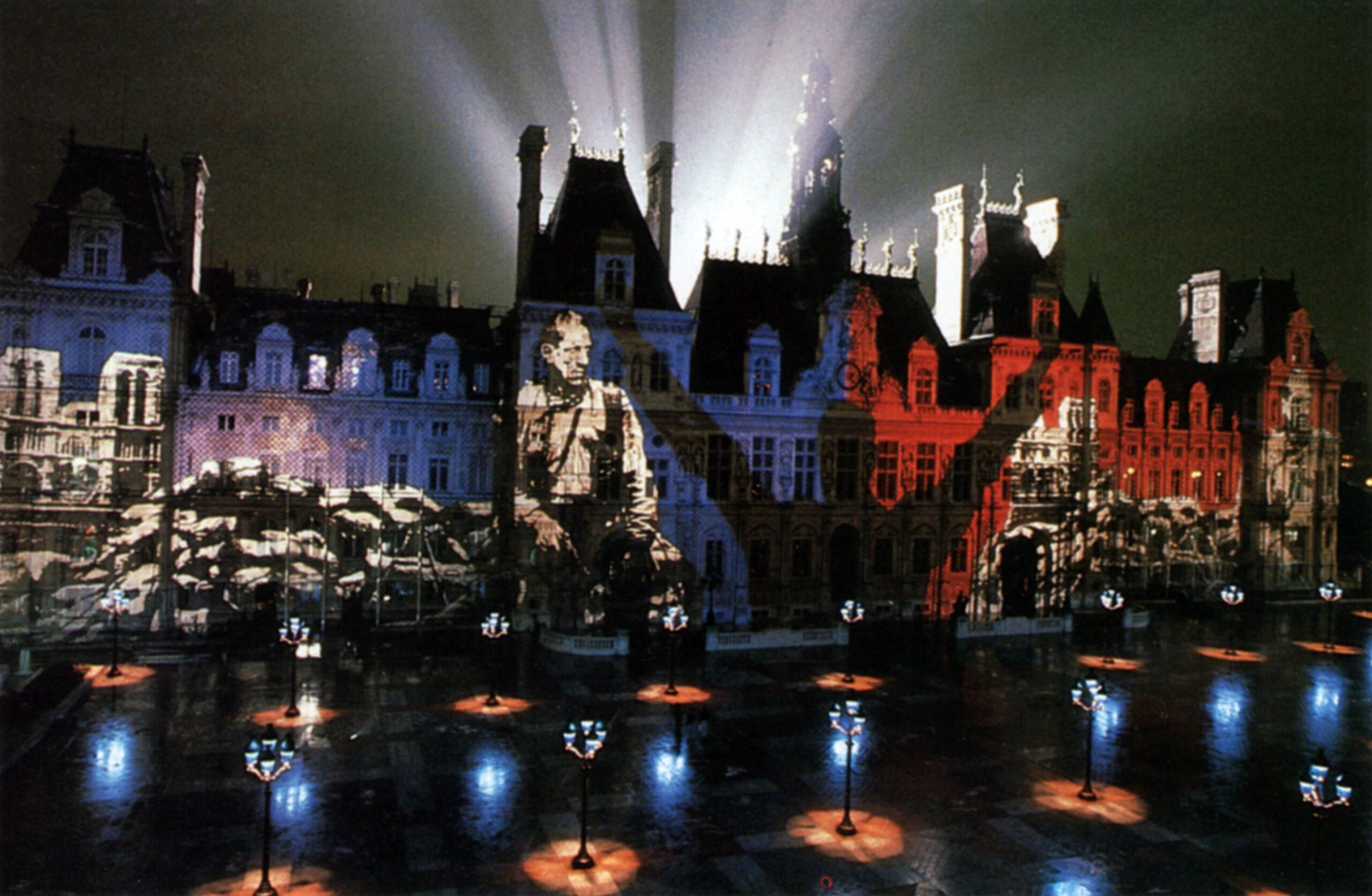
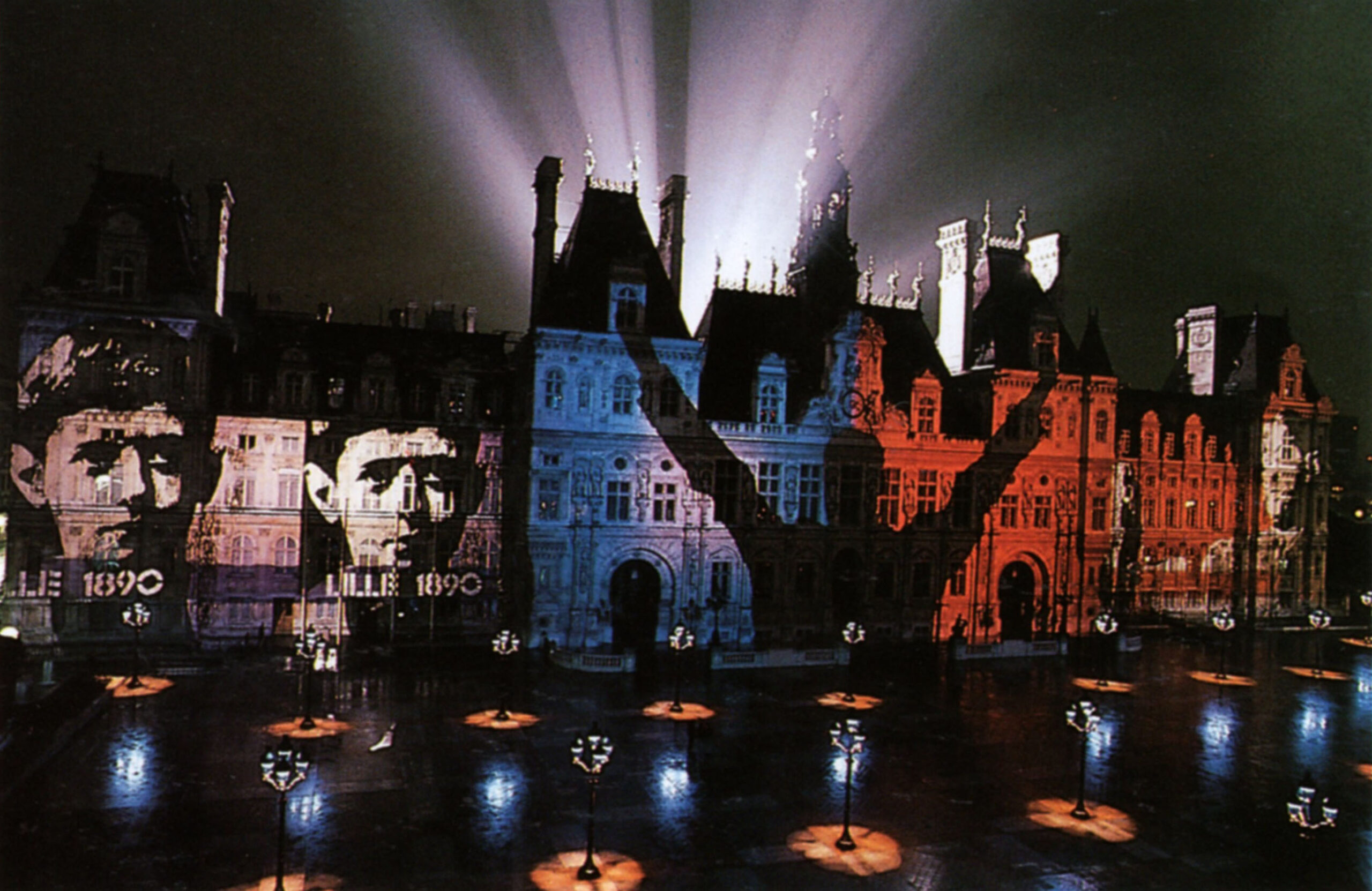
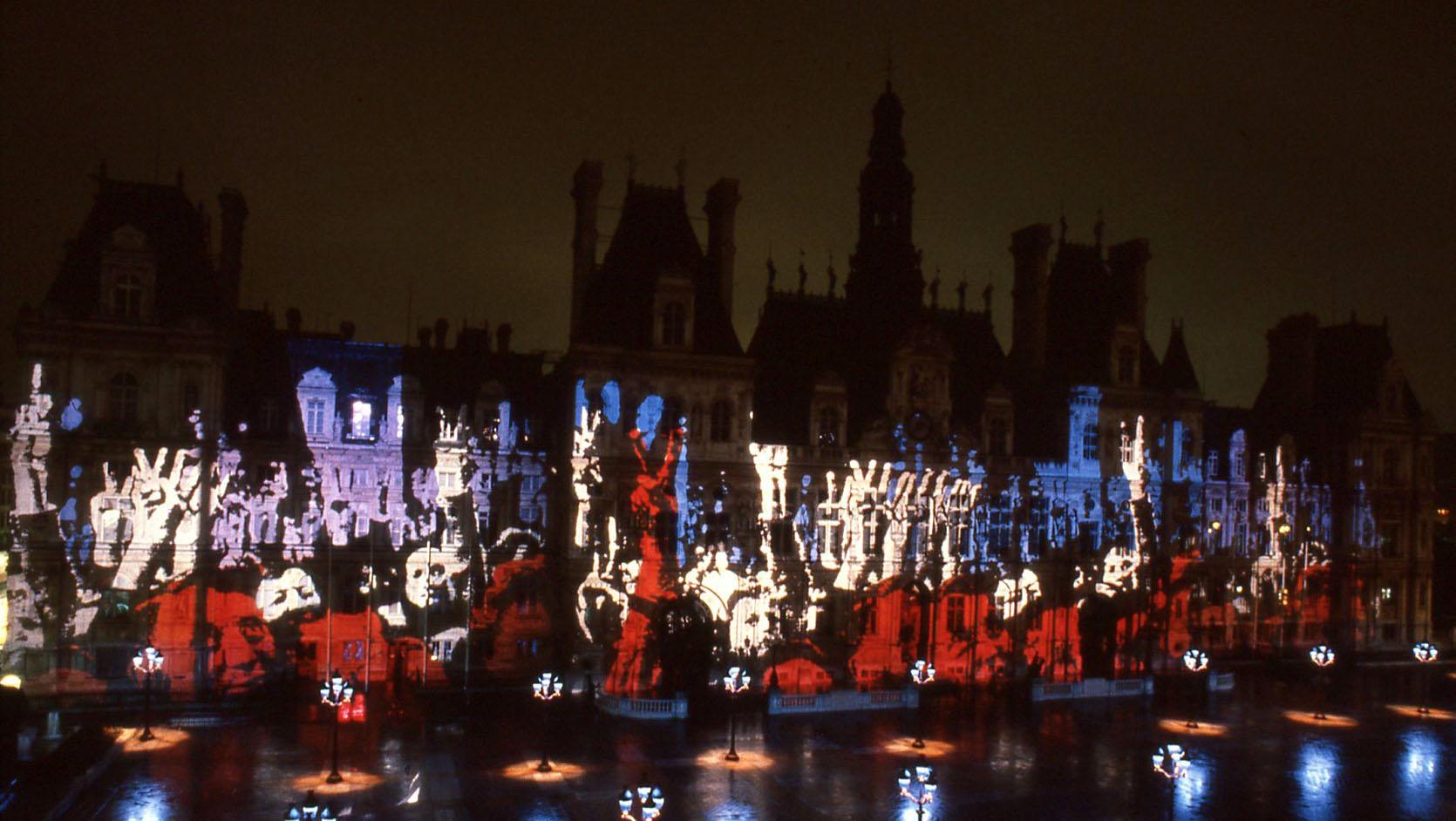
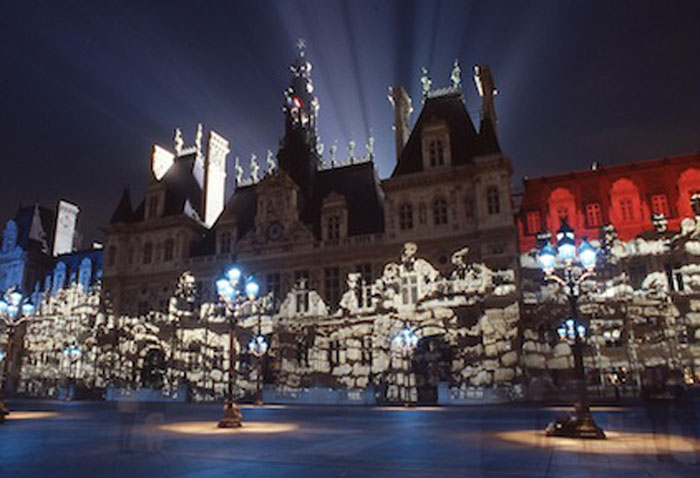
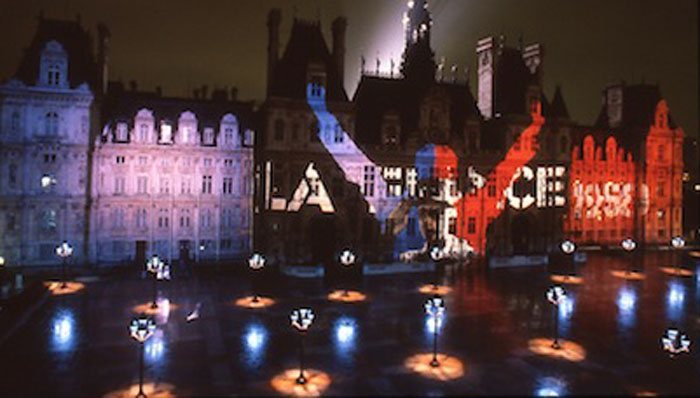
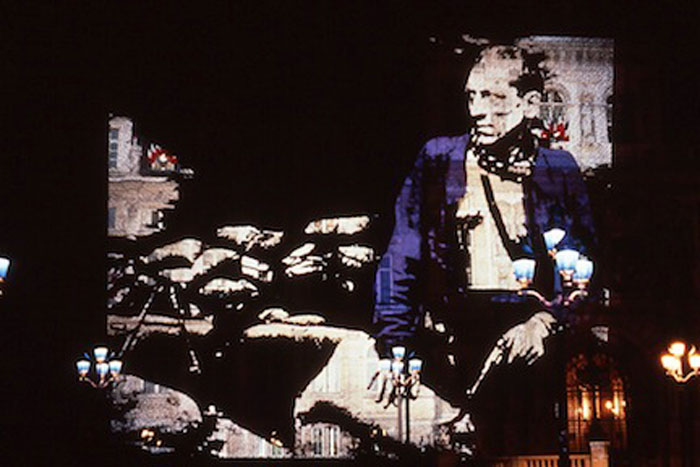
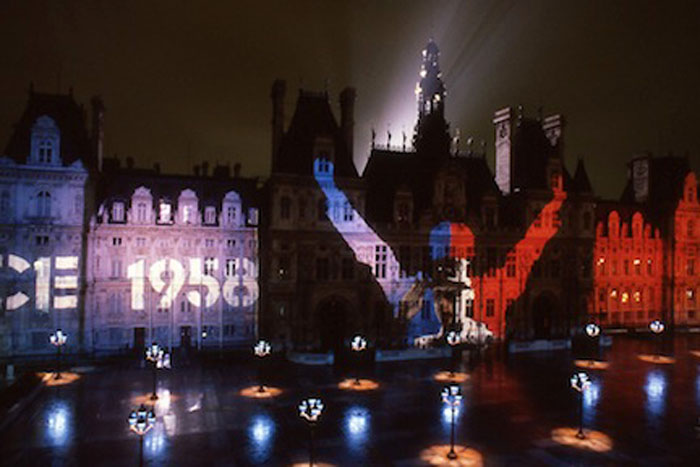
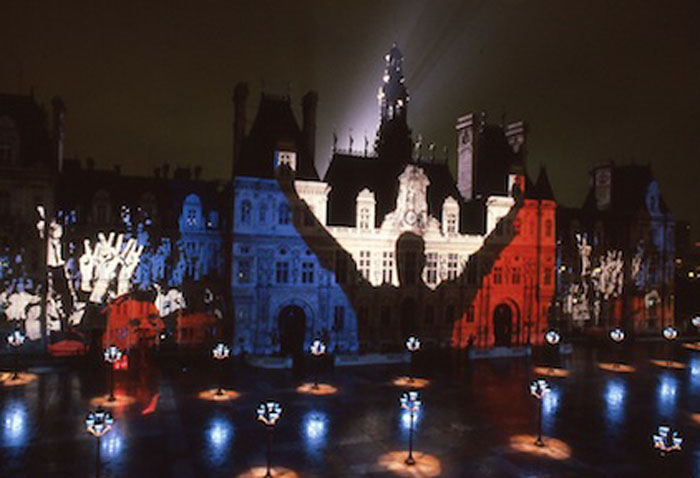
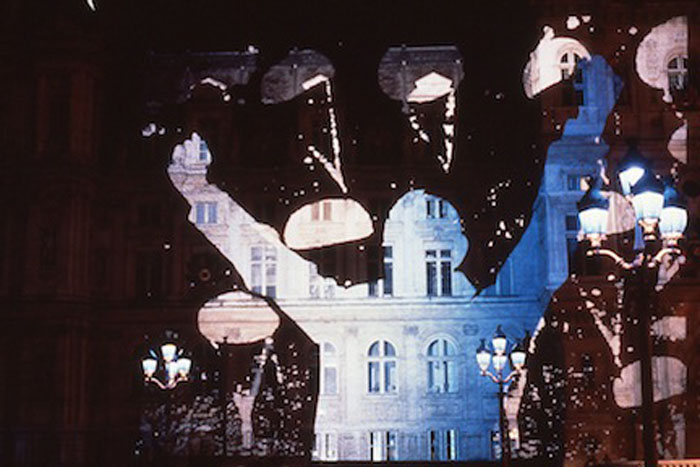
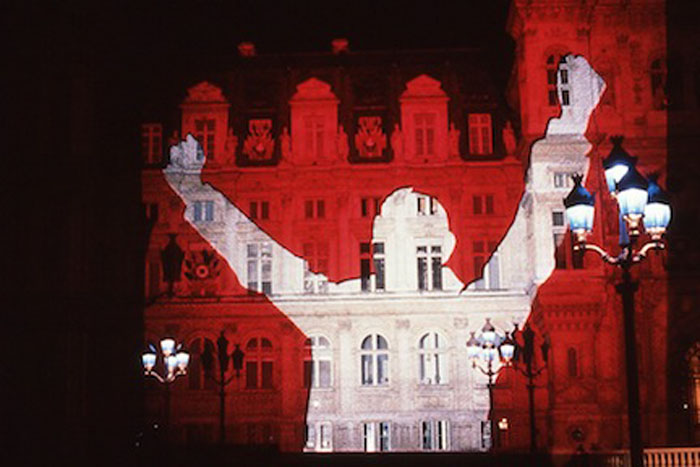
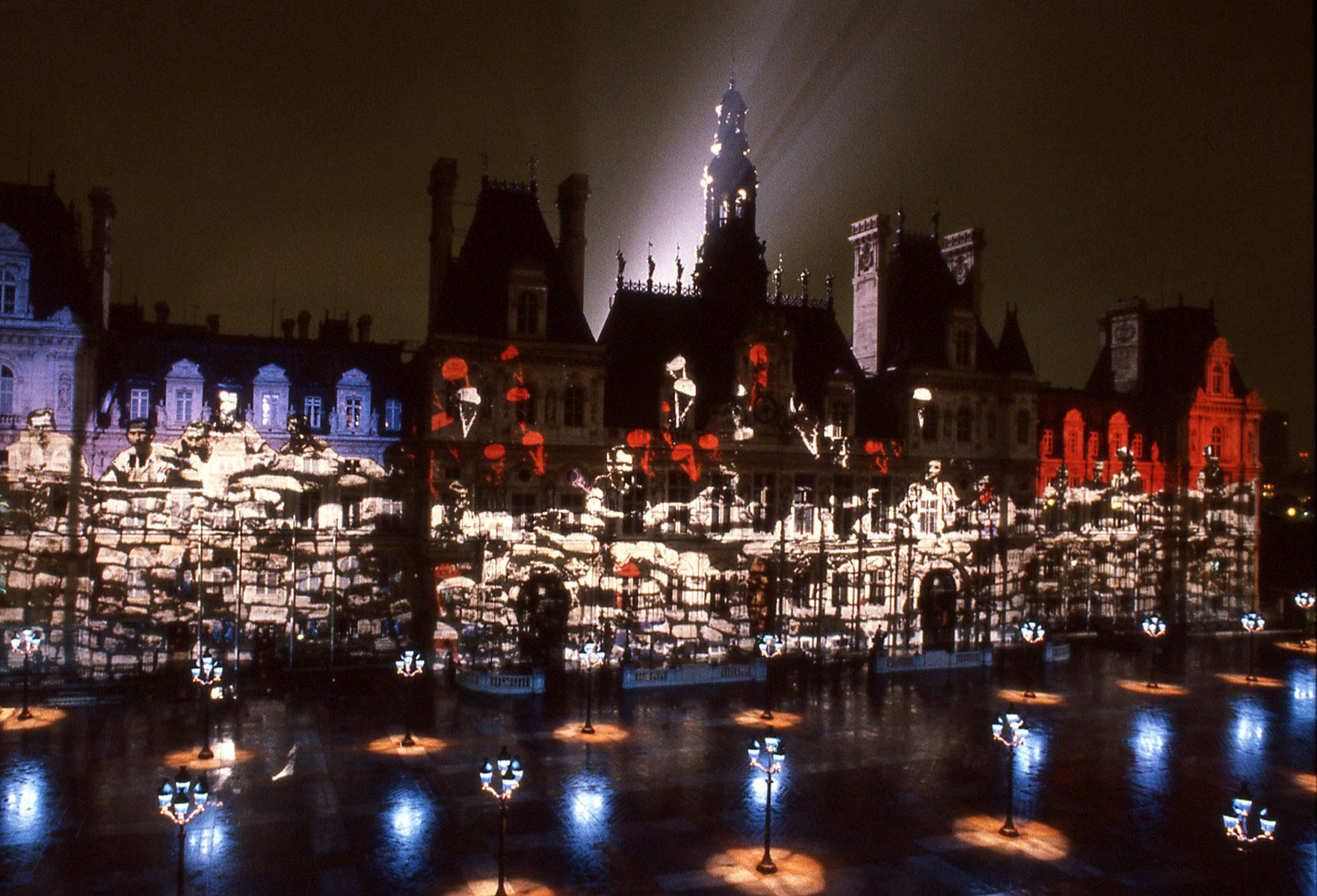
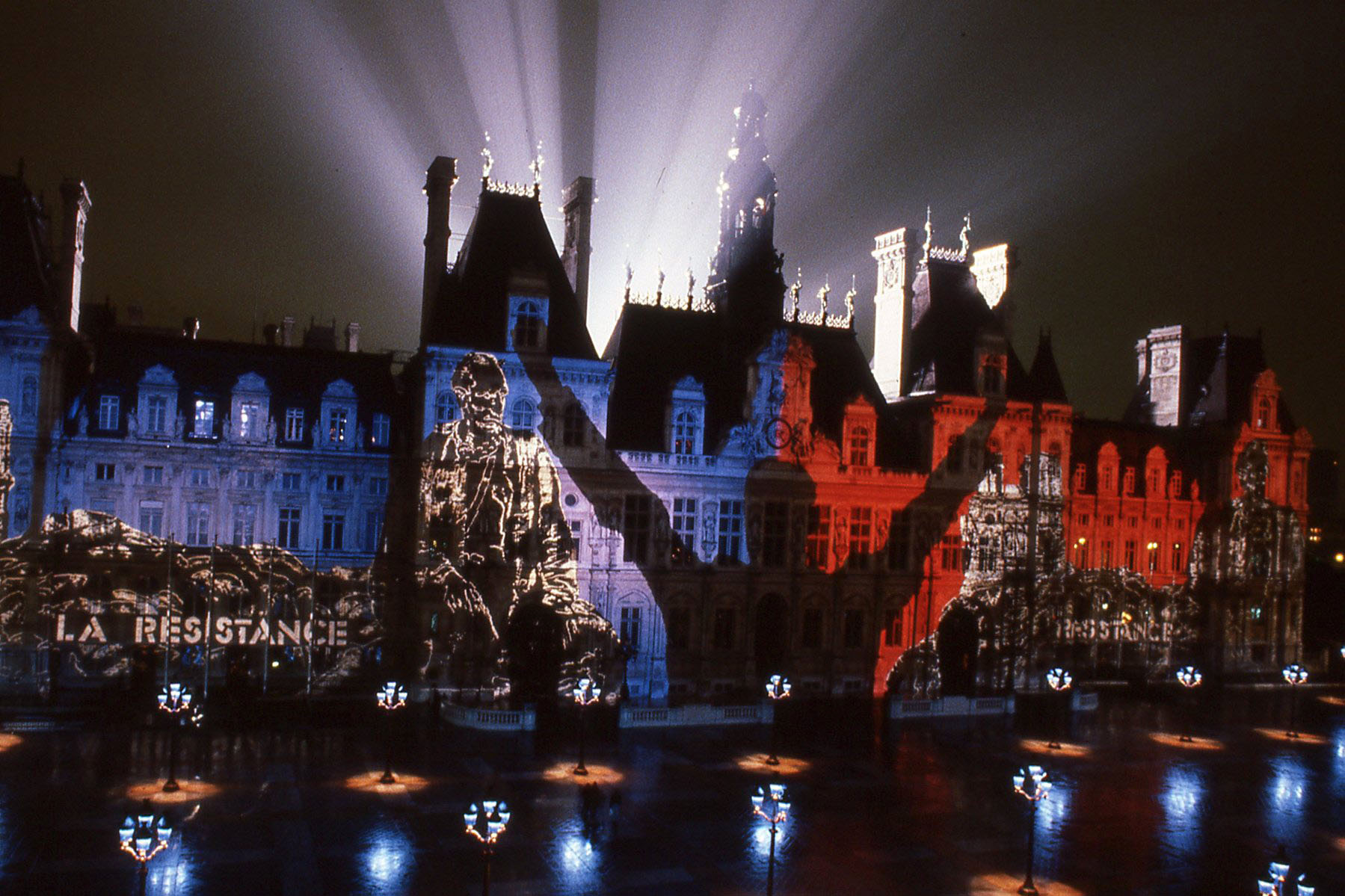
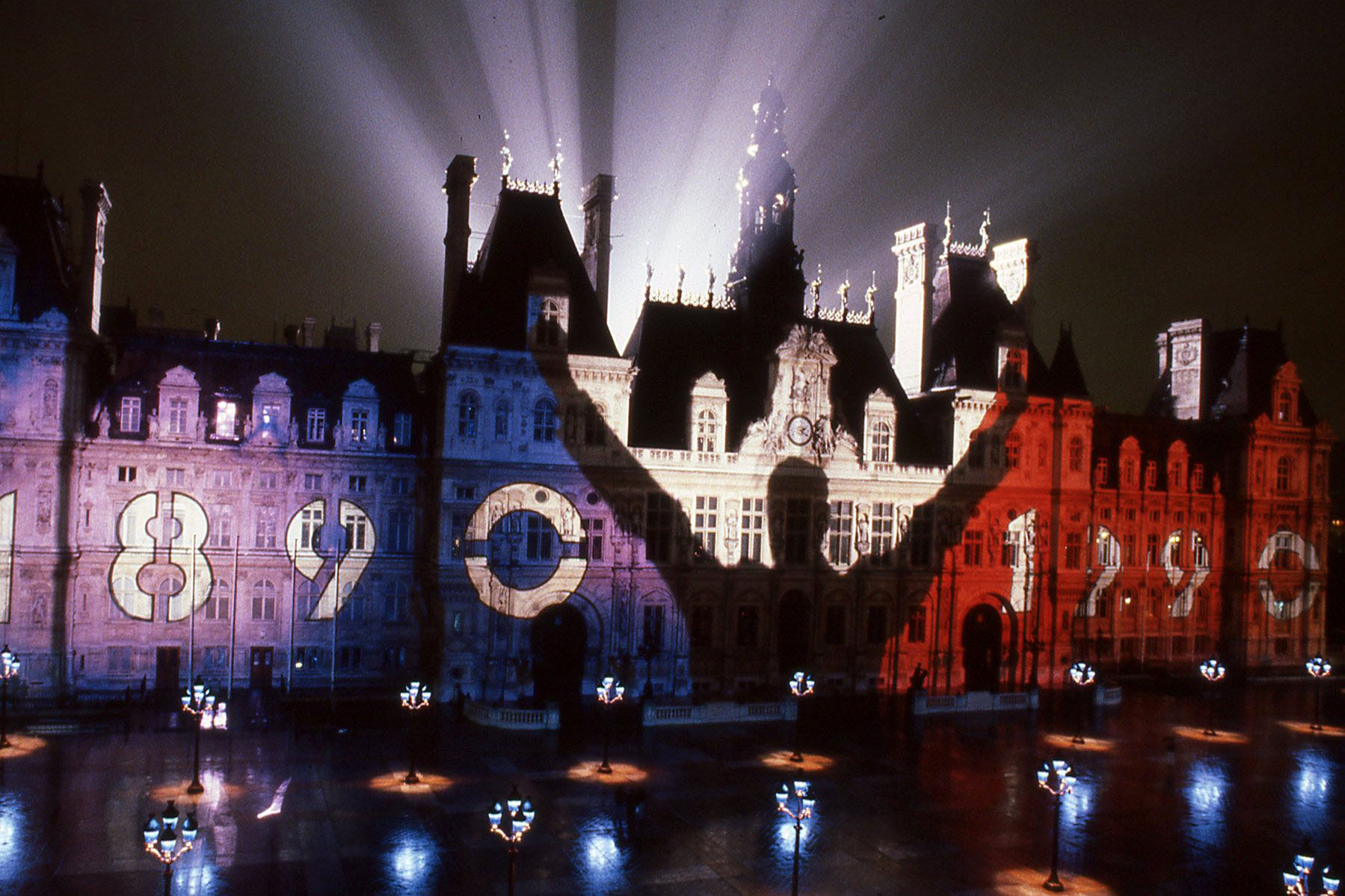
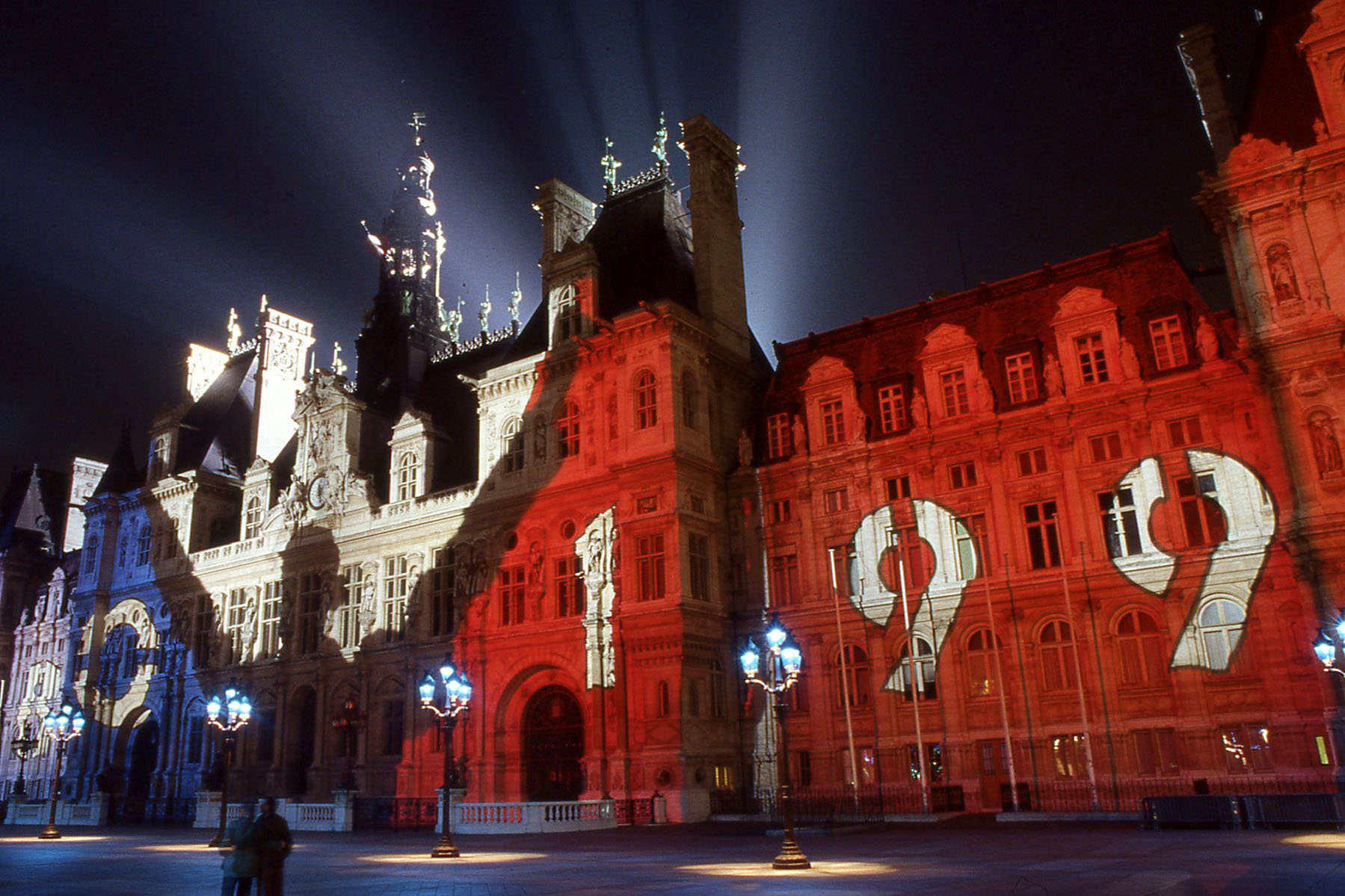
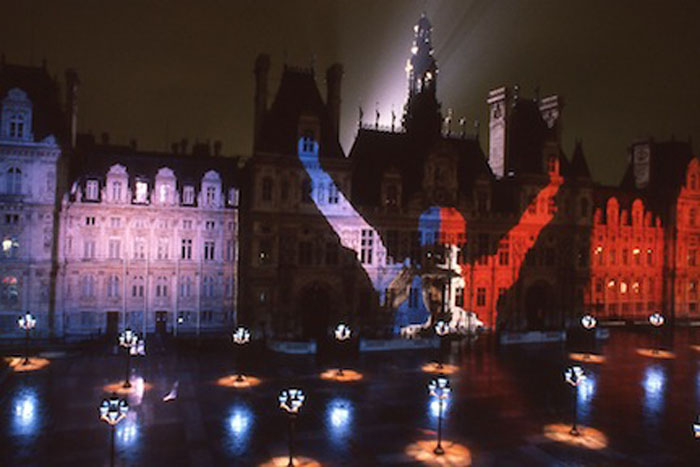
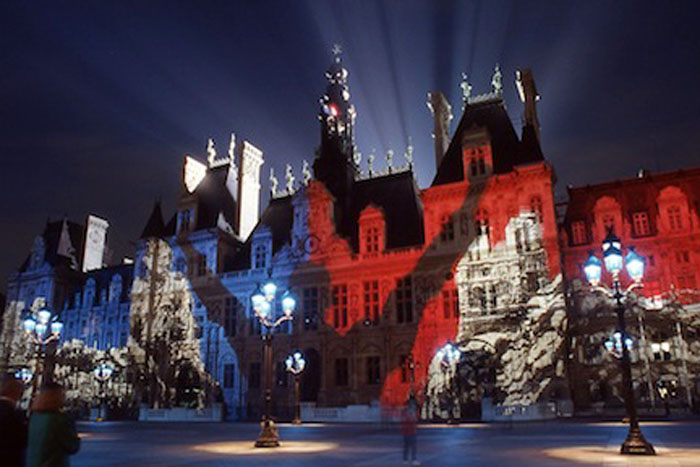
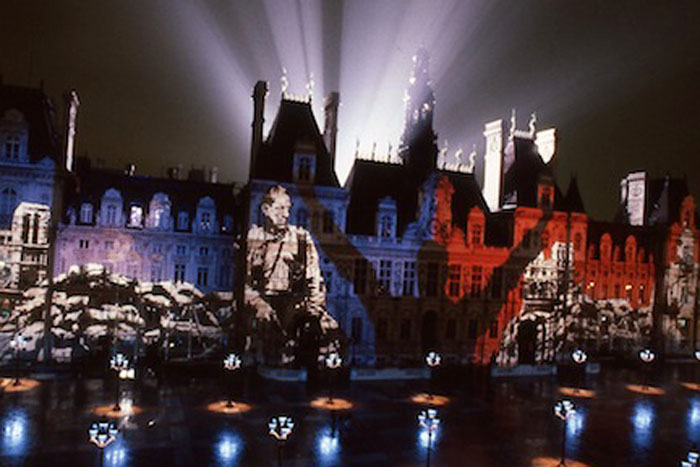
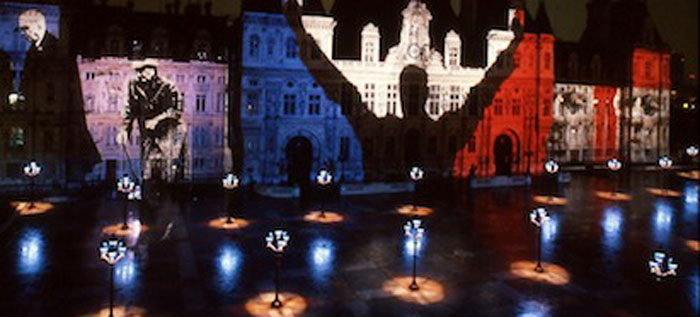
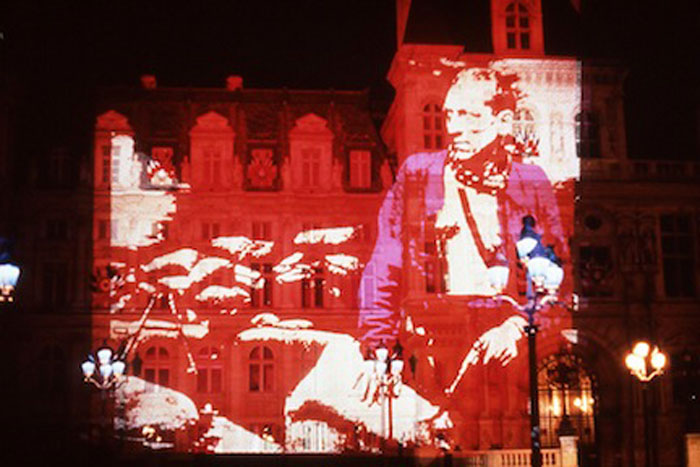
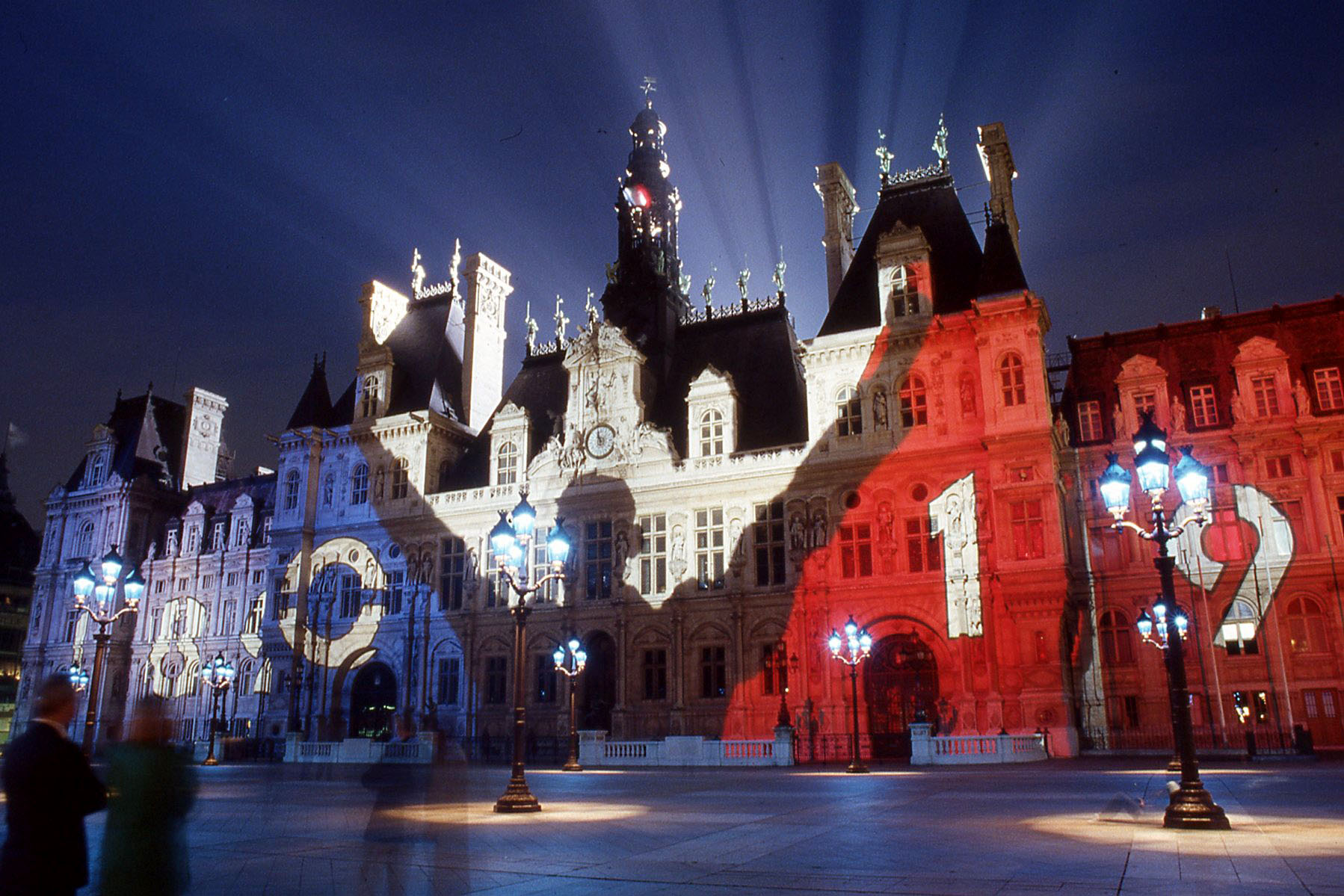
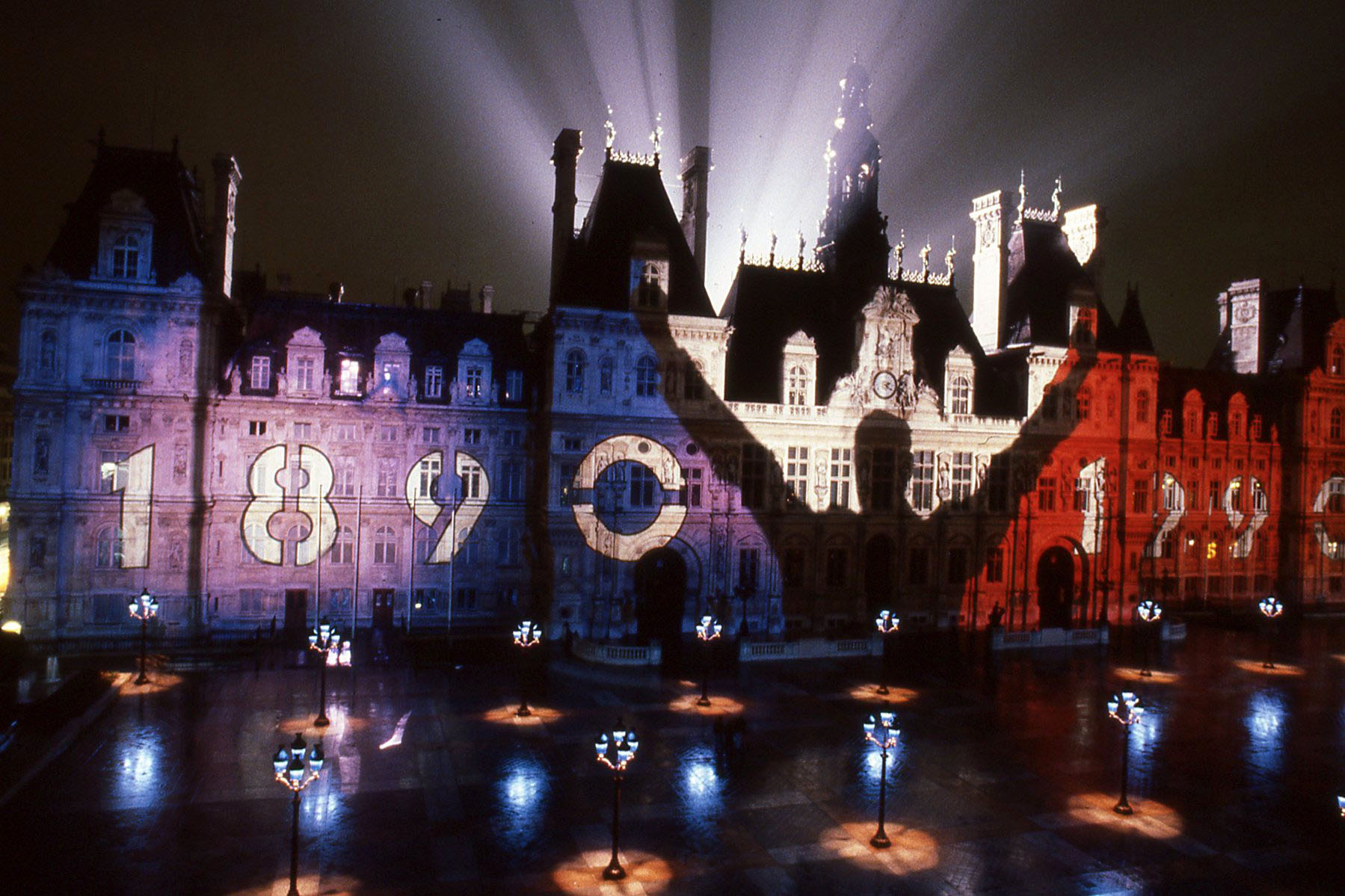
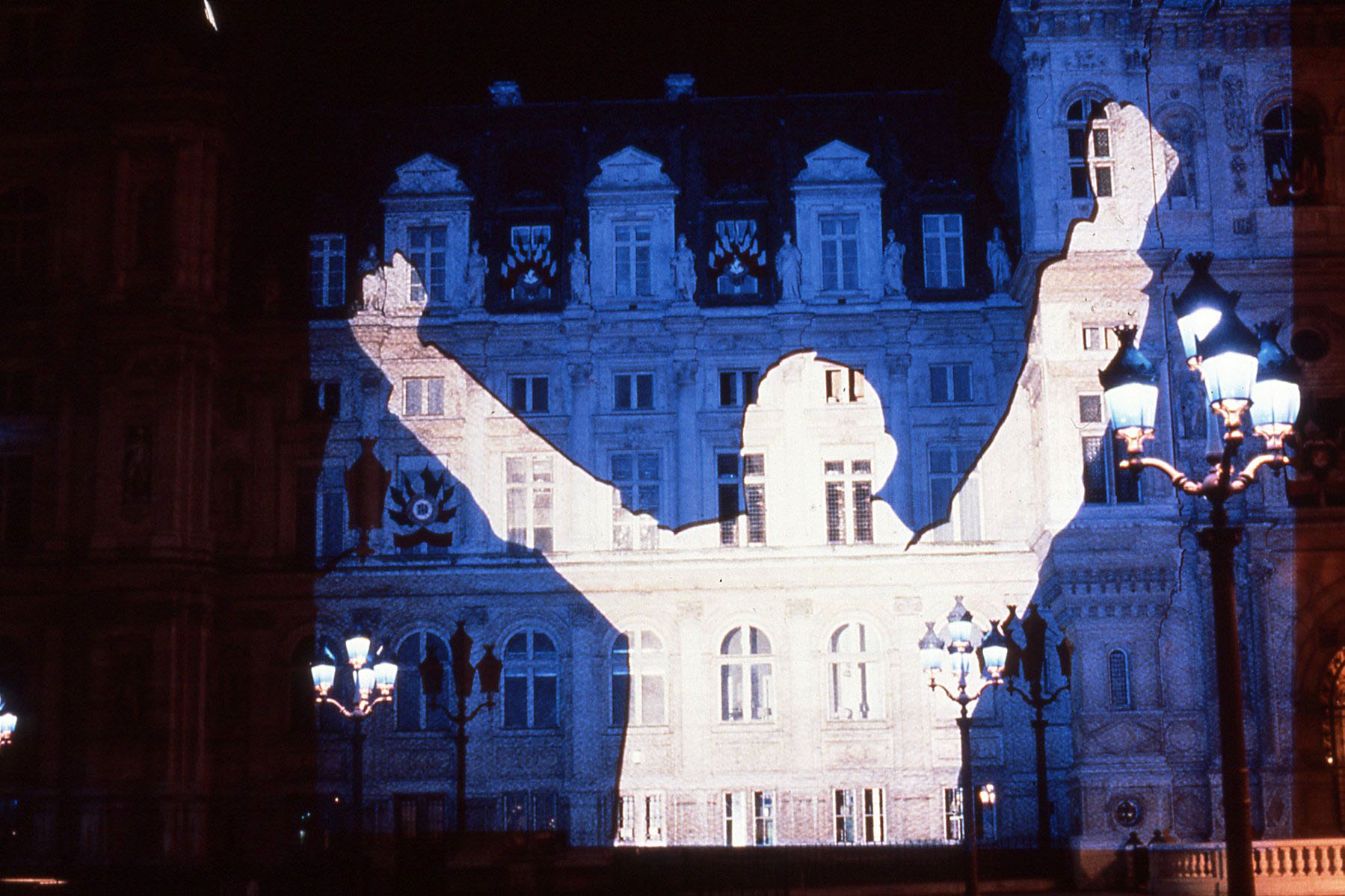
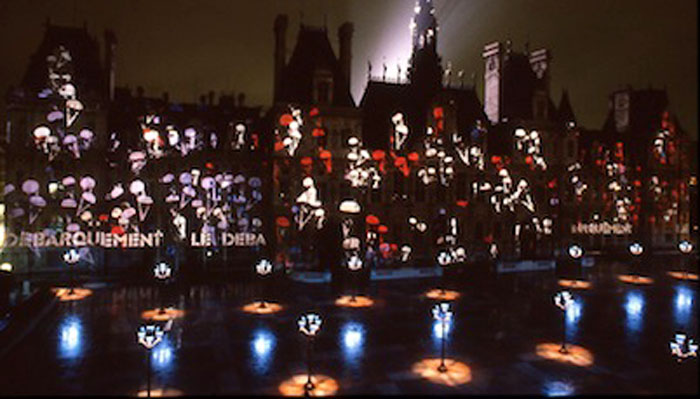
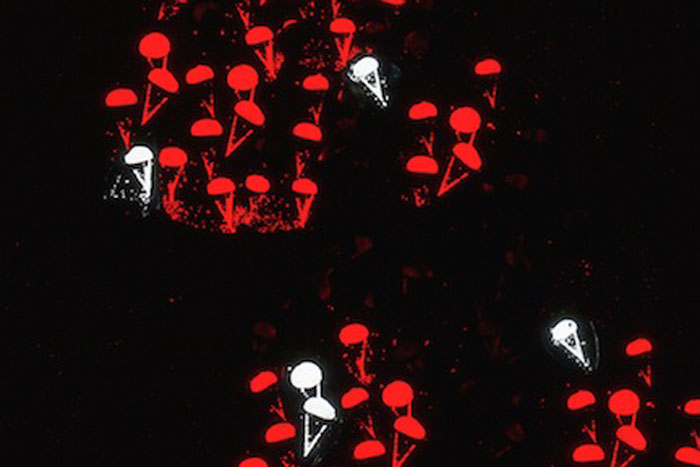
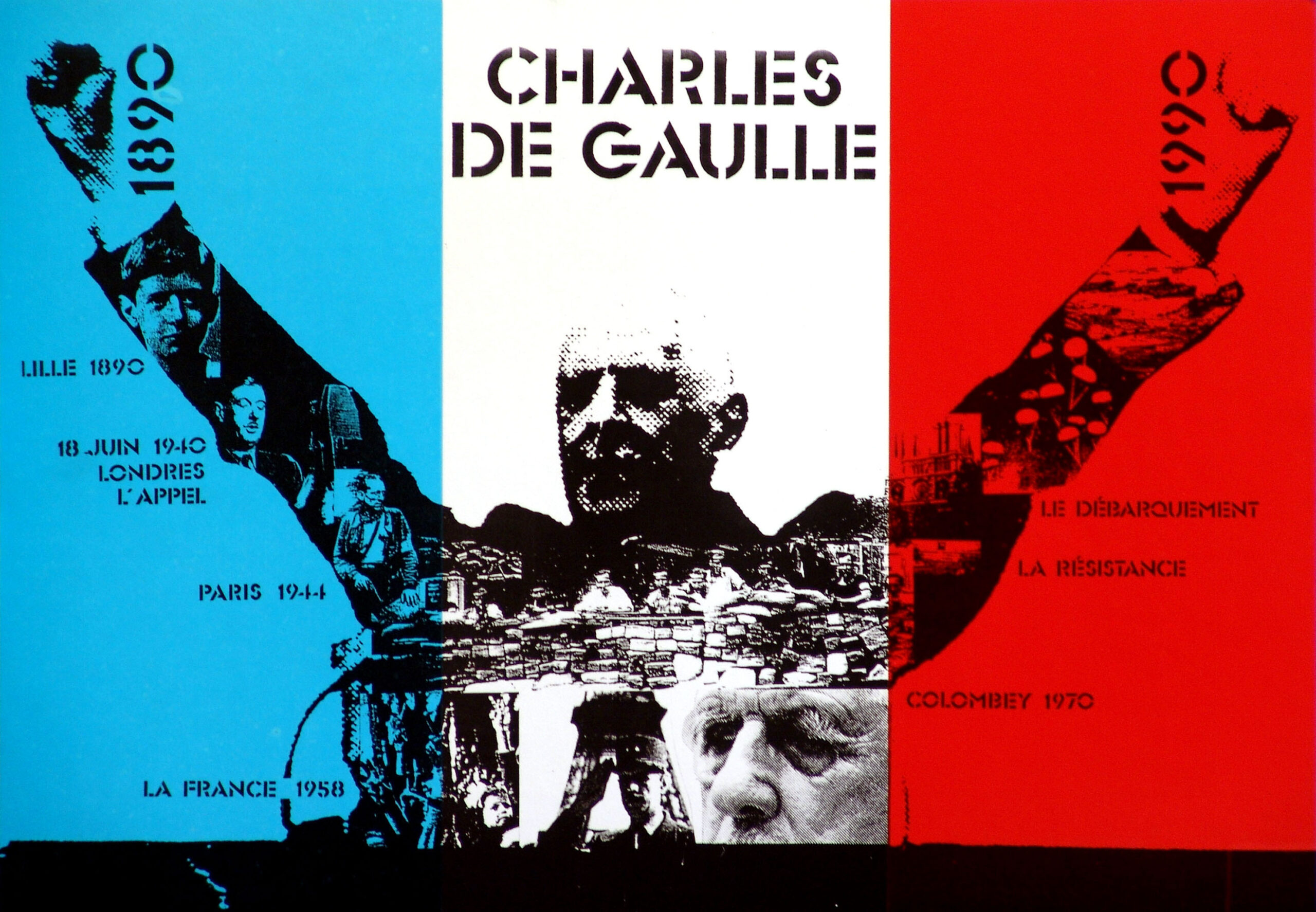
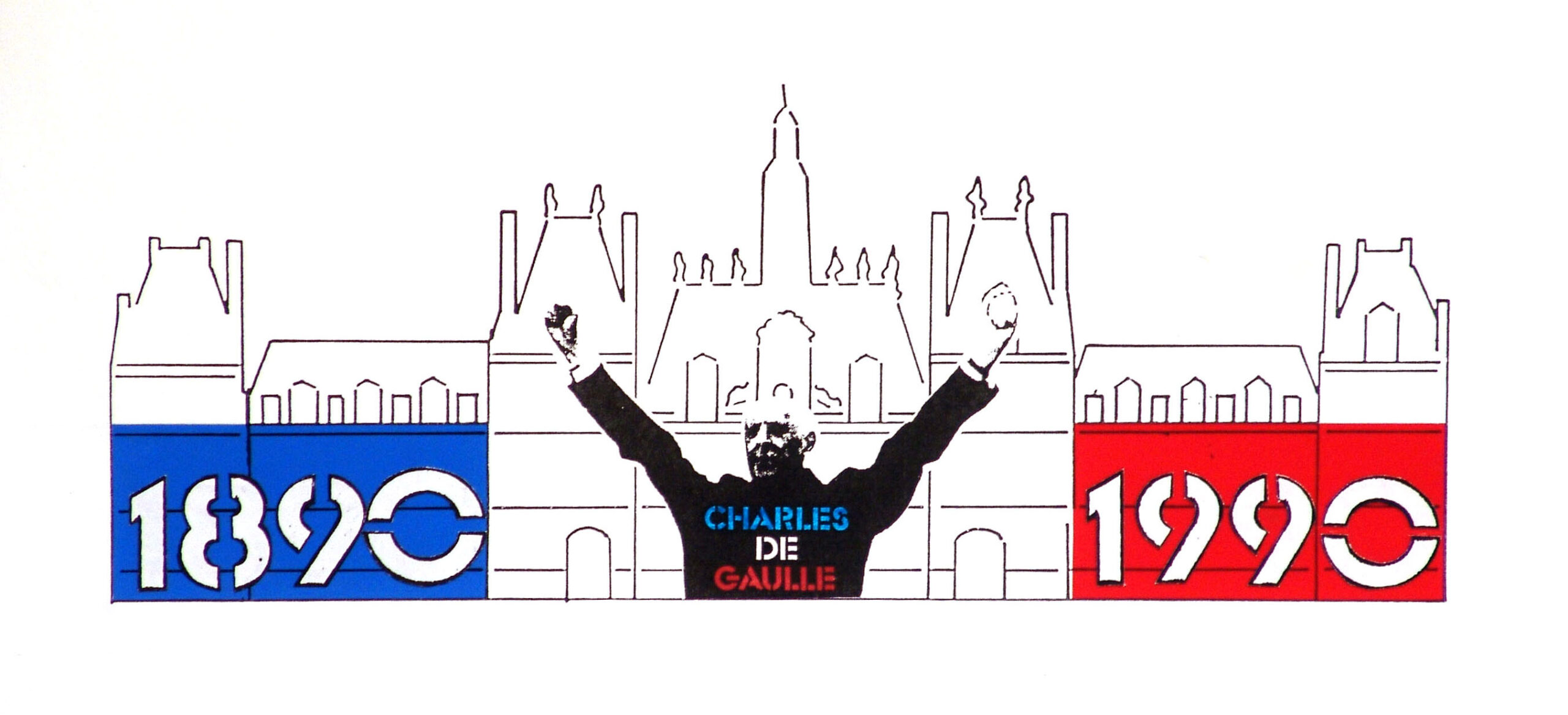
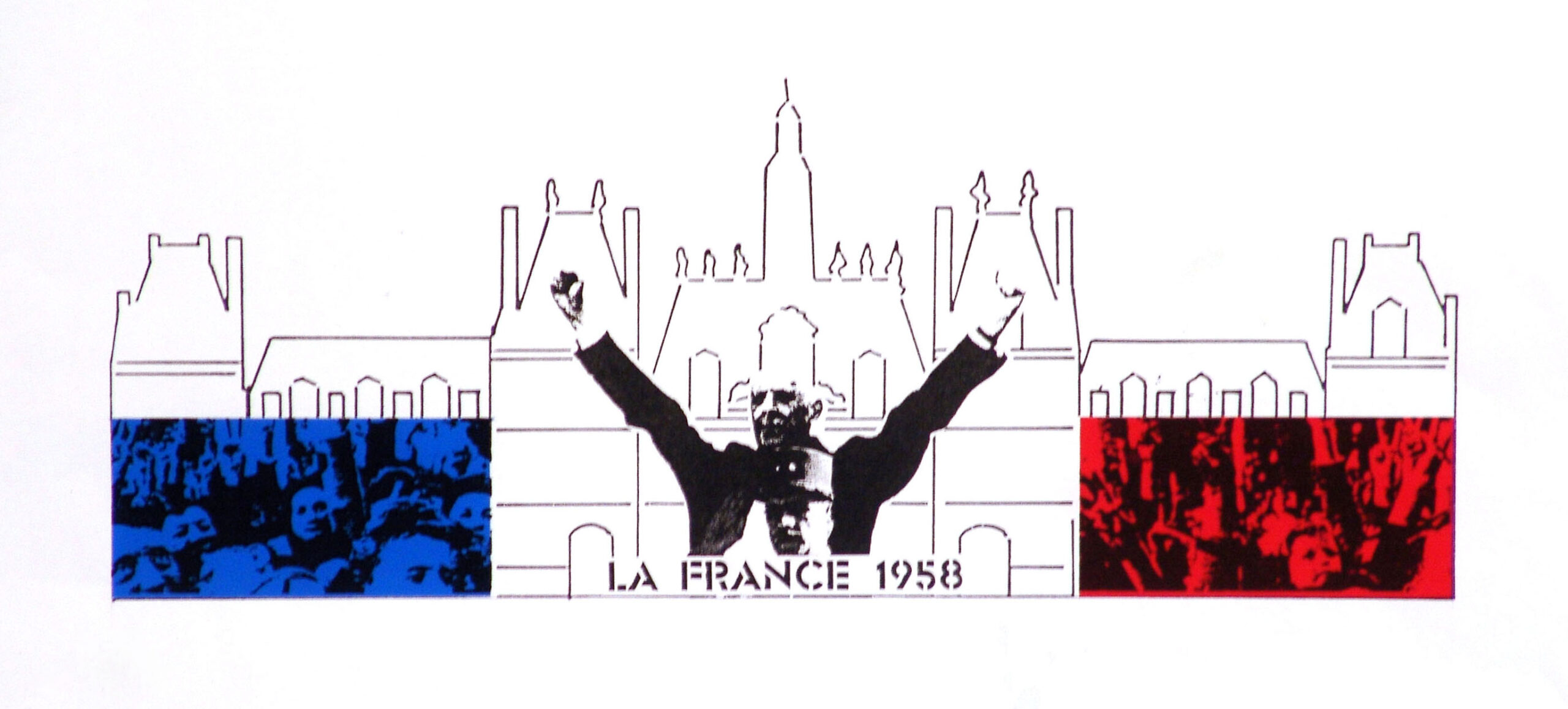
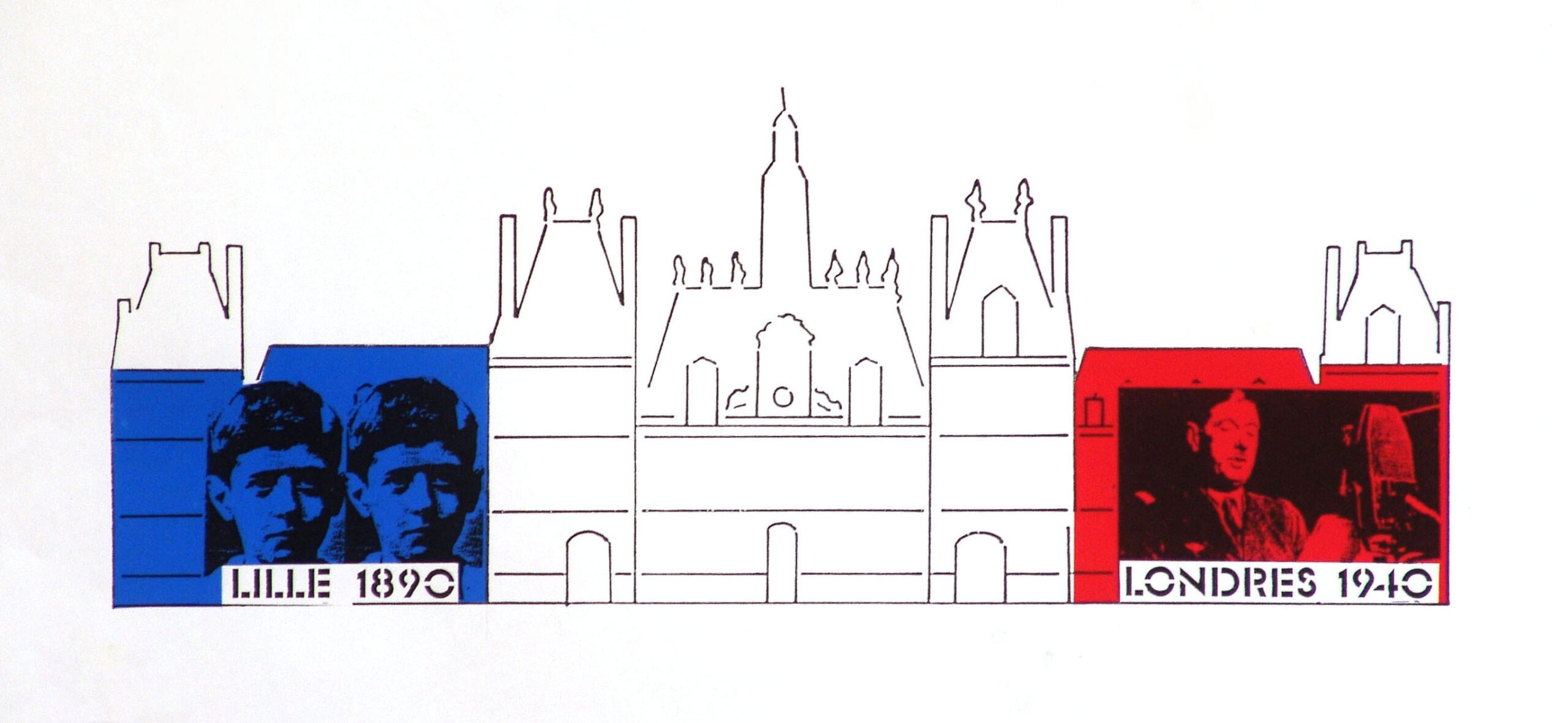
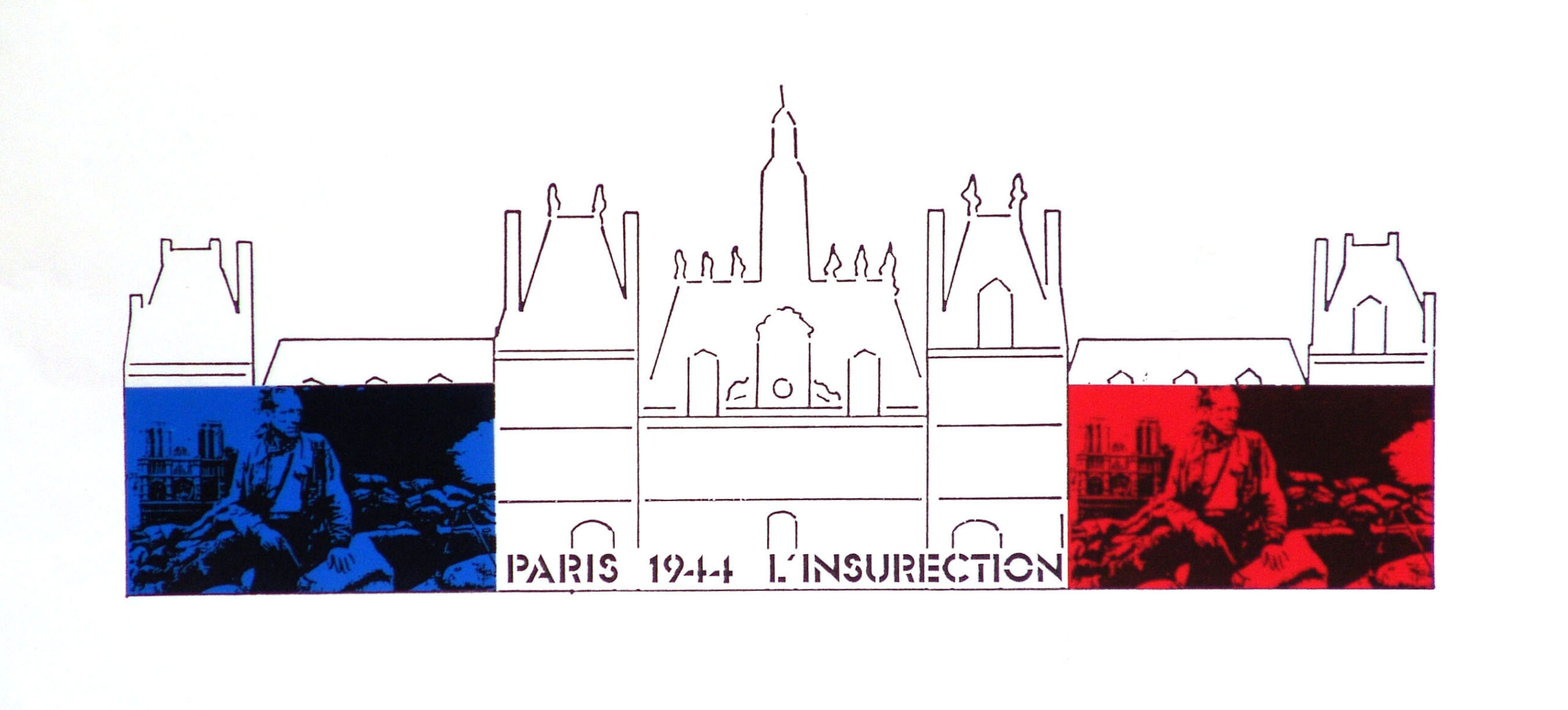
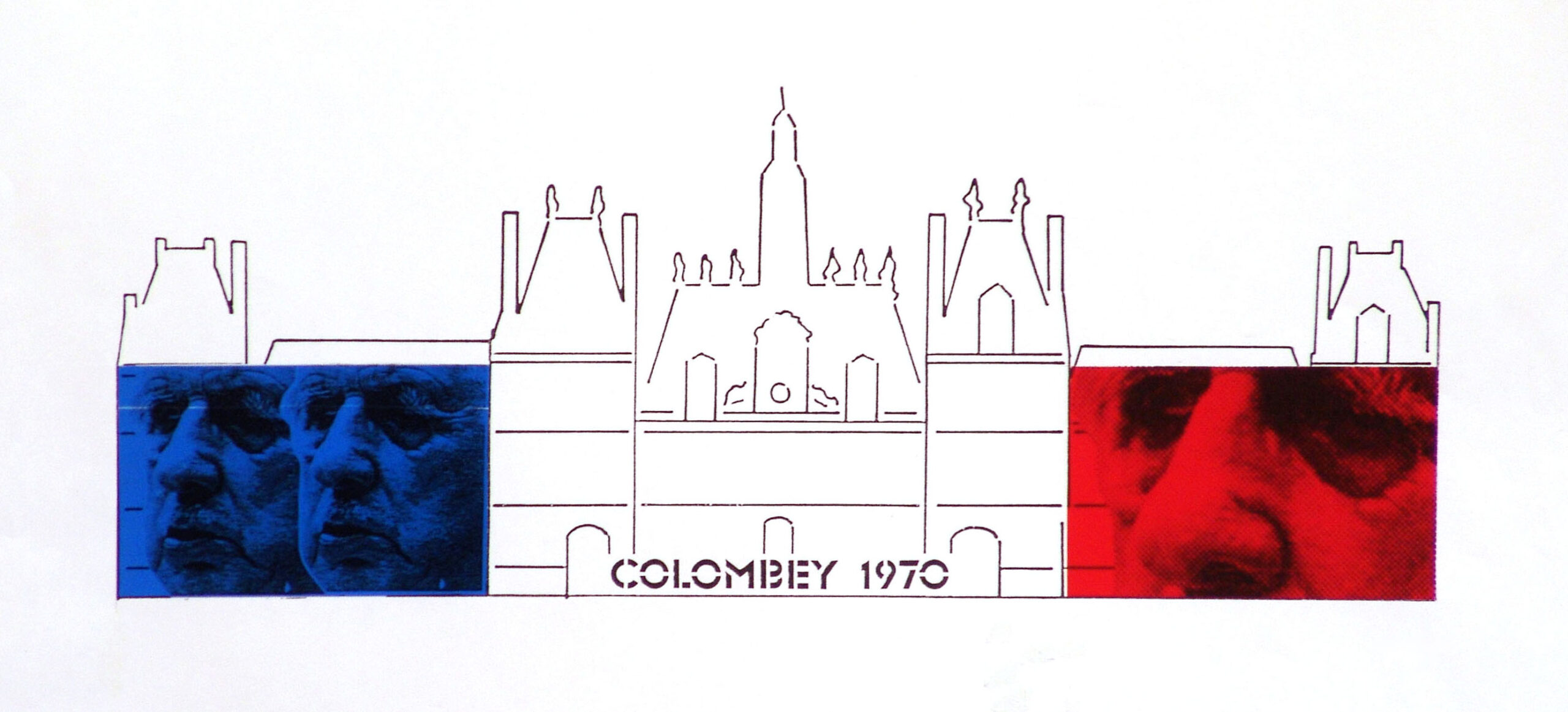
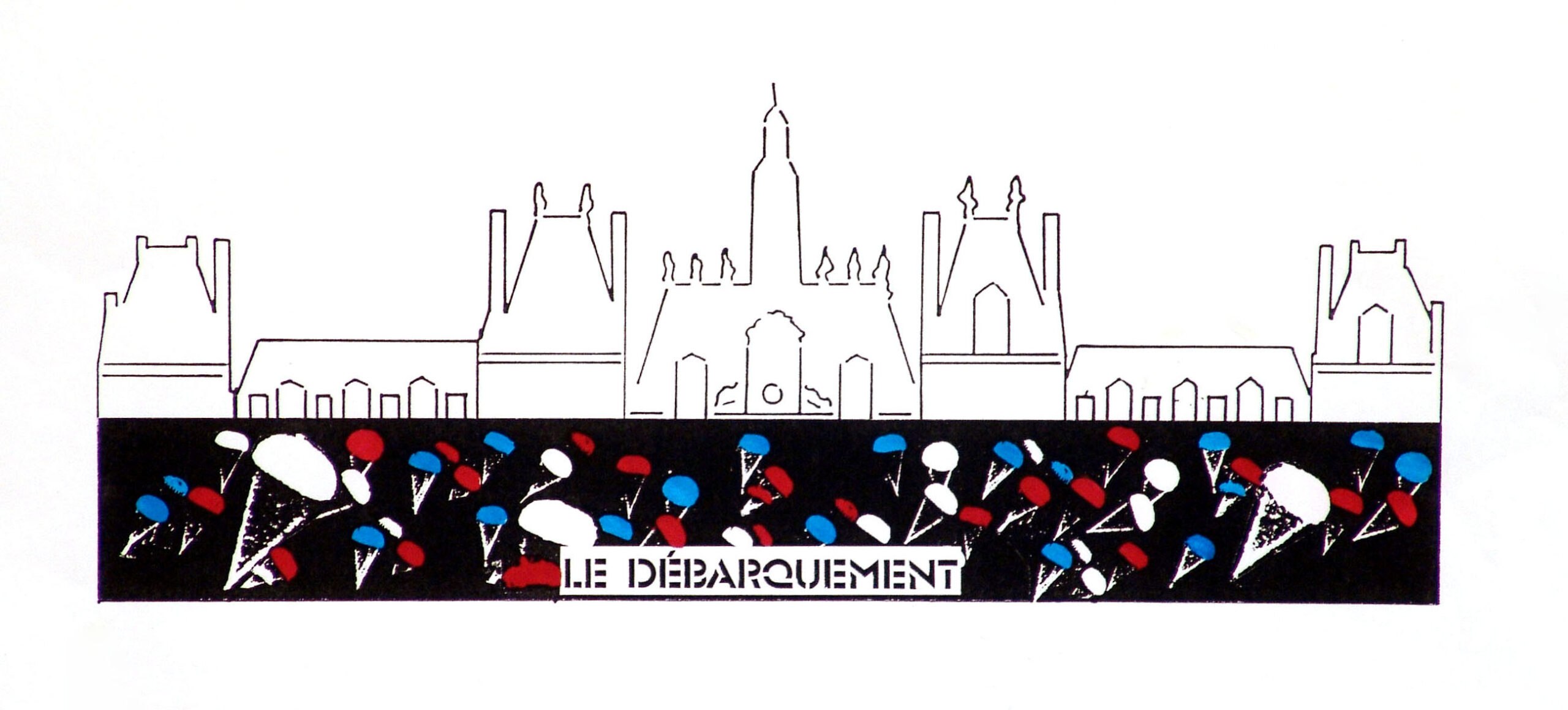
Decoration design of the Paris City Hall (Hôtel de Ville de Paris) commemorating the 100th birthday of General Charles de Gaulle’s birth. The original design size 21 × 30 cm was transformed into animation by Contrejour. The film was projected onto the City Hall facade at night for ten days.
Bibliography:
M. Rouard-Snowman, Roman Cieslewicz: Master of Graphic Design, Paris 1993, p. 128.
F. Barré, Roman Cieslewicz (La collection design & designer 021), Paris 2004, p. 72–73, 75.
Roman Cieslewicz. Calmels Cohen, kat. aukc., Drouot-Richelieu, Paris, 18–19 marca 2006, red. L. Calmels, C. Cohen, T. Desbenoit, Paris 2006, ill. 253, p. 77.