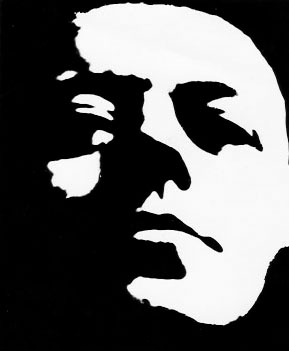
Roman Cieślewicz (1930 – 1996)
1930
Lviv
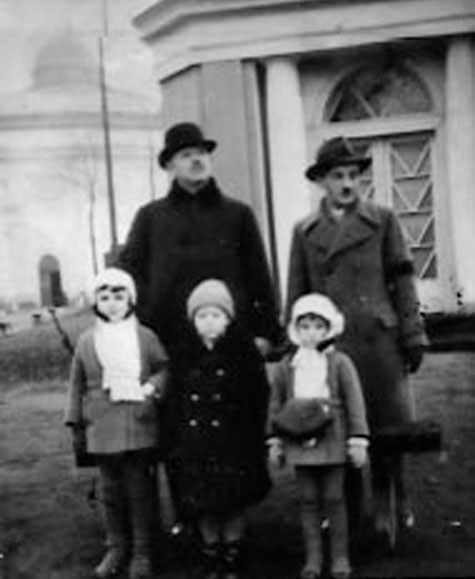
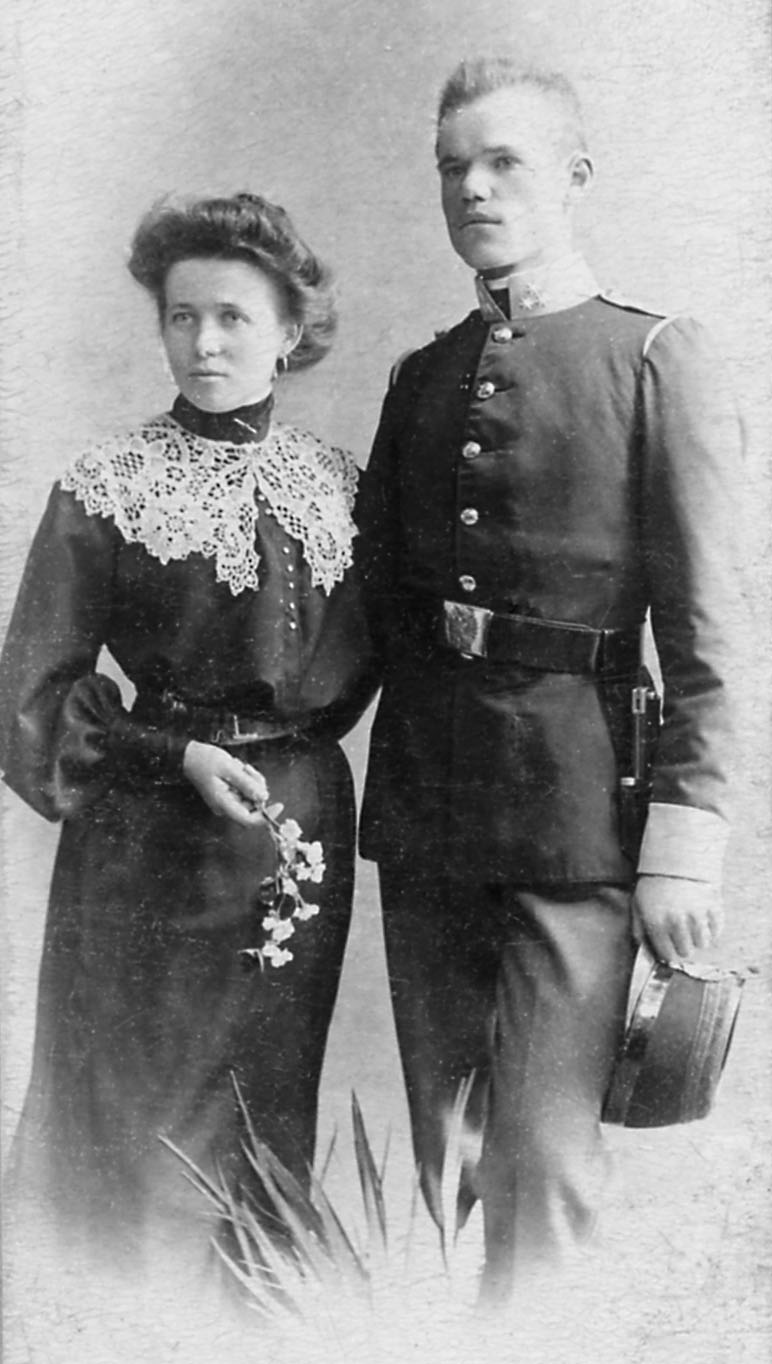
Roman Kazimierz Cieślewicz is born in Lviv on 13 January 1930 as the third son of Sabina nee Mielnicka (d. 1981) and master tiler Leon (d. 1947). He has two elder brothersMieczysław (1914 – ca. 1956 in London) and Tadeusz (d. 1985 in Opole), and sister Maria (d. 1943 in Lviv, buried at Lychakiv Cemetery). The family reside at 11a Św. Zofii St. (now Ivana Franko).
He started his education at the Maria Konopnicka Primary School at 10 Zielona St. His brother Mieczysław, who studied under Prof. Ludwik Tyrowicz at the graphics department of the State School of Arts and Crafts in Snopkowska St., is a paper artist and e.g. decorates the interiors of the exhibition pavilions at the Eastern Trade Fair; after the outbreak of World War II, he leaves with the Polish troops for Romania1.
Roman attends the same school during the occupation and studies in the carpentry department, as only crafts departments were available to Polish youths. Early on, he starts learning to draw. At first, he is fascinated by watching his older brother’s work and drawing tools; then he studies under Stanisław Kaczor-Batowski (1866-1946), a Polish battle painter and co-author of the Panorama of Racławice. He receives drawing lessons as payment for his father’s work in rebuilding Batowski’s villa and studio after it was bombed by the Germans.
1 The memorabilia in Roman Cieslewicz’s archive at the IMEC help reconstruct his successive places of stay: from Romania he was sent to the Altengrabow prisoner-of-war camp (1941), then to the French forces in Marseilles (1942) and Aix-les-Bains (1944), and after the war to Monifieth, Scotland (1946).
1939
On 1 March 1939, he becomes a member of the Polish Scouting Association (he will take the oath after the war, in Krakow, in 1947).
In June 1946, he leaves Lviv with his parents and brother Tadeusz on one of the last transports.
1946
Opole
The family settled in Opole, at 24 Strzelecka St. Leon Cieślewicz dies in 1947, and his widow makes a living by sewing at home. The first to work at the Groszowice cement plant is his older brother Tadeusz, who in May 1947 is joined by Roman as a draftsman. The director of the cement factory helps Roman to continue his studies: “(…) He asked me: «What are you going to do afterwards?». I tell him: «I would like to study the arts». One day he told me that the party offers stipends, school scholarships, and that one might enrol in the High School of Visual Arts. ‘If you fancy this, I can send a letter and you will receive money from us’ (the factory was to pay, and the party was to back it up as the engine propelling young people to go to art schools)”2.
2 Z. Schubert, Roman Cieślewicz o sobie, o miejscach, o ludziach, in: Roman Cieślewicz 1930–1936 [catalogue of an exhibition in the National Museum in Poznań], ed. A. Grabowska-Konwent, Poznań 2006, p. 17.
1948
Krakow
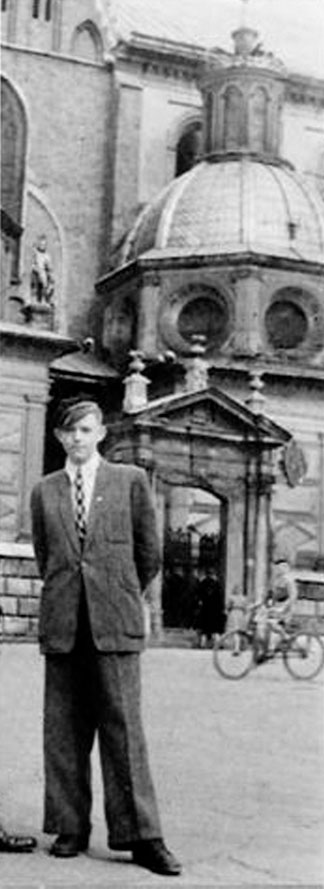
The scholarship helps him to enrol in at the Secondary School of Fine Arts at 18 Juliusz Lea St. in Krakow. The school’s headmaster was Włodzimierz Hodys, an eminent educator and art expert who lived and taught at the State Art Industry School in Lviv during the occupation. Completing his secondary school education with a good result in the final exam allowed Cieślewicz to continue his studies at the Academy of Fine Arts in Krakow.
Shortly after arriving in Krakow, in December 1948, he visits the First Exhibition of Modern Art. Held at the Palace of Art, it is arguably one of the major artistic events in Poland at the time. The exhibition features new trends in art and very innovative works made in various techniques by artists such as Tadeusz Kantor, Maria Jarema, Jonasz Stern, Tadeusz Mikulski, Marek Włodarski, and Jerzy Skarżyński.
“It was an exhibition that was completely unbelievable to me; I hadn’t known anything about Surrealism at all”3.
3 Ibidem, p. 12.
1949
In 1949, on passing his entrance exam in drawing, he is accepted to the Faculty of Painting and Sculpture of the Krakow Academy of Fine Arts. Already as a freshman, he has classes with Zbigniew Pronaszko, Czesław Rzepiński, Ludwik Gardowski, Wacław Taranczewski, Jerzy Bandura, and Karol Estreicher.
1950
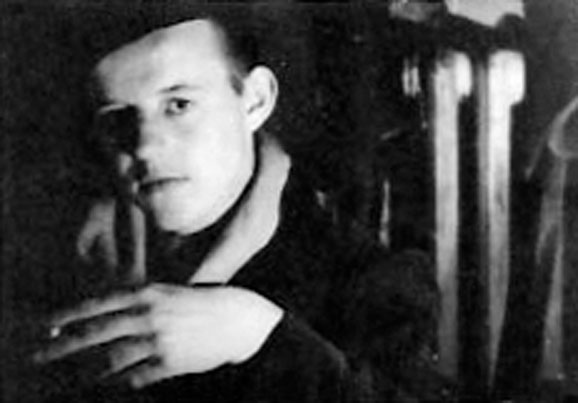
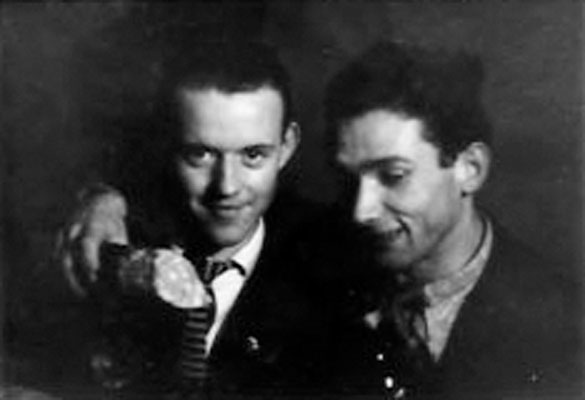
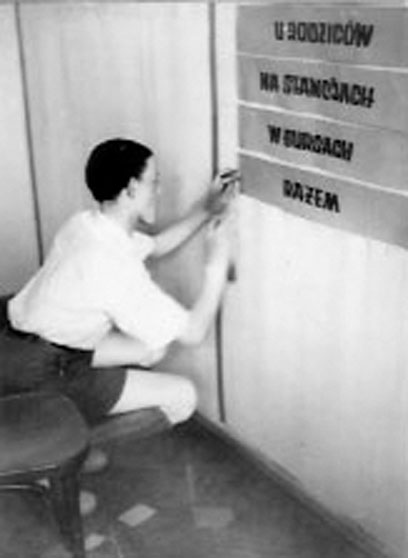
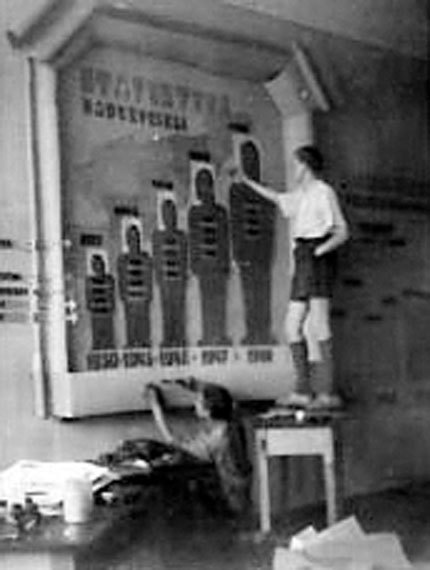
In August 1950, the Krakow Academy of Fine Arts is renamed the Academy of Visual Arts; Cieślewicz continues studying at the Faculty of Graphics and that very year becomes a member of a student research group. He lives in a dormitory near the High School of Visual Arts at 29 Juliusza Lea St.
Later, in interviews he would recall older friends from the Academy of Fine Arts; as a freshman, he looked up to them and aspired to join their circle (e.g. Andrzej Wajda, Ryszard Brzeski, Jan Tarasin, Walerian Borowczyk, and Jerzy Tchórzewski) and that of students of the nearby State Higher Theatrical School, an important group for Cieślewicz (e.g. Zbigniew Cybulski and Bogumił Kobiela) and Roman Polański, who was not accepted as a student yet lived in Krakow at that time.
Włodzimierz Hodys, who teaches art history at the Academy of Fine Arts, is one of the most important people for the young student of graphic art. Cieślewicz will remember the uniqueness of his professor,4 the evenings he held in the Pałac pod Baranami, his home filled with books, as well as his versatile knowledge and expertise in classical and modern art. Apart from Hodys, the biggest impact on Cieślewicz’s education was exerted by the graphics professor Ludwik Gardowski and his assistant Jan Szancenbach. In Gardowski’s studio, senior student Witold Skulicz teaches younger colleagues how to design letters, while classes in graphic composition for books and illustration are taught by Witold Chomicz. Cieślewicz wants to do his degree under Jerzy Karolak, who teaches fourth-year graphic composition and whom he considers an outstanding poster artist. Ultimately, however, after Karolak is taken away from the school for health reasons, he is tutored by Stefan Maciej Makarewicz in his studio.
4 M. Reinhard-Chlanda, Włodzimierz Hodys – between Paris and Kraków, [in:] Paris et les artistes polonais 1945-1989 / Paris and the Polish Artists 1945-1989, red. M. Geron, J. Malinowski, J. W. Sienkiewicz, Wydawnictwo Uniwersytetu Mikołaja Kopernika, Toruń 2018.
1951
In 1951, at the invitation of Włodzimierz Hodys, with Jerzy Karolak and Jan Szancenbach, he completes decorations commemorating Joseph Stalin’s birthday. Designed by Tadeusz Kantor and Maria Jarema, the decorations are installed in Dom pod Baranami. This additional paid work, which he ironically called the “second salon of Surrealism”, was a kind of distinction for his very good academic record and social commitment. This is recorded in his student’s book, which will later facilitate access to artistic scholarships, which will be his subsistence as a student.
Roman Cieślewicz later emphasised in interviews that the Jagiellonian University library played an important educational role at the time. In an era of minimal access to information about contemporary art outside the country, it was here that one could read, e.g. the inter-war artistic avant-garde magazine Blok.
1953
He completes his studies on schedule. In August 1953, he does his student internship at the House of the Polish Word (Dom Słowa Polskiego), the largest printing works in the country, and a year later, he completes the four-month internship necessary to obtain his diploma at Graphic Arts Publishing House (Wydawnictwo Artystyczno-Graficzne WAG). He graduated on 22 June 1954 and passed his final exam with a very good result a year later, on 11 June 1955.
1955
Warsaw
Cieślewicz moves to Warsaw on receipt of his diploma. He gets employed as a graphic artist at Graphic Arts Publishing House (Wydawnictwo Artystyczno-Graficzne WAG) publishers at 10 Smolna St., where he was an intern earlier. Eminent editor Henryk Szemberg is director of the publishing house at the time. Cieślewicz’s first job as editor of leaflets is supervised by Jan Słomczyński.
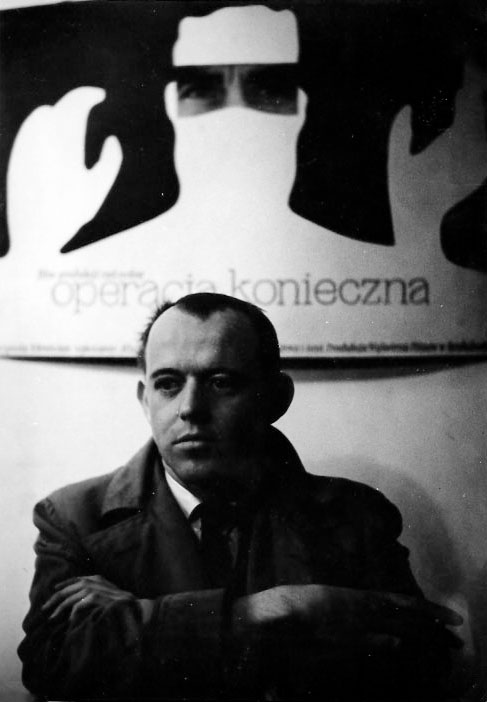
At the same time, he designs film posters commissioned by the Film Lease Headquarters (Centrala Wynajmu Filmów CWF), its headquarters in Konstytucji Sq.5 The film posters by a variety of designers will be the embryo of the so-called Polish School of Poster, which Cieślewicz joins. His first implemented project is a poster for the Bulgarian film The Heroes of September (1954) and is especially memorable thanks to his poster for the Hungarian production The Birth of Menyhért Simon (1955), where he deliberately uses changeable scale. Initially he applies mainly the painting technique, popular in Poland at that time, and his successive projects, merging painting and photography, are increasingly innovative and original.
In December 1955, he receives the Tadeusz Trepkowski Award6 for the propaganda poster titled I Do Not Come Back! Anders. Its theme is linked to the author’s personal experience, who as a young boy lost contact with his older brother during World War II. Cieślewicz blames General Anders for the loss of his brother, who will remain an émigré until his death.
Mieczysław Berman, a Polish graphic artist whom Cieślewicz meets soon after his arrival in Warsaw, will be of great importance for the artist’s further development. The origins of this friendship are unknown. According to Cieślewicz’s account, the only source of knowledge on the subject, he frequently visits Berman in his flat at 4 Narbutta Street. It is most likely here that he hones his skills, acquiring practical and theoretical knowledge of photomontage, in which Berman, 27 years older than him, had specialised for years. Here he also has access to an extensive library, including publications on the Russian avant-garde and German photomontage. Berman reveals the secrets of this art to the young graphic designer, fascinated by the potential of this art form. Soon, Cieślewicz tries his hand at it and makes full use of the technique of photomontage in his art after his departure for France.
“First of all, never forget that photomontage is an insanely difficult thing and has nothing but easy. I will now show you Heartfield’s and Tschichold’s whole series of photomontages for his books and you will see what was going on at the Bauhaus…”7
5 Waldemar Świerzy, who arrived in Warsaw a year prior to Cieślewicz, helped the latter establish the first contacts at the Film Rental Authority, cf.: W. Świerzy, Plakat nie lubi oszustwa, in: Roman Cieślewicz…, p. 46.
6 Cieślewicz met Trepkowski during his internship at WAG, shortly before the latter’s death in December 1954.
7 Z. Schubert, Roman Cieślewicz o sobie, o miejscach, o ludziach, in: Roman Cieślewicz…, p. 14.
1956
With Walerian Borowczyk, Jerzy Czyż, Duszan Poniż, Alina Scholtz, and Alina Szapocznikow, he designs the Polish pavilion for the Expo 58 show in Brussels. Despite winning one of the first two equal prizes, the project is not implemented due to its high costs. It is probably during this work that Cieślewicz gets to know Alina Szapocznikow better.
Becomes a member of the international society of graphic artists Alliance Graphique Internationale (AGI) and of the Association of Polish Artists and Designers (ZPAP).
Between 196 and 1959, he designs book covers for Czytelnik publishing house.
1957
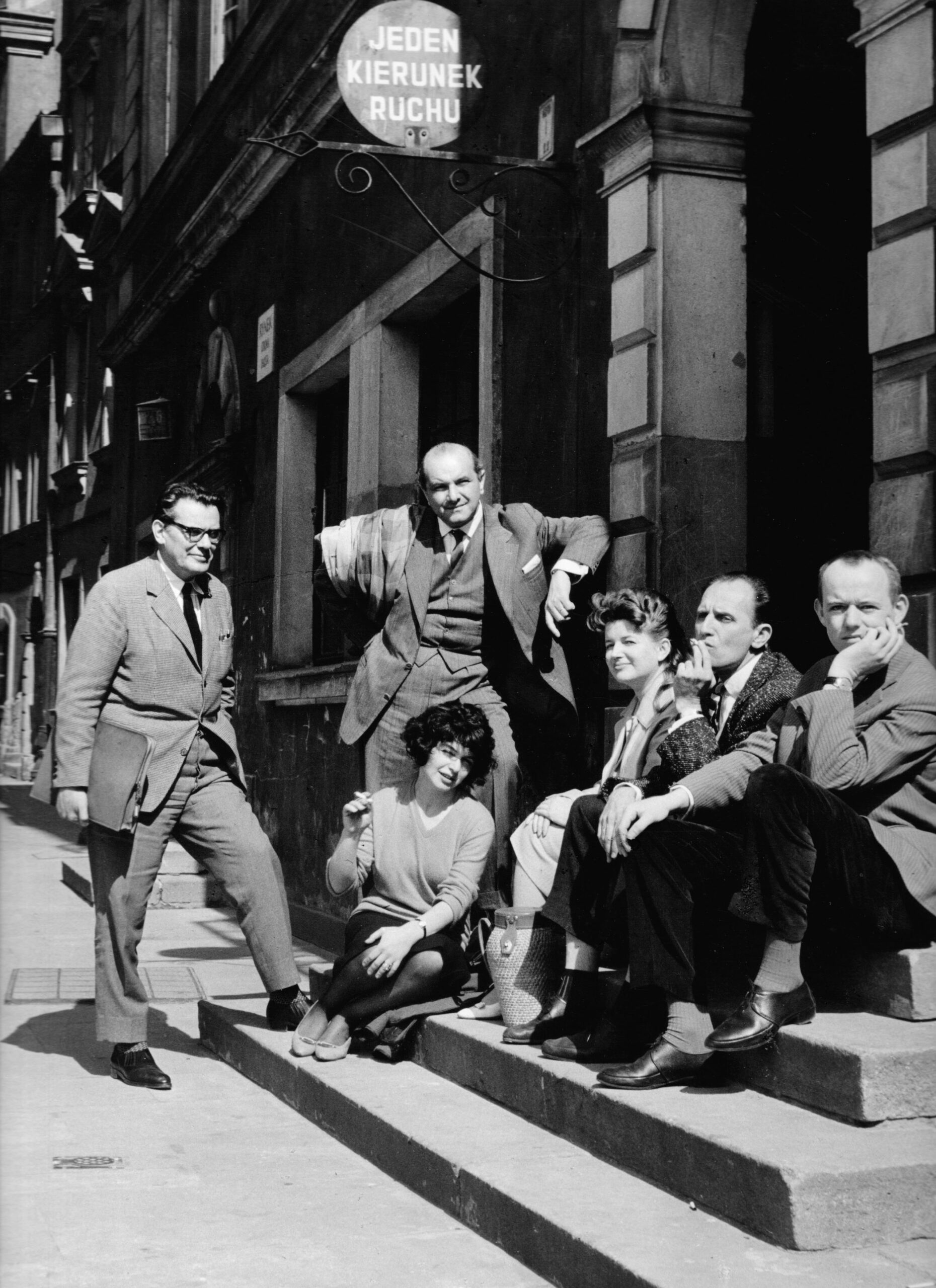
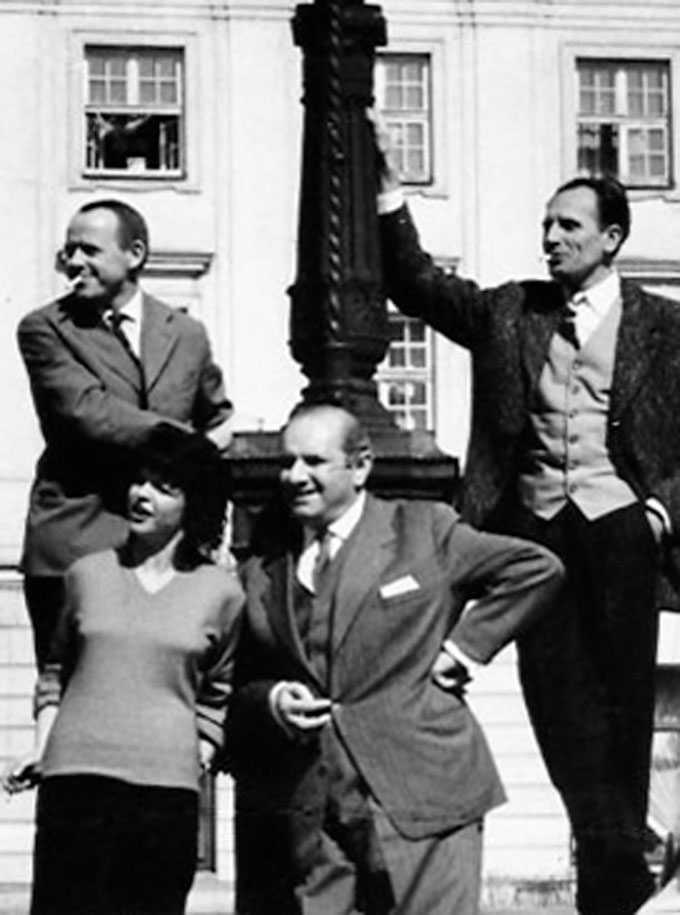
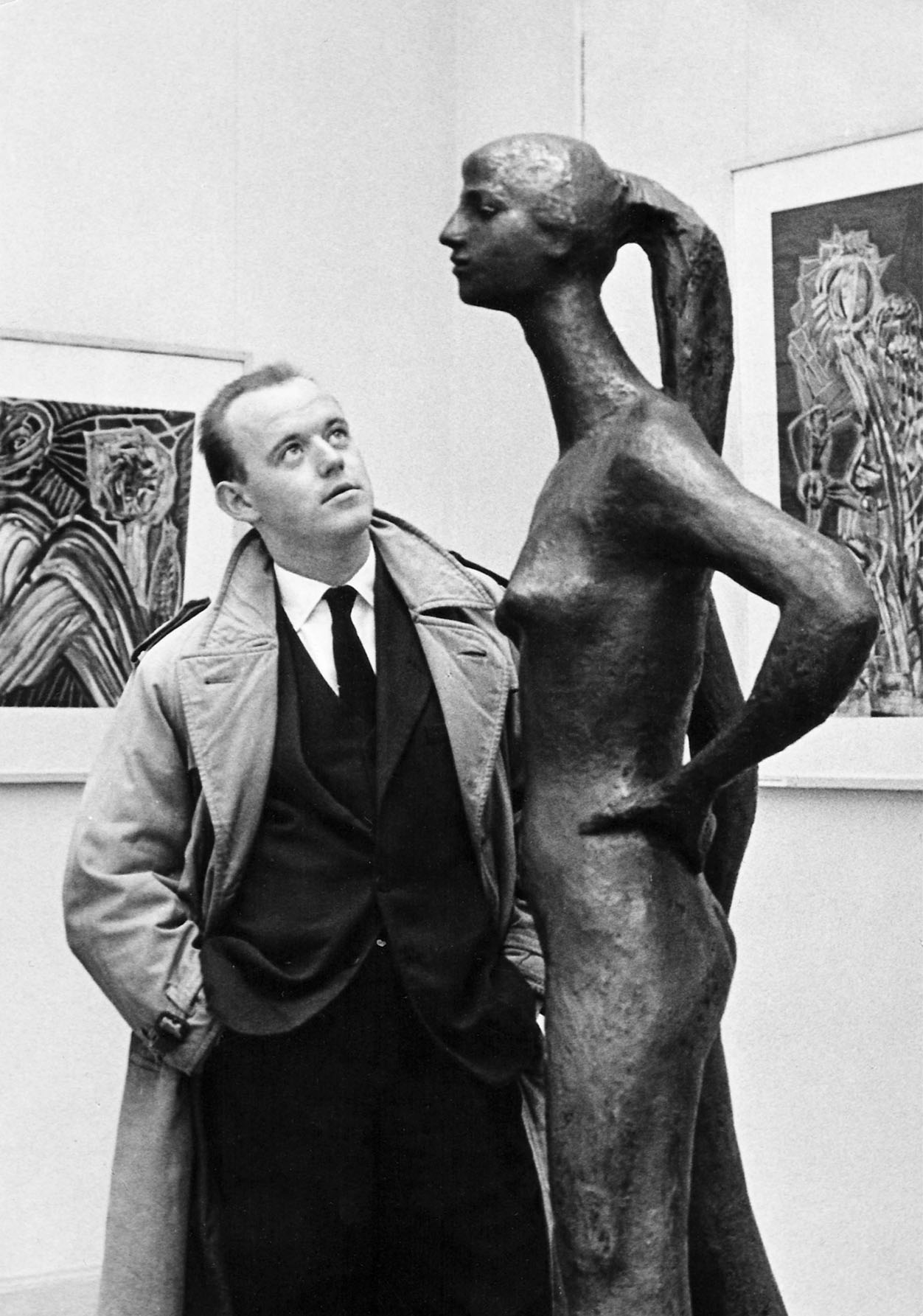
Begins collaboration with the graphic and literary magazine Zebra, where he edits the “Graphic Update” column.
In the summer Alina Szapocznikow leaves Ryszard Stanisławski (the divorce takes place in August the following year), while Cieślewicz moves into a flat at 8/1 Old Market Square, where she lived with her son Piotr Stanisławski. The surviving correspondence indicates that all the family members were in constant touch for the next years.
With Jan Muniak, he designs the Polish industry pavilion for the Leipzig International Trade Fair.
Between 1957 and 1965, he designs book covers for Iskry publishing house.
1958
Cieślewicz designs his first front page for Polska monthly. Published in several languages, the magazine is to promote Polish culture abroad; riding the wave of success of Polish poster artists, it begins to work with graphic designers, giving them full freedom of artistic expression in designing the covers. Between 1956 and 1988, around 25 issues of the monthly had covers designed by Cieślewicz.
With Jerzy Chudzik, Bolesław Malmurowicz and Alina Szapocznikow, he takes part in the international competition for the design of the memorial in Oświęcim. Their joint project, one of seven out of the total number of 426, makes it to the second stage, but is not implemented.
In the same team he takes part in the first stage of the national competition for the design of the Monument to the Heroes of Warsaw. The team receives a distinction of second degree.
1959
Between May 1959 and June 1963, he is graphic editor of Ty i Ja monthly.
The authors of the magazine, Teresa Kuczyńska and Roman Juryś, make Roman Cieślewicz in charge of the visual aspects of the periodical. He designs most of the covers and invites other artists to contribute. The monthly, with a print run of 10,000 copies, sells out in no time and readers are attracted to the new themes presented in a new form. In making the layout, Cieślewicz patterns himself on Western magazines and experiments with photomontage, which in time will become the dominant technique in his work. When he is about to leave Poland for good, he recommends Julian Pałka, then dean of the Faculty of Graphic Arts at the Warsaw Academy of Fine Arts, for his position, and the latter, for lack of time, recommends his students, Elżbieta Strzałecka and Bogdan Żochowski, who will successfully continue Cieślewicz’s vision until the closing down of the magazine in 1973. When in Paris, Cieślewicz will continue collaborating with Ty i Ja, designing covers and writing letters under the pen name “Charpentier” (French for carpenter).
Uses photomontage in the design of an advertising poster for Moda Polska company; the poster will be repeatedly republished.
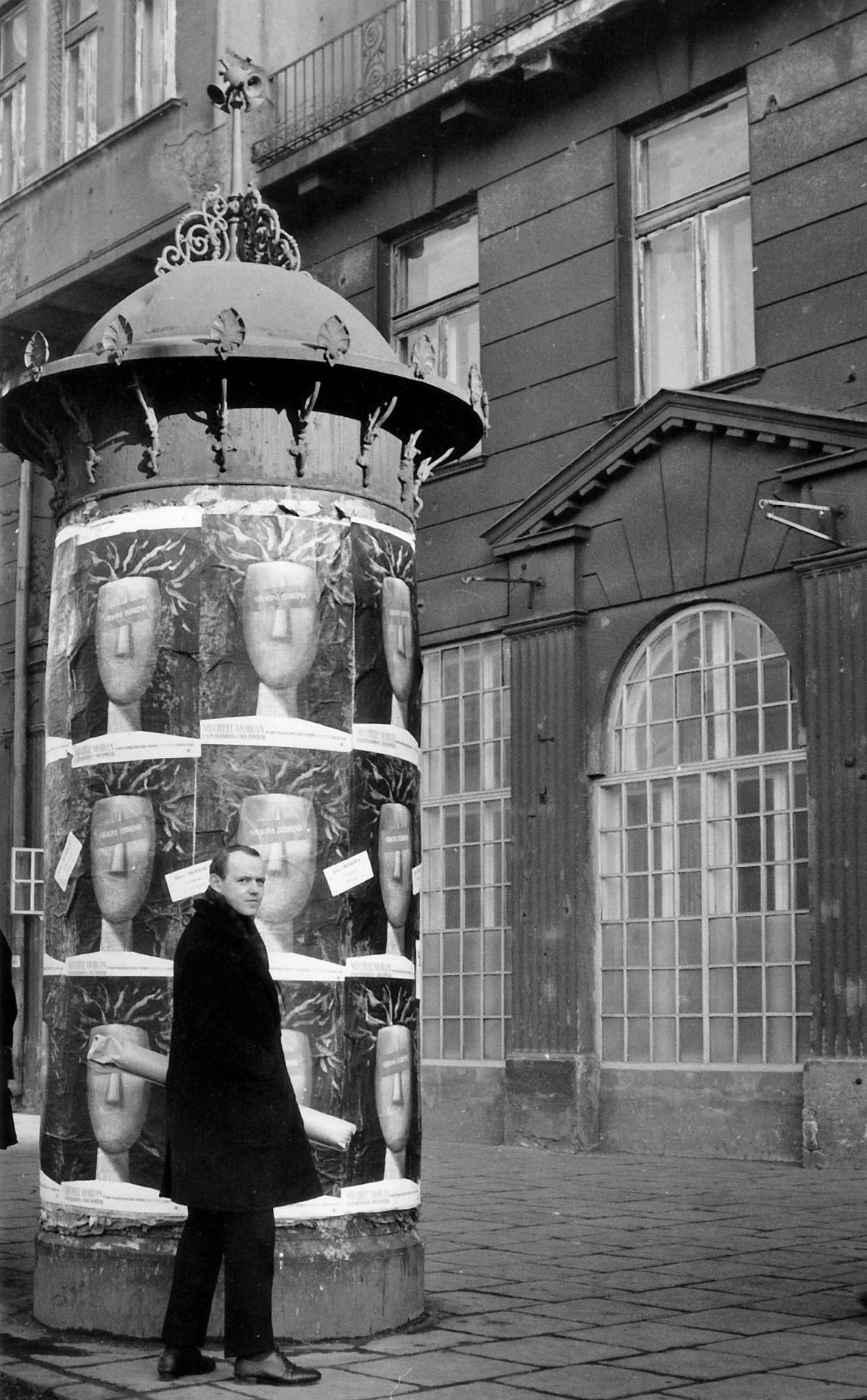
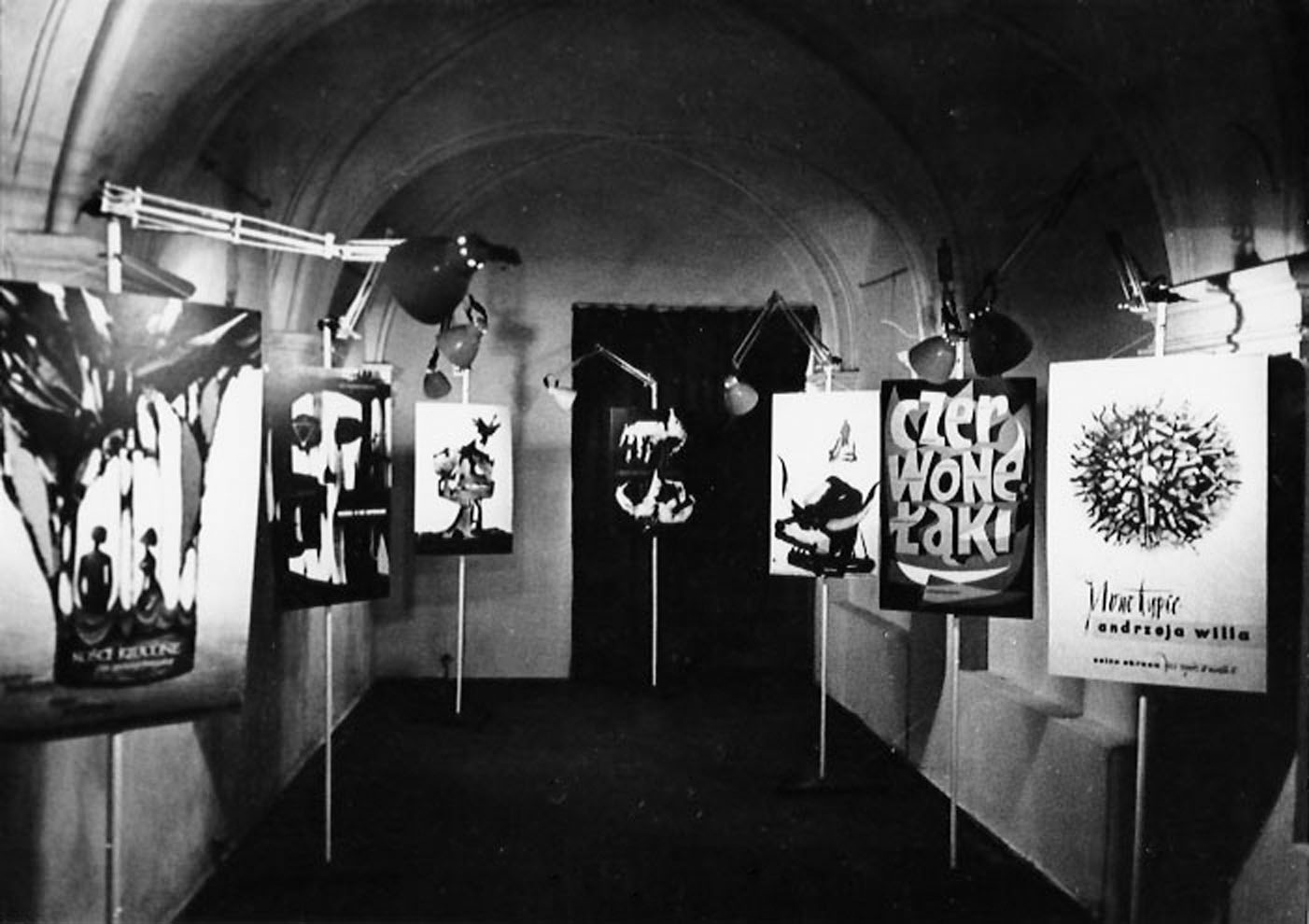
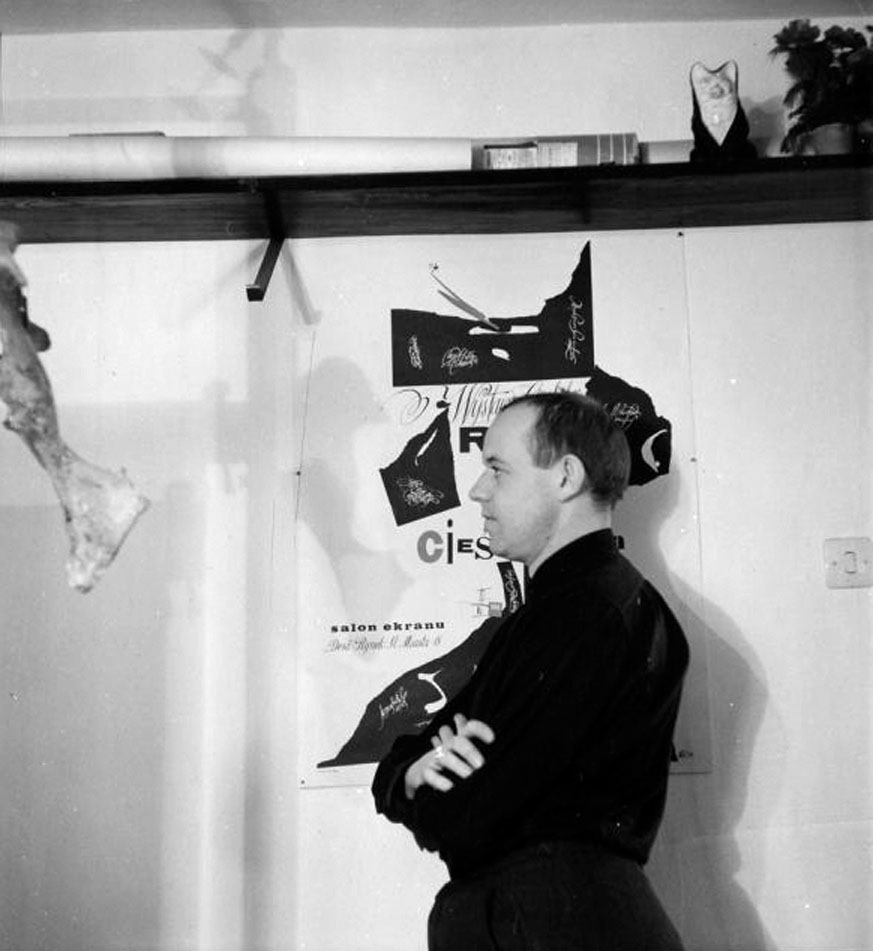
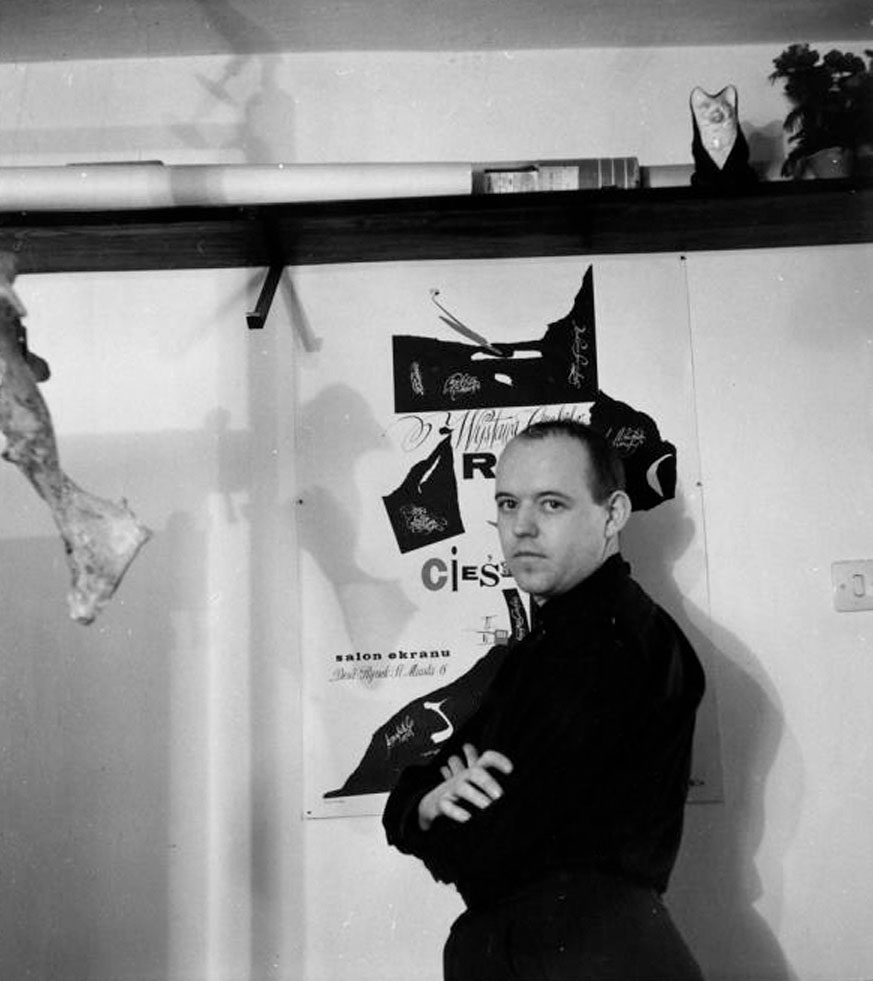
The Desa gallery in the Old Market in Warsaw in its “Salon Ekranu” hosts Roman Cieślewicz’s first solo exhibition.
With Andrzej Gucewicz and Andrzej Strumiłło, Cieślewicz designs the sailing pavilion for the Poznań International Fair.
1960
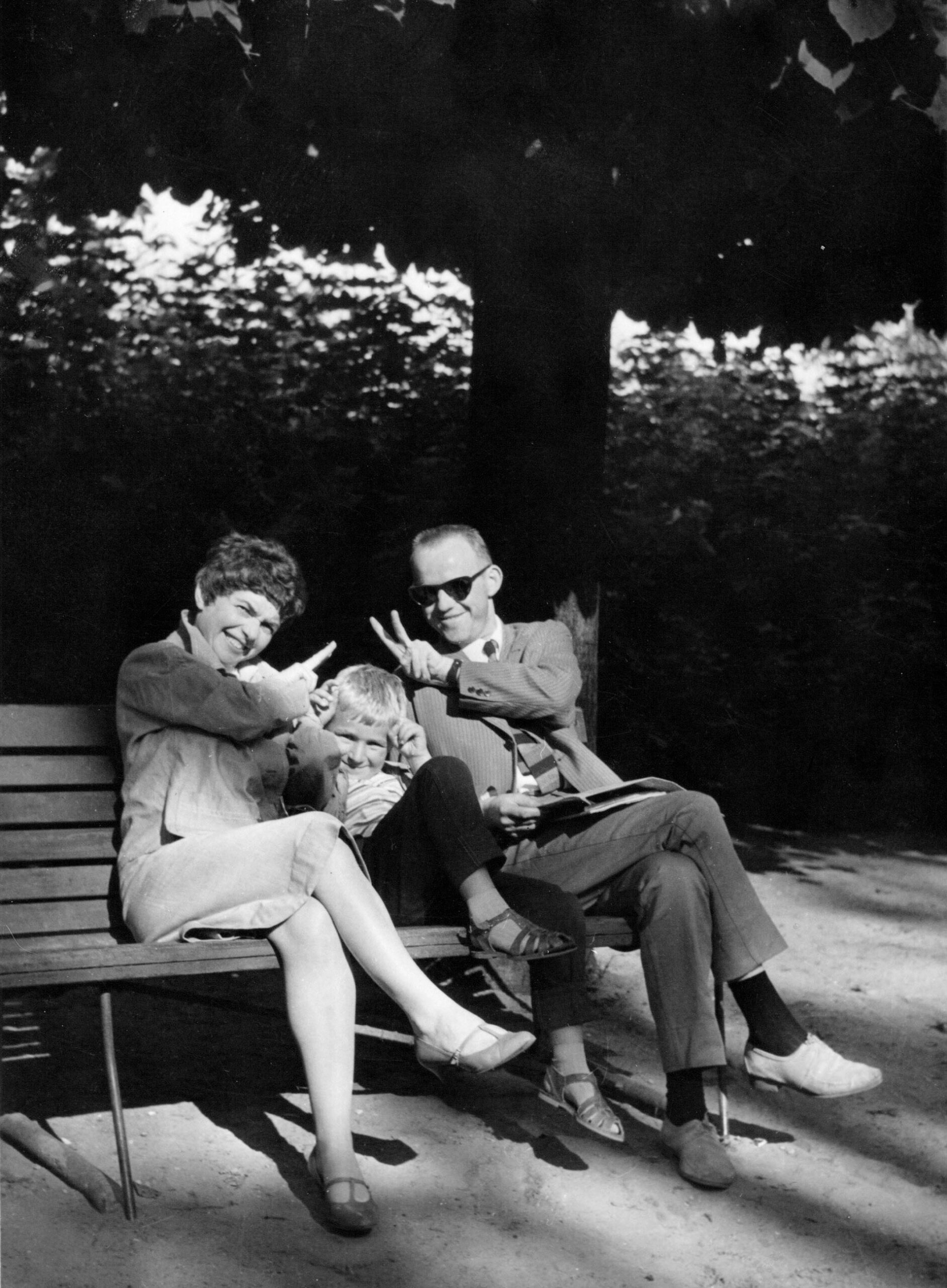
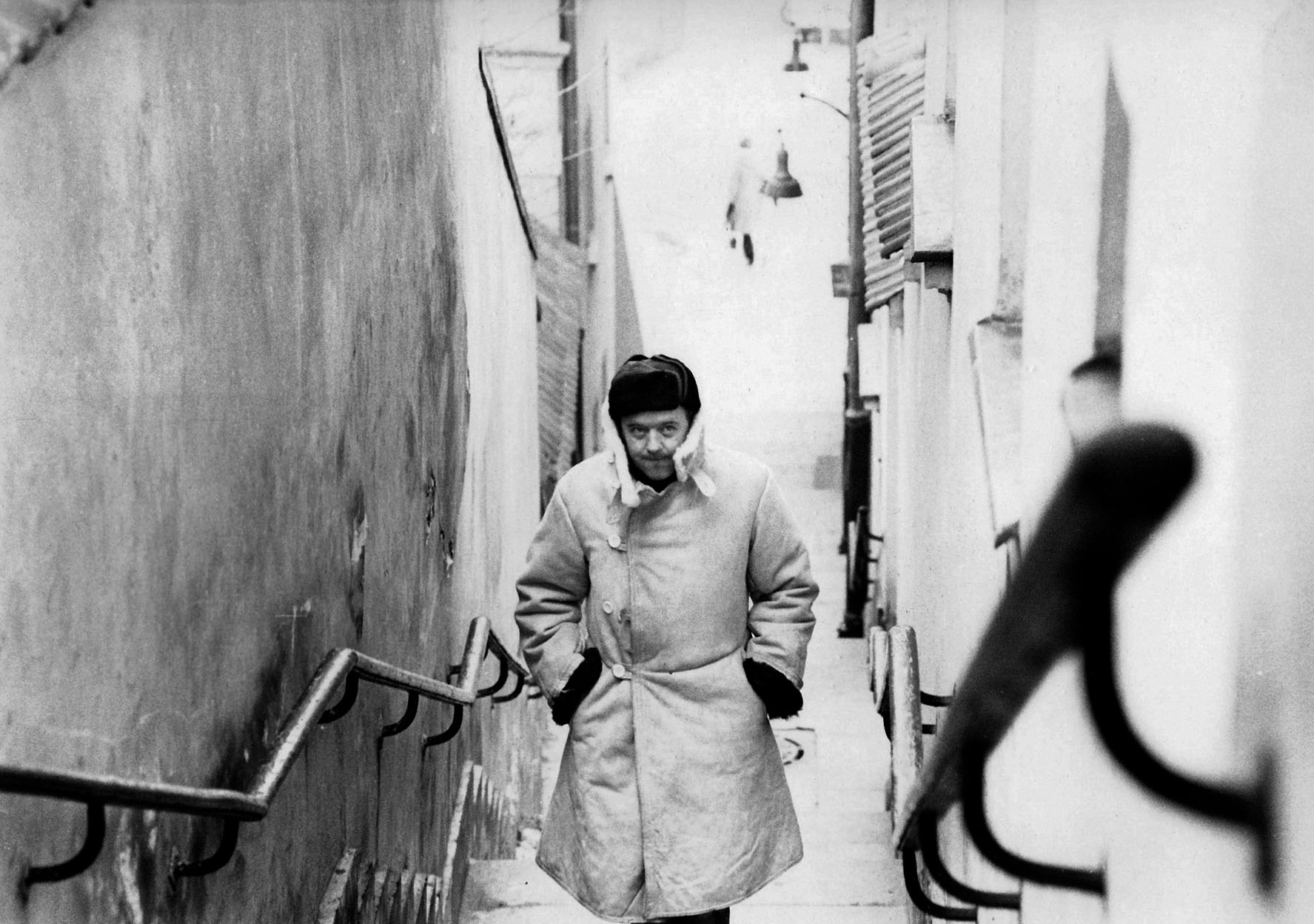
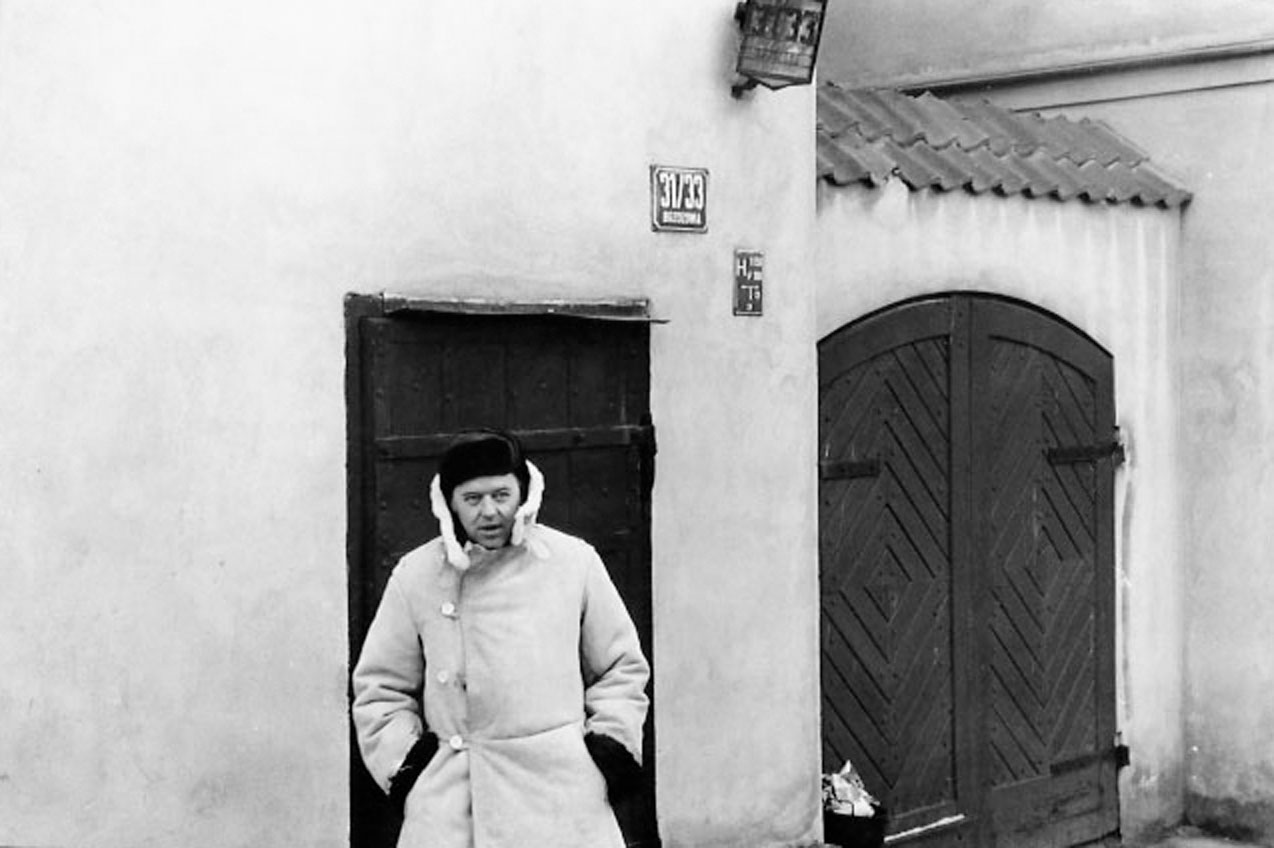
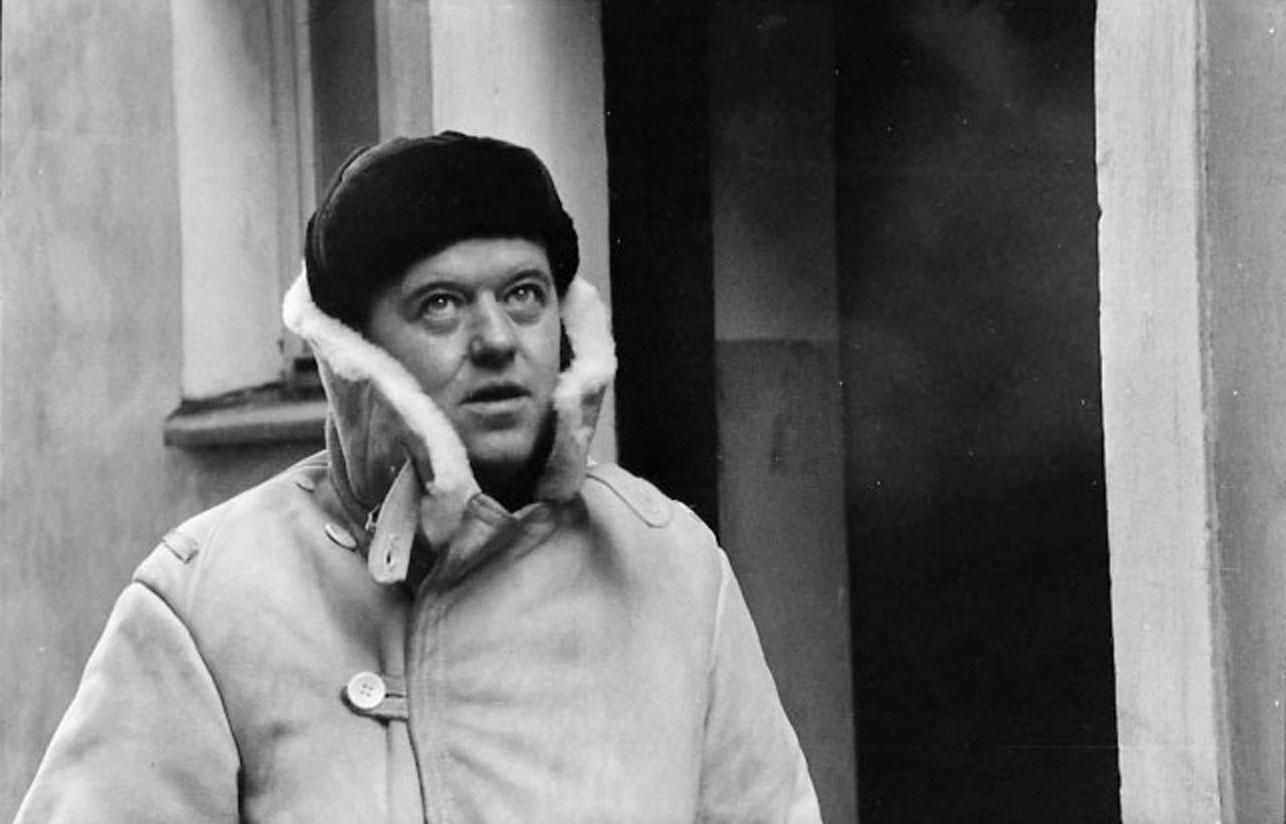
Roman Cieślewicz, Alina Szapocznikow and Piotr Stanisławski move into a new studio at 31/33 Apt. 7 Brzozowa St.
1961
Bohdan Wodiczko, that year appointed director of the Warsaw Opera, introduces prominent contemporary composers to the repertory and commissions posters for the new events from eminent Polish poster artists, e.g. Jan Lenica, Jan Młodożeniec, Waldemar Świerzy, and Henryk Tomaszewski (so-called “Golden series”). Cieślewicz designs around a dozen of them, e.g. Manru (1961), Persephone (1961), Oedipus Rex (1961), The Peaks (1961), The Stone Flower (1961), Don Juan (1961), Prisoner (1962). Repeatedly awarded in competitions for the best poster of the month, they both announced a cultural event to passers-by and helped them interact with a vigorous and intriguing art form.
A vacation trip to Prague with Alina Szapocznikow.
In the Croatian city of Rijeka (then Yugoslavia), a joint exhibition is held of Szapocznikow’s sculptures and Cieślewicz’s prints and posters.
In Beijing he completes another exhibition project, the Elektrim pavilion for an exhibition of Polish industry.
In the period 1961–1963, he designs a few book covers for Wydawnictwa Artystyczne i Filmowe publishers.
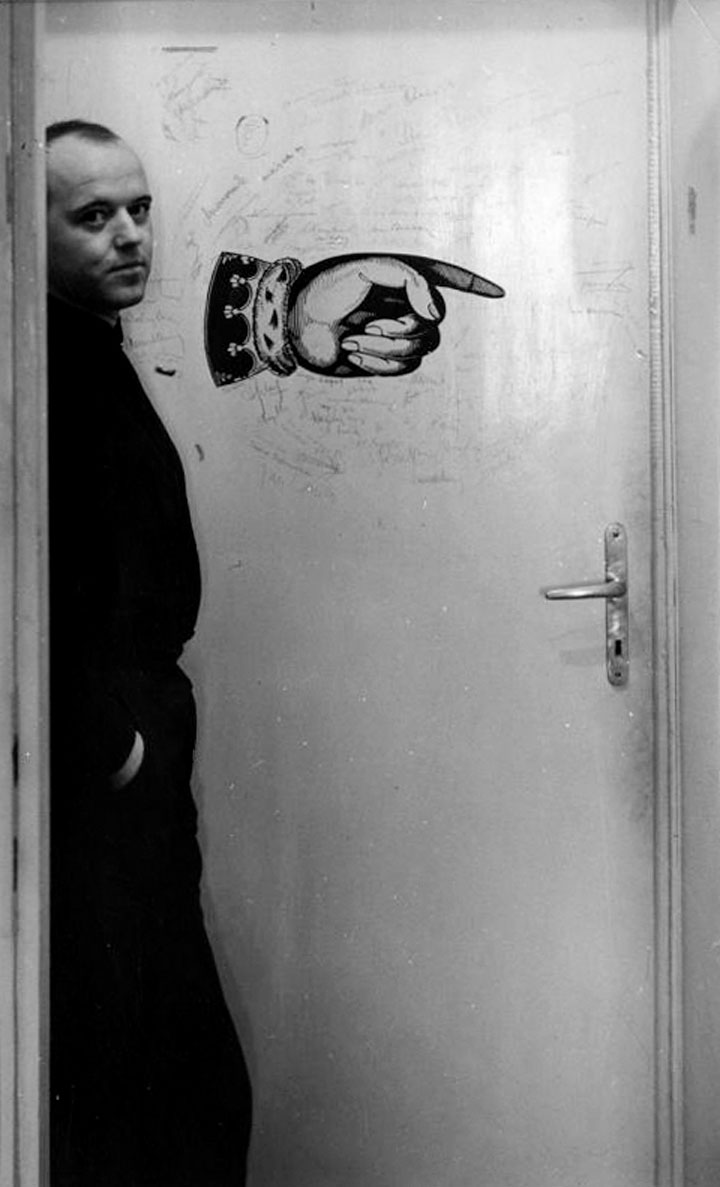
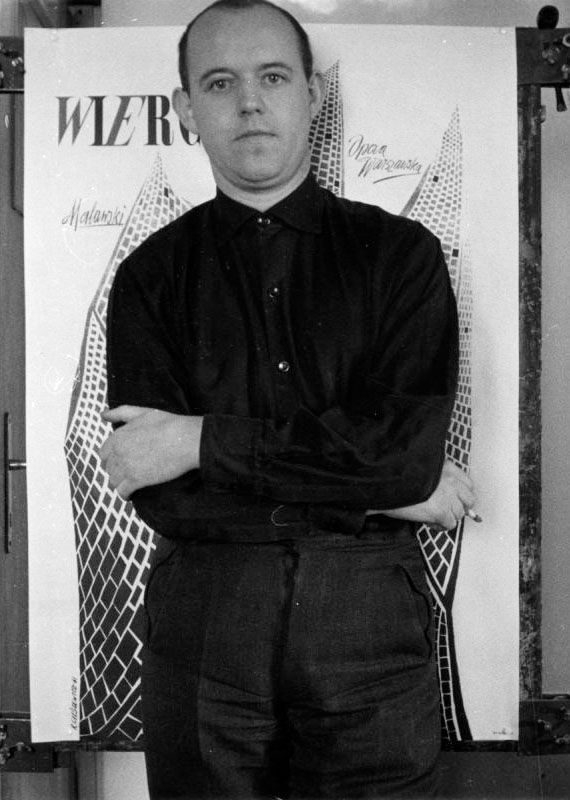
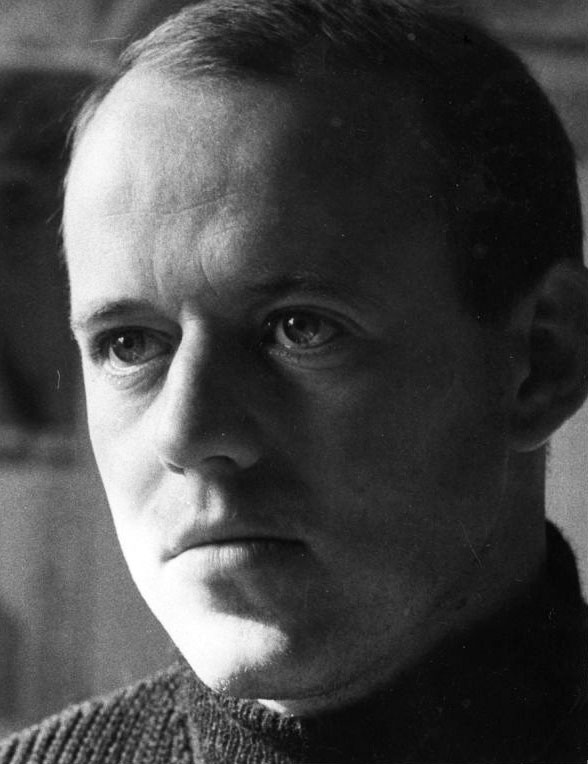
1962
By decision of the Ministry of Culture and the Arts, as a visual artist he is entitled to use additional living quarters in the form of a separate room.
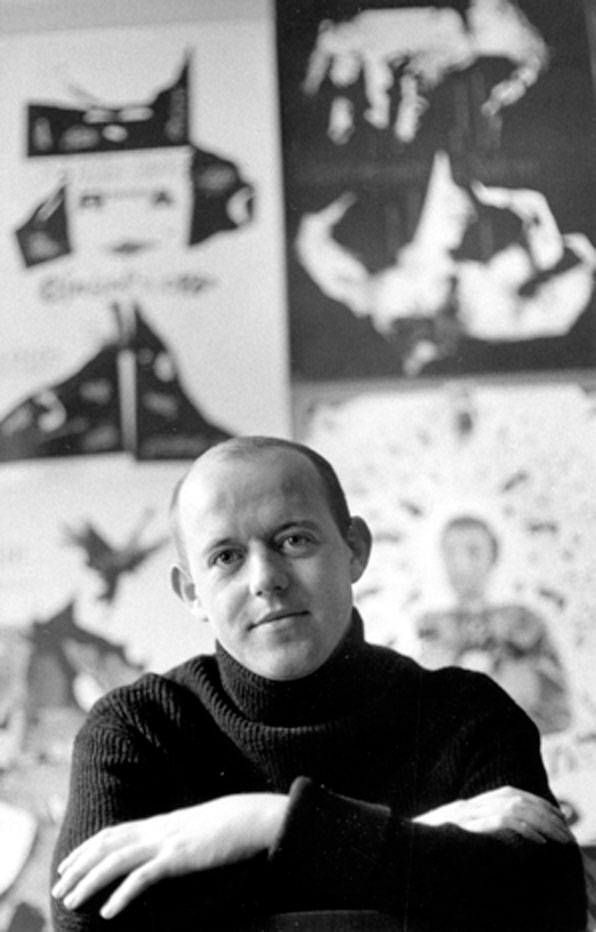
1963
With Andrzej Gucewicz he designs the Ce-Te-Be pavilion for the Poznań International Fair, making use of large-sized blow-ups of photographs of a woman’s face.
Completes work on a series of illustrations for Bruno Schulz’s prose (The Cinnamon Shops and The Hourglass Sanatorium). His collages apply iconographic material from old prints and books. Referring to Schulz’s metaphorical language, Cieślewicz creates his own graphic interpretation of the author’s texts. Schulz’s work would later be cited by Cieślewicz as one of his major inspirations, probably because of the author’s surrealist approach to the problem of the image and his unbridled imagination. However, as the illustrations were not favourably received by literary critics in Poland, they were never published.
Journey
Roman Cieślewicz kept a travel diary in which he described in detail all the stages of his journey to Paris, the key meetings with people and the work he did. Day after day, also during his first days and months in Paris, he would regularly report on everyday life, his problems, expenses, and little joys. The notebook used by Cieślewicz for the diary, written in a very unclear, difficult-to-read handwriting, is kept in the artist’s archive at the Institut Mémoires de l’édition contemporaine (IMEC) in Saint-Germain-la-Blanche-Herbe. It is the only personal document of its kind in the vast amount of other archival records, so we can conclude that the journey was from the word go a watershed moment for Cieślewicz.
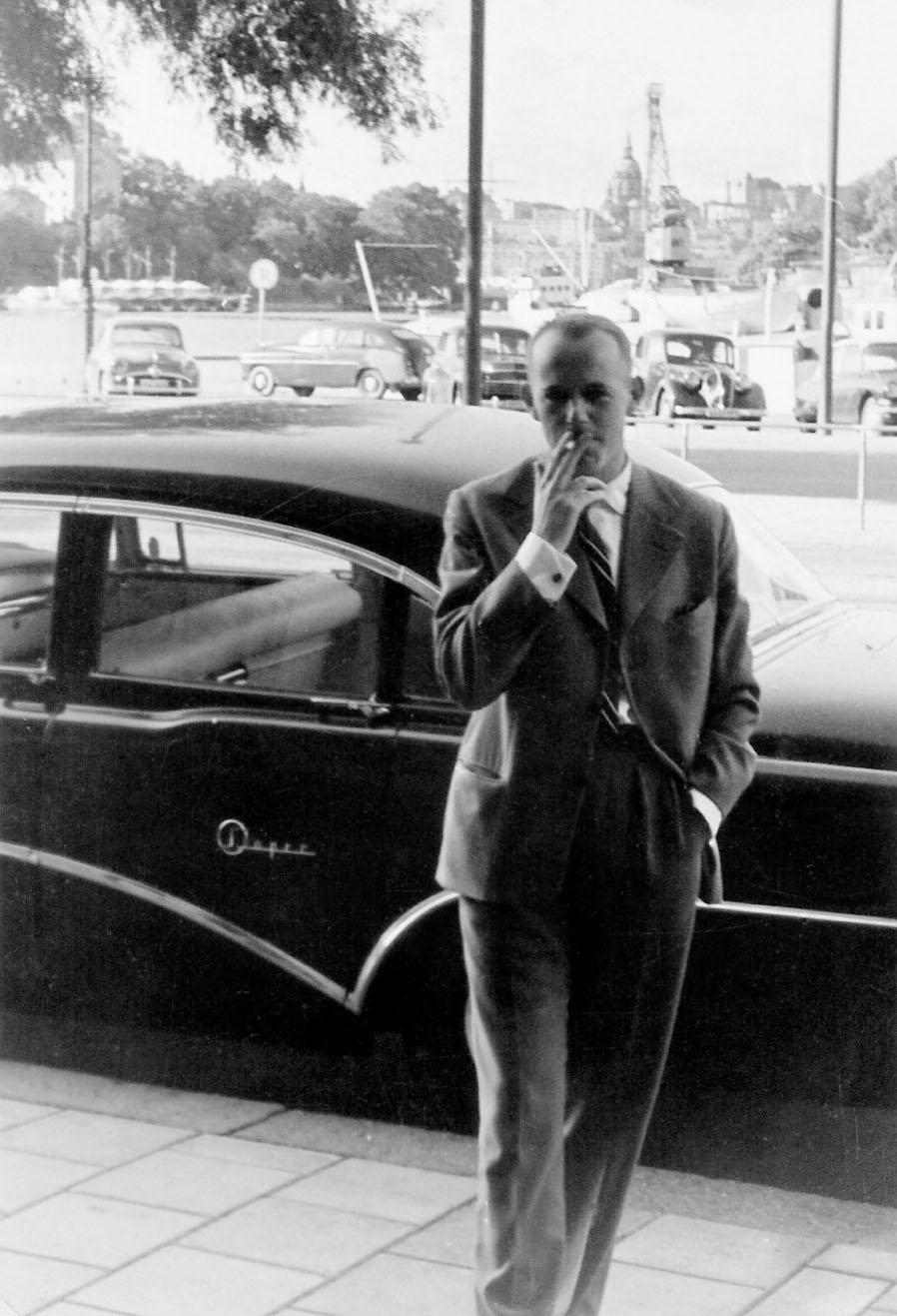
On July 2, with Alina Szapocznikow and her eleven-year-old son Piotr, Cieślewicz leaves Warsaw. They first stop in Opole, where they visit Roman’s brother Tadeusz. Later they spend two days in Prague, where they get together with Alina’s friends from university. They cross the Czechoslovak-Austrian border on July 6. They stop near Innsbruck for their first night in western Europe. The next day they cross the Swiss border to meet in Zurich Walter Herdeg, editor of the magazine Graphis8, which published texts about Polish posters and e.g. Cieślewicz’s works. As Herdeg was not there, they were received by the co-owner of the publishing house Walter Amstutz. A few days later, Cieślewicz leaves for work in Germany, while Szapocznikow with her son continue their trip to Yugoslavia via Italy.
8 Graphis started to come out in 1944, six years after Walter Amstutz (1902–1997) and Walter Herdeg (1908–1995) founded the Amstutz & Herdeg advertising agency and publishing house in Zurich. Their collaboration ended in 1964, when Amstutz left the publishing house.
On July 10, Cieślewicz arrives by train in Essen, where he get employed for a few days as a graphic designer in the German Krupp company at the invitation of its management, impressed by his work published in the album Polnische Plakatkunst edited by Józef Mroszczak (1962). His stay and work in Essen are brilliantly prepared: he lives in a hotel outside the city centre, has a car and an interpreter at his disposal, and his task is to prepare Krupp heute leaflets and advertising brochures. The money he earns in Essen will provide him with a living for a few months.
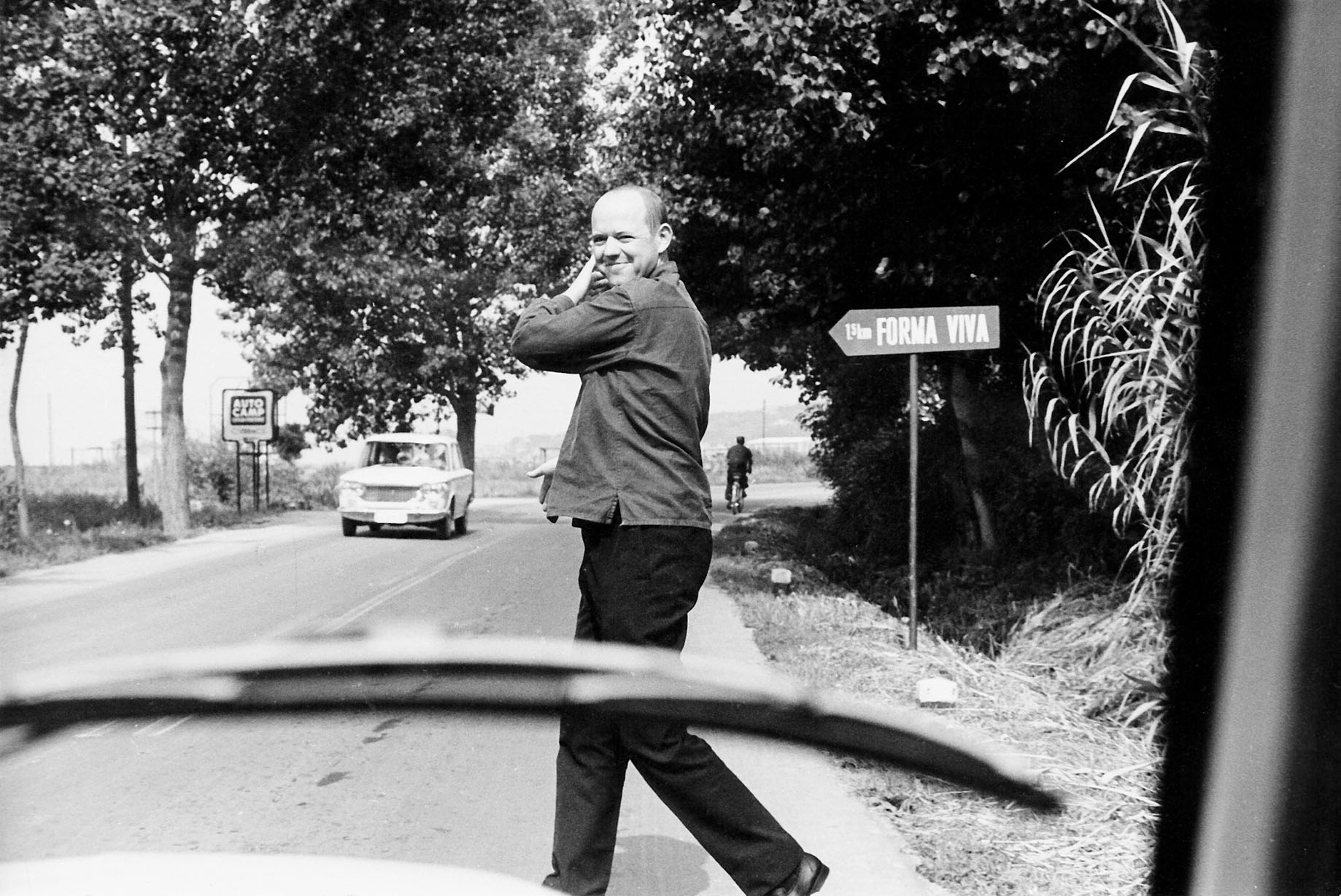
On July 26, the family meet in the seaside town of Portorož in Istria Peninsula. They stay here until September 2, as Szapocznikow takes part in the Forma Viva International Symposium of Sculpture and works nearly every day on her Biological Sculpture. At that time, Roman and Piotr enjoy their vacations (beach, reading books, writing letters), just like Krystyna Zachwatowicz and Andrzej Wajda, who also visit Portorož. The time spent together in the summer can be compared to “recharging batteries” for the first, difficult months of autumn and winter in Paris.
On September 3, they leave for Italy. From Trieste, via Aquileia, where they sightsee the historical monuments from Roman times, they arrive in Casale sul Sile near Venice. After visiting Venice, on September 6 they move via Piacenza towards Genoa.
On September 9, in Genoa, Szapocznikow and Cieślewicz meet Eugenio Carmi, a graphic designer in the steel concern Italsider. Within 10 days, commissioned by this company, Cieślewicz uses photomontage to design five decorative panneaux showing workers’ heads (his designs 21 × 30 cm in size will be enlarge to 230 × 150 cm and installed in the production units of steelworks in Bagnoli, Piombino, Lovere, Cornigliano, and Taranto). At that time he moreover designs a poster for Brecht’s play Vita di Edoardo II d’Inghilterra, played by the Compagnia dei Quattro in Milan.
On September 24, the three of them leave for Paris. Cieślewicz makes note of successive locations in his diary: Turin, Avrieux, Chambéry, Aix-les-Bains, Culoz, Mâcon, Cluny, Charolles, Nevers, Bourges, Orlean, Chartes, and Ablis. Their last stop before Paris is Chevreuse, where Alina’s friend Michelle Zahorska9 takes Peter in for the first few days of his parents’ stay in Paris.
9 Michelle Zahorska was married to Lech Zahorski (1923–1993), a long-time artistic editor of Polska magazine, where Roman Cieślewicz made large-sized covers. After getting divorced, she returned to France and lived in Chevreuse n. Paris. The Zahorskis were friends of Alina Szapocznikow and Ryszard Stanisławski since their first stay in Paris. Cf.: A. Jakubowska, K. Szotkowska-Beylin, Kroją mi się piękne sprawy. Listy Aliny Szapocznikow i Ryszarda Stanisławskiego 1948–1971, Kraków–Warszawa 2012, p. 222.
Paris
Immediately upon their arrival in Paris, as of September 27, Roman and Alina lived in hotels and jointly take care of three things of utmost importance, looking for an apartment, a job, and a school for young Piotr. Since they are living on the money they previously earned, they are in a tight spot, aware that in the absence of a job they will quickly lose cash. Therefore, they decide only on the most urgent expenses.
They look for a flat by browsing the adverts and visiting Alina’s old friends, who also help with other things (for example, Robert Wogensky stores their luggage). Roman continues to make regular notes of all events and of the most urgent expenses: “We are planning items for a new house, but it all seems unimportant in the absence of a job”. Piotr occasionally lives with them but usually stays in Chevreuse.
On October 9 they move into a flat at 15 rue Sextius-Michel in the XV district.
Roman accepts a commission for a play by Anna Banti Corte savella for the Teatro Stabile Genoa. Two days later he notes: “When is any concrete work coming? Alina takes Piotr to school today; it is his first day. Piotr is at school until 11.30 a.m., then he comes back for lunch and goes back to school for 1.30 p.m. and finishes at 5 p.m. Everything picks up. […] I am the housekeeper, washing, cleaning, elecroluxing, washing socks and handkerchiefs. Alina is off to the foundry. She says she has found the foundry of her dreams”.
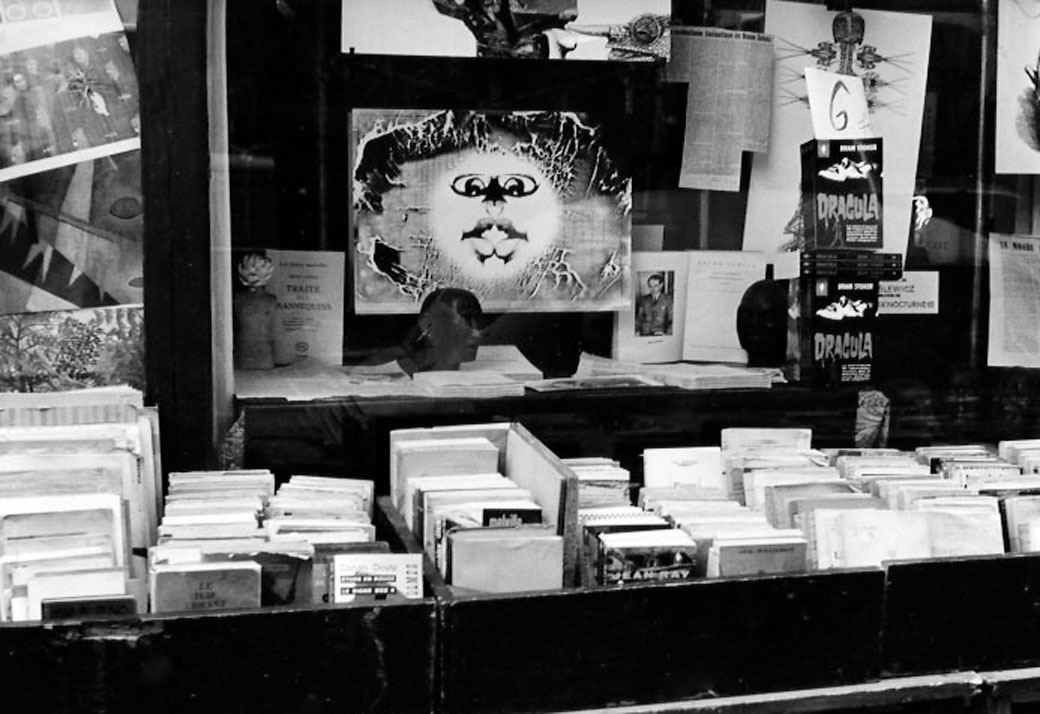
On October 16 Cieślewicz makes his first contact with Peter Knapp, photographer and artistic director of Elle. He receives his first commission for the design of several vignettes, as well as contact data of and letters of recommendation to people working at publishing houses and agencies, including Synergie, Juliard and Publicis. During the first two months in Paris, Cieślewicz presents his posters and designs for illustrations to Schulz’s prose at meetings with potential clients, while Szapocznikow looks for a sculpture studio. They make appointments together, visit galleries together and slowly get to know Parisian artists. Alina helps Roman as a translator, as he does not yet speak French.
During this time, they also meet with the Poles living in Paris, as well as with Polish friends visiting the city. A circle of close friends includes Jan Lebenstein, Magdalena and Wojciech Fangor, Teresa Byszewska and Jan Lenica, Ryszard Stanisławski and his second wife, art historian Urszula Czartoryska.
On November 13 the first exhibition of Cieślewicz’s works is launched in Paris. Mandragore, a small gallery, shows 12 illustrations for The Cinnamon Shops. The suggestion to show these works in public came during his first visit to the Julliard publishing house under the new management of Christian Bourgois,10 for whom he would design his first French book covers.
“(…) The designs for The Cinnamon Shops were created in 1963, a few months before I left for the Krupp company (I give the date 1963 here – as the execution of the entire cycle, i.e. 12 photomontages). In March 1963 they were viewed in my studio at 31/33 Brzozowa Street by Mr Artur Sandauer, a Polish expert on Bruno Schulz. He left disgusted and the whole meeting almost took on the flavour of scandal and provocation. In April 1963, Ignacy Witz looked at this series in the Brzozowa studio – as a possible selection for the 3rd Youth’s Biennale in Paris in the «artistic» printmaking section – but after 2 weeks, he gave me to understand that the works were not ‘artistic’ enough and too utilitarian (emphasis R.C.). Witz was right – because thanks to these photomontages and their exhibition at the Mandragore Gallery in the autumn of 1963 – their utility has given me the opportunity to stay in Paris until today”11.
During the first few years in Paris, Cieślewicz meets a number of professionals, e.g. in the autumn of 1963 Jean Widmer, then director of Jardin des Modes magazine and initiator of revolutionary changes in the graphic layout of French magazines.
10 Bourgois, earlier editor-in-chief, took over the publishing house after the death of its founder René Julliard in July 1962. Éditions Julliard was before long taken over by Presses de la Cité publishers and Bourgois established his own one, Christian Borgouis Éditeur, in 1966.
11 An excerpt of a letter to Zdzisław Schubert, after: Roman Cieślewicz, plakaty, fotomontaże [cat. of an exhibition at the National Museum in Poznań], ed. Z. Schubert, Poznań 1981, p. 10.
On November 18 he notes in the diary: “Alina is wonderful. I would probably die here without her”.
Thanks to contacts with Peter Knapp, artistic director of Elle, in December he begins steady collaboration with the weekly as a freelance graphic artist (pigiste), in which capacity he will work until March 1968. In this time, he will produce numerous full-page illustrations for the texts, as well as small graphic interludes and vignettes for the magazine’s regular columns.
1964
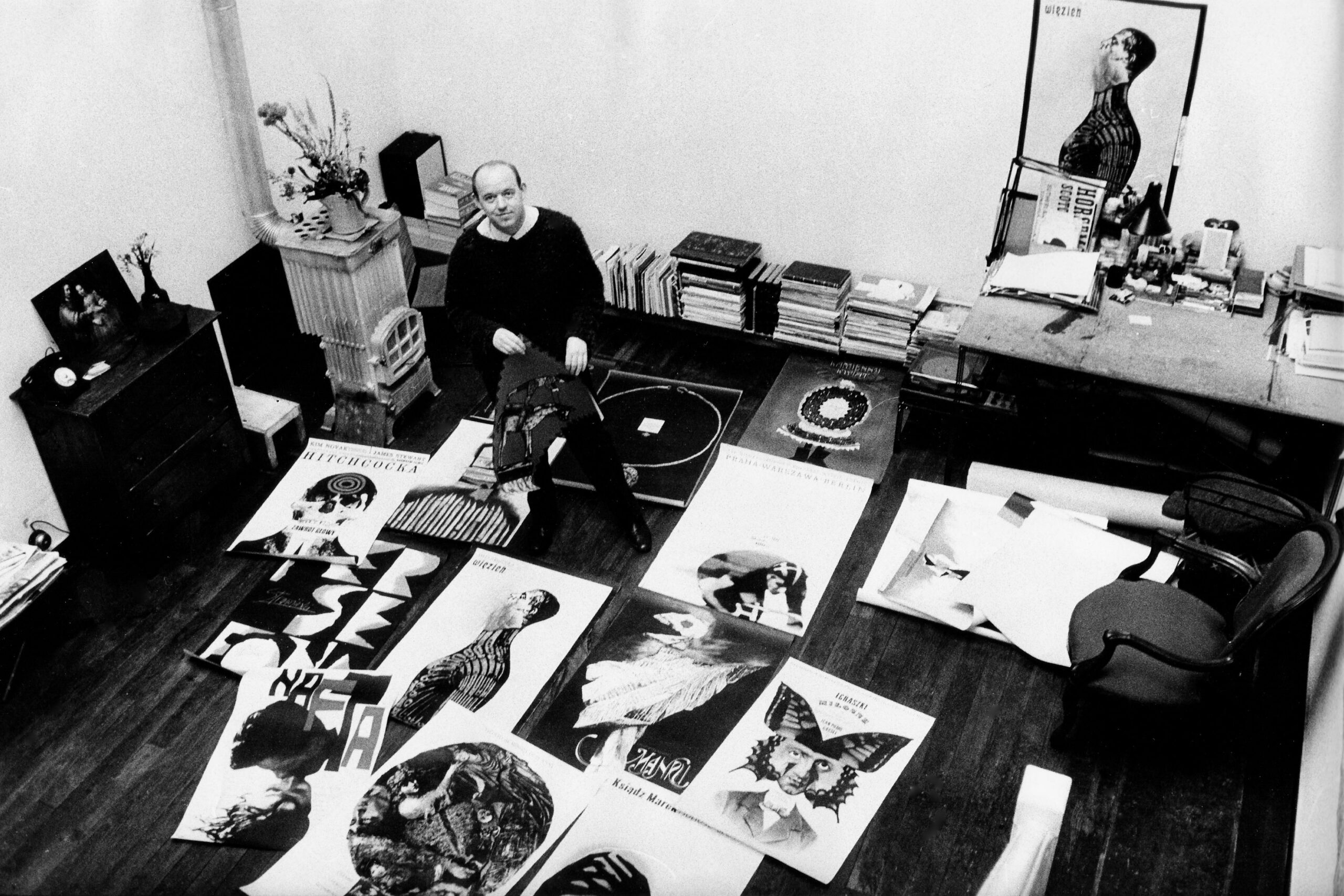
From the very beginning of his stay in Paris, Cieślewicz makes contacts which will bear fruit with numerous commissions from French publishing houses. As early as 1964, Claude Tchou, the founder of the Tchou publishers, commissions from his 24 letters of alphabet and collages in the form of illustration vignettes for an upcoming book of an encyclopaedic nature titled Guide de la France Mystérieuse. Later commissions will be made by other French publishing houses, e.g. Julliard, Pauvert, Christian Borgouis Éditeur, Gouraud, Stock, and Le Seuil, as well as the publishing house of the Polish Pallottine order, Société d’Éditions Internationales Paris, later operating under the name of Éditions du Dialogue.
1965
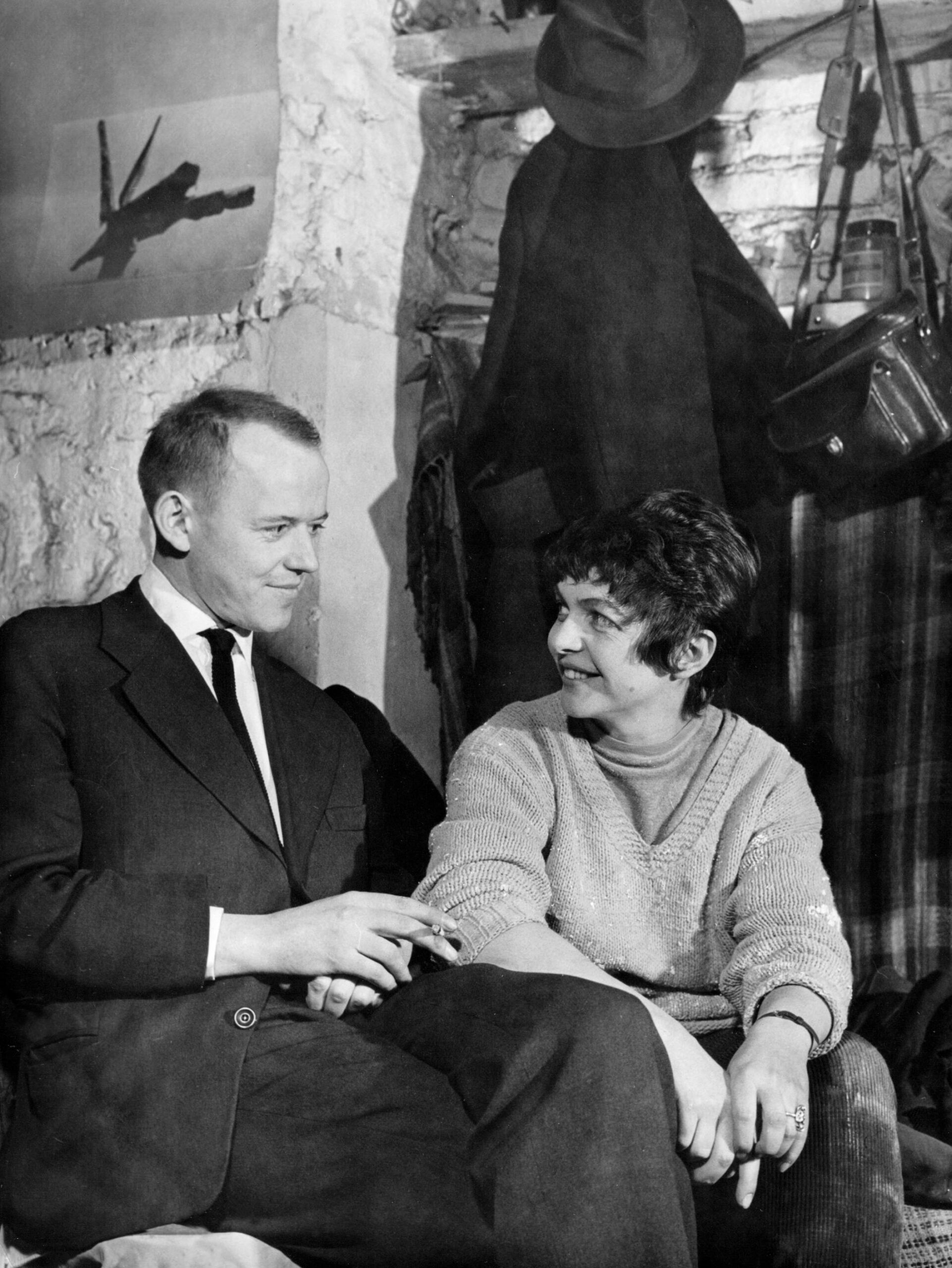
In the spring, Alina Szapocznikow moves to the studio at 32 Rue Victor Hugo in Malakoff, near Paris. They will soon start to live together in his house; Cieślewicz will remain here also after Alina’s death.
In August, he receives a letter confirming his collaboration with Julliard publishers concerning the design of book covers.
In October, Wydawnictwo Handlu Zagranicznego Publishing House confirms acceptance of Cieślewicz’s resignation from the position of art consultant due to his domicile abroad.
He joins the artistic group Panique, founded three years before; the group included e.g. his later friends Fernando Arrabal, Roland Topor, Sam Szafran, and Olivier Olivier. They most often meet in the Café de la Paix in the Place de l’Opéra, where the artists debate and subversively parody the reality around them. Cieślewicz participates in joint informal shows and designs posters and photomontages for the friends from the group.
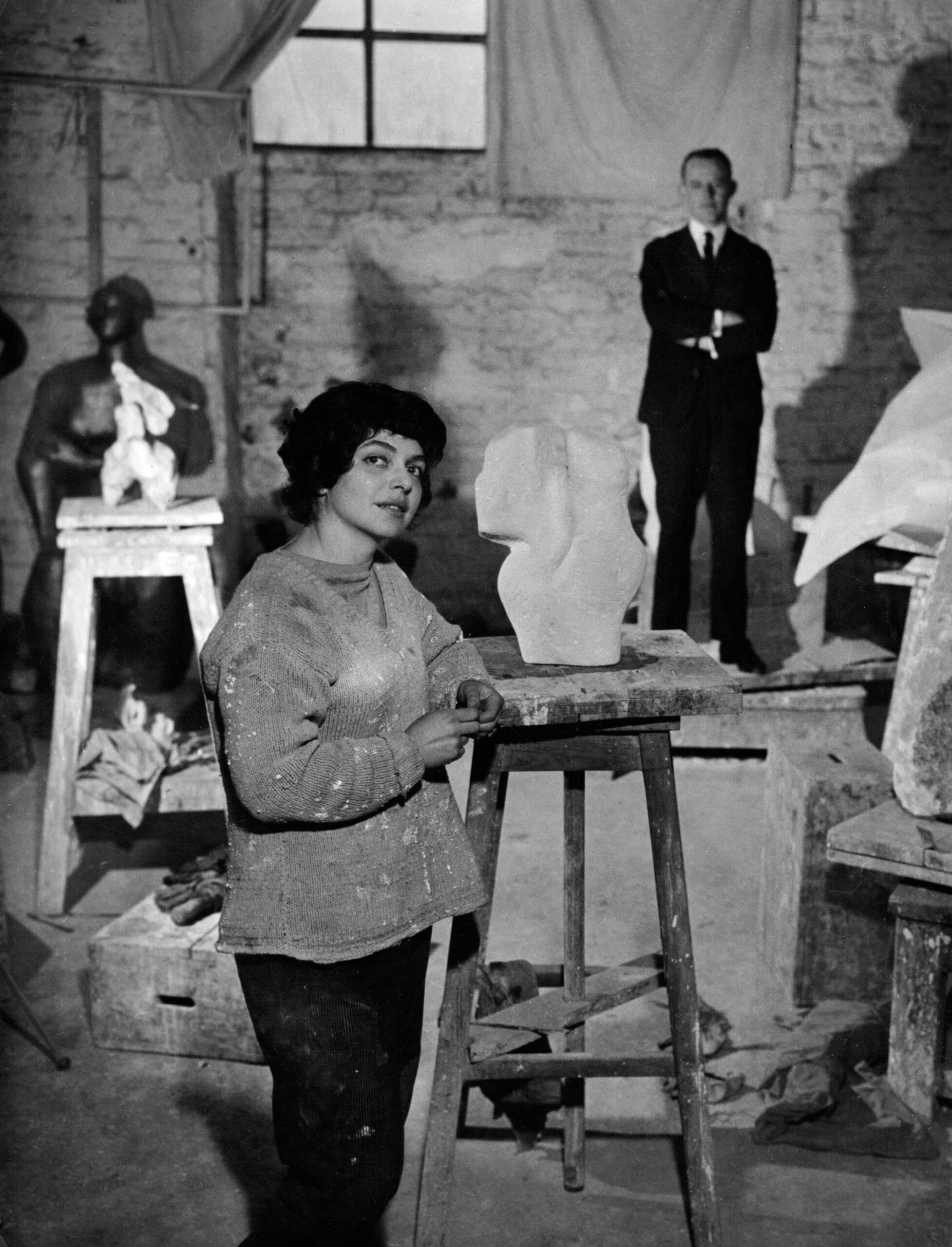
Makes first repetitive collages (collages répétitifs), which he will consistently produce until 1971. These are some of the first works since leaving the country that were not created as commissions, but as the artist’s own projects. There is a change of material in them, from illustrative, based on a collage from old prints, to photographic. In addition, for the first time he uses the modern technology of graphic reproduction he comes across in Paris.
A multiplied illustration Magicien for Elle magazine will be published later as a poster for the solo show at the Musée de Grenoble (1972).
Quite by chance, Cieślewicz begins a long-term collaboration with a publishing house of the Polish Pallottines (since 1966 operating under the name Éditions du Dialogue, one of the most distinguished émigré publishing houses). When Piotr Stanisławski has a skiing accident, the Julliard publishing house suggests that he should be placed during his convalescence in the dormitory of a printing boarding school run by the Pallottines in Osny, near Paris. As Société d’Éditions du Internationales, the priests print their own publications there. The director and initially the only employee of the publishing house is Fr. Józef Sadzik, who is friends with many eminent expatriate artists (e.g. Maria and Józef Czapski, Jan Zygmunt Hertz, Czesław Miłosz, and Sławomir Mrożek). Cieślewicz will design covers and dust jackets for most books by Éditions du Dialogue until 1993, a total of ca. 80 projects, including at least 48 covers and the graphic layout of the “Znaki czasu” series, gathering works by the most eminent religious thinkers and authors. Compared to the books published at that time in Poland, the Éditions du Dialogue publications demonstrate a superior editorial level.
1966
Between January and September, he works as a freelancer in the Vogue magazine, where with Antoine Kieffer designs the graphic layout.
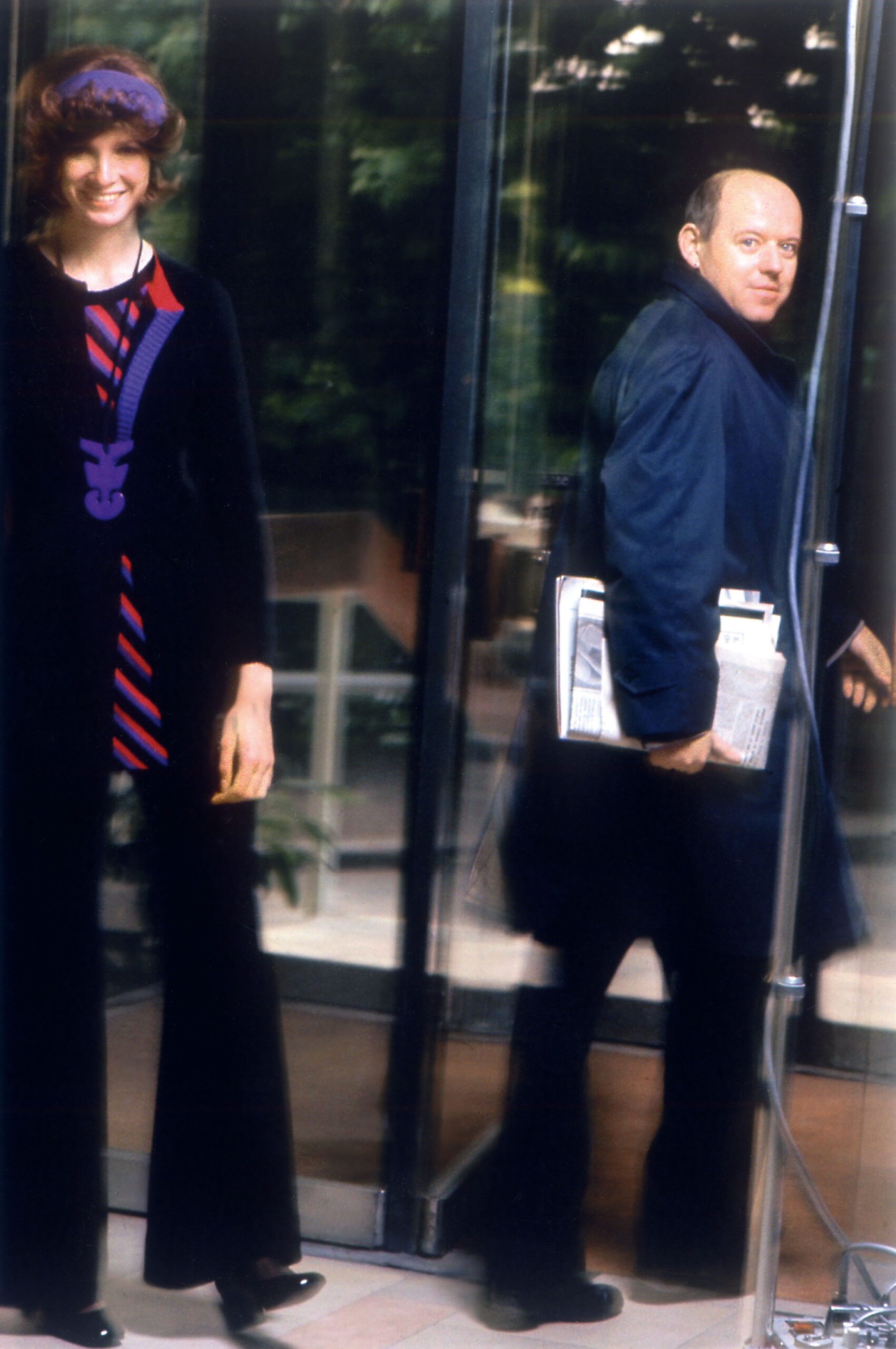
Probably this year he starts new works called structural collages (collages structurels). He makes close to 100 charts of photomontages 27 × 36 cm in size. He uses here variously arranged selected clippings of press photographs. He will use some of them in 1968 for the visual identification of M.A.F.I.A. advertising agency (so-called structural poster).
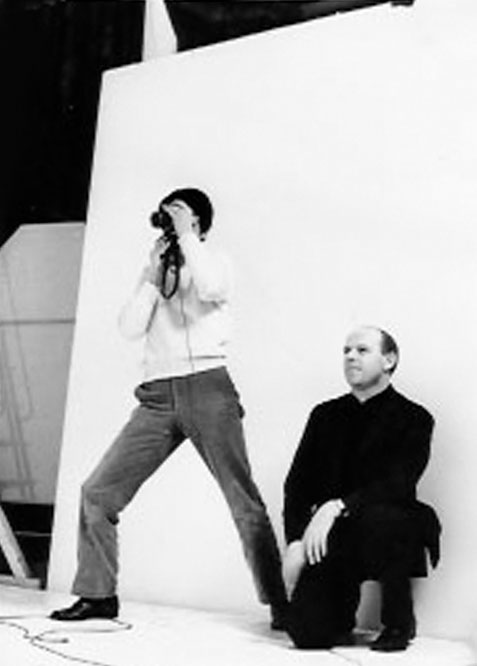
1967
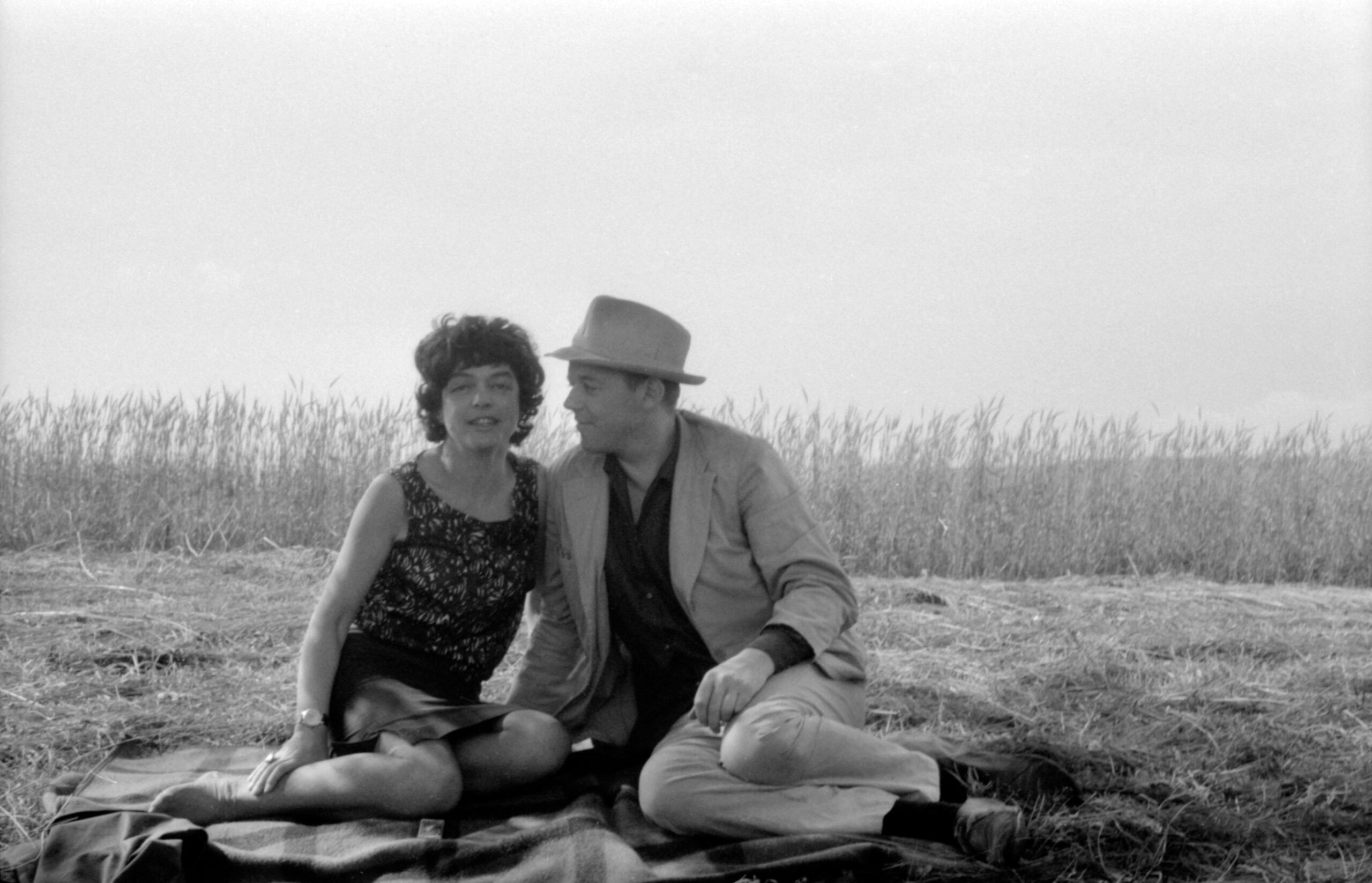
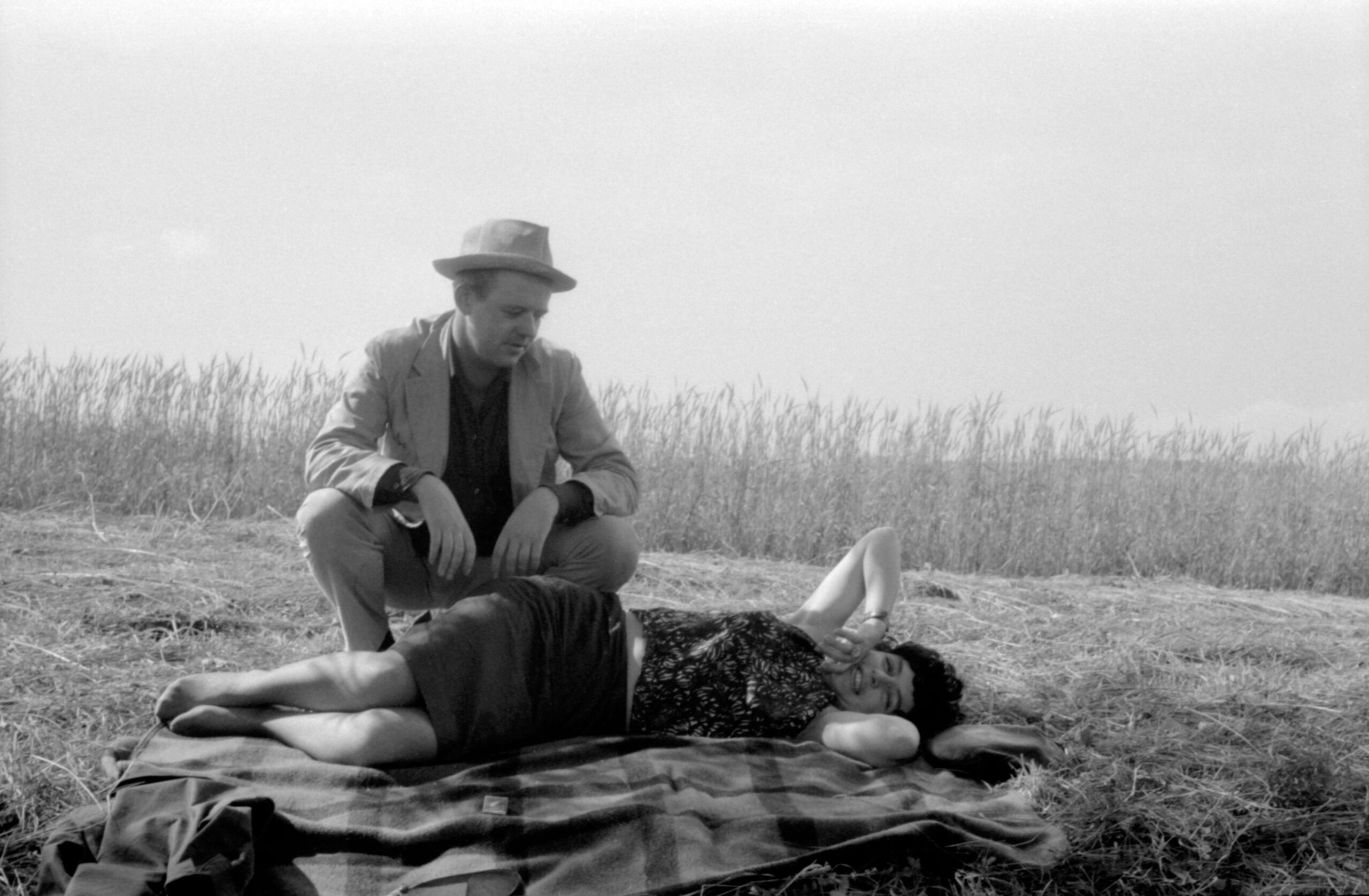
On February 4, Alina Szapocznikow and Roman Cieślewicz get married in the General Consulate of the People’s Republic of Poland in Paris, with Antoni Kieffer and Roland Topor as their best men.
As of January 1967 until May 1969, both use their new address: 14 Passage Du Guesclin, Paris XV in documents and correspondence.
The Association of Polish Artists and Designers (ZPAP) send Cieślewicz the union’s ID no. 3429. Issued on August 9, it conforms his membership in the graphics section of the Association’s Warsaw division.
Designs his first graphic book, where he outlines the life of the hero of the Cuban revolution Che Guevara. It was published by the Parisian Jeune Afrique weekly in 1968, and shown in Poland three years later, at Cieślewicz’s solo exhibition in the Muzeum Sztuki in Łódź.
Opus International, a quarterly on contemporary art is launched. Published by Georges Fall, it gathers leftist art critics. Cieślewicz designs the graphic layout of the magazine and remains its art editor until 1969. He then makes most of his iconic covers in pop-art style (Che, Mona Lisa, Superman), published also as posters. His black-and-white illustrations are also published inside the magazine.
Begins to design covers and illustrations for the series of guidebooks Ultra Guide by Jacques-Louis Delpal – Cannes, Sports d’hiver en France and Paris la Nuit about Paris nightlife, a publication that was repeatedly re-issued. The guides are published by three different publishing houses (Éditions Jacques Chénot, Jean-Louis Gouraud, and as of 1970 Éditions du Mont-Cenis) are advertised by posters of Jean-Louis Gouraud publishers.
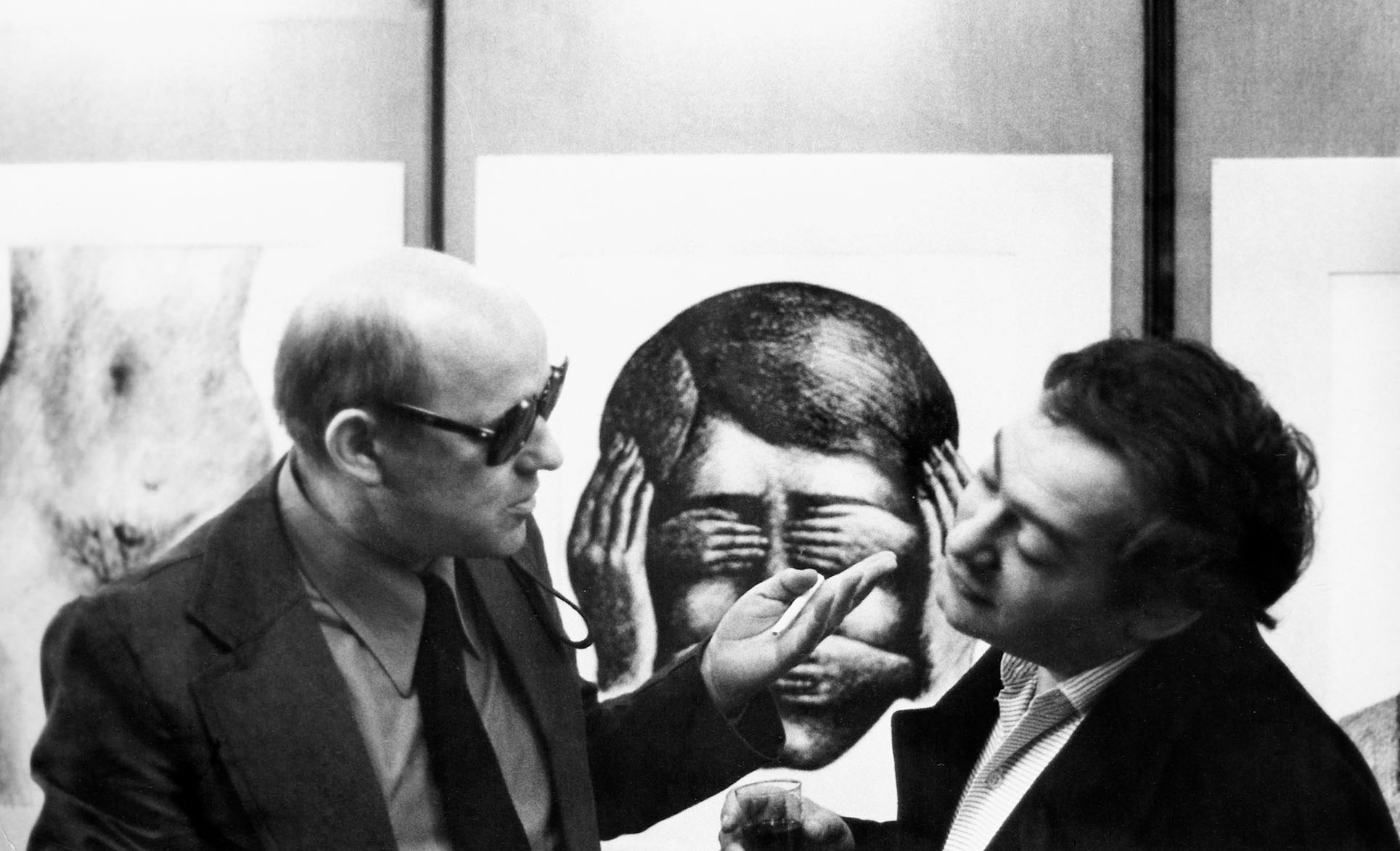
French press, e.g. Adam, Formidable, and Le Courrier de l’Unesco commission occasional designs of illustrations and covers from Cieślewicz; he receives ongoing commissions from Poland for covers for the magazines Ty i Ja, Projekt, and Polska.
The second solo show “Roman Cieślewicz, wystawa plakatu i grafiki” is held at the BWA salon in the Kordegarda in Krakowskie Przedmieście St. in Warsaw.
Receives the gold medal for cultural posters at the 2nd Biennale of Polish Poster in Katowice for his poster for Dziady [Forefathers’ Eve] directed by Kazimierz Dejmek. The play takes on political significance and its suspension in mid-January 1968 triggers student protests and marks the beginning of March ’68.
Becomes a member of the International Centre for the Typographic Arts (ICTA).
1968
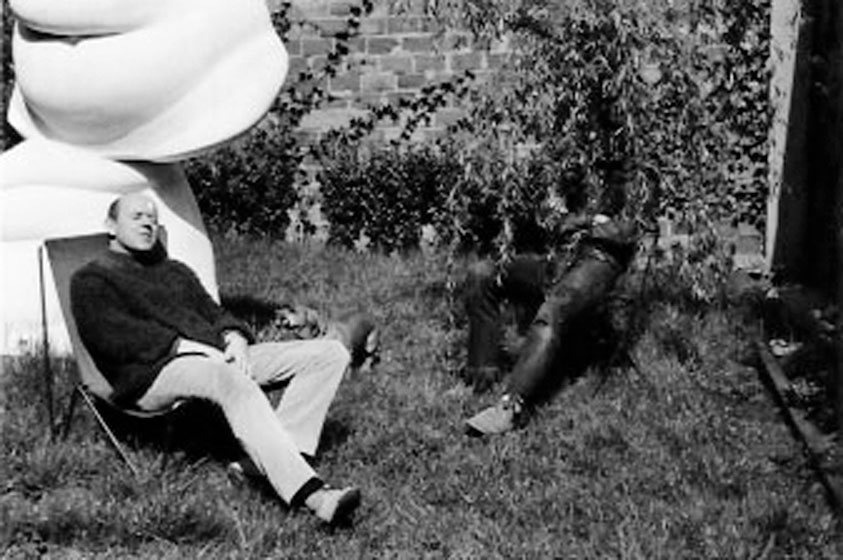
Between March 15 and November 30, he designs the mock-up (premier maquettiste), and as of December 1 until the end of July of next year is artistic director (directeur artistique) of Elle. Work in a popular magazine helps him make contacts and paves the way to collaborate with prominent fashion photographers such as Roland Traeger, Gay Bourdin, David Bailey, and André Carrara. Designs decoration for three photo shootouts of Carrara: Les petits pois (Elle no. 1151), Zone blue kobalt (Elle no. 1153), Les maillots de bain (Elle no. 1167).
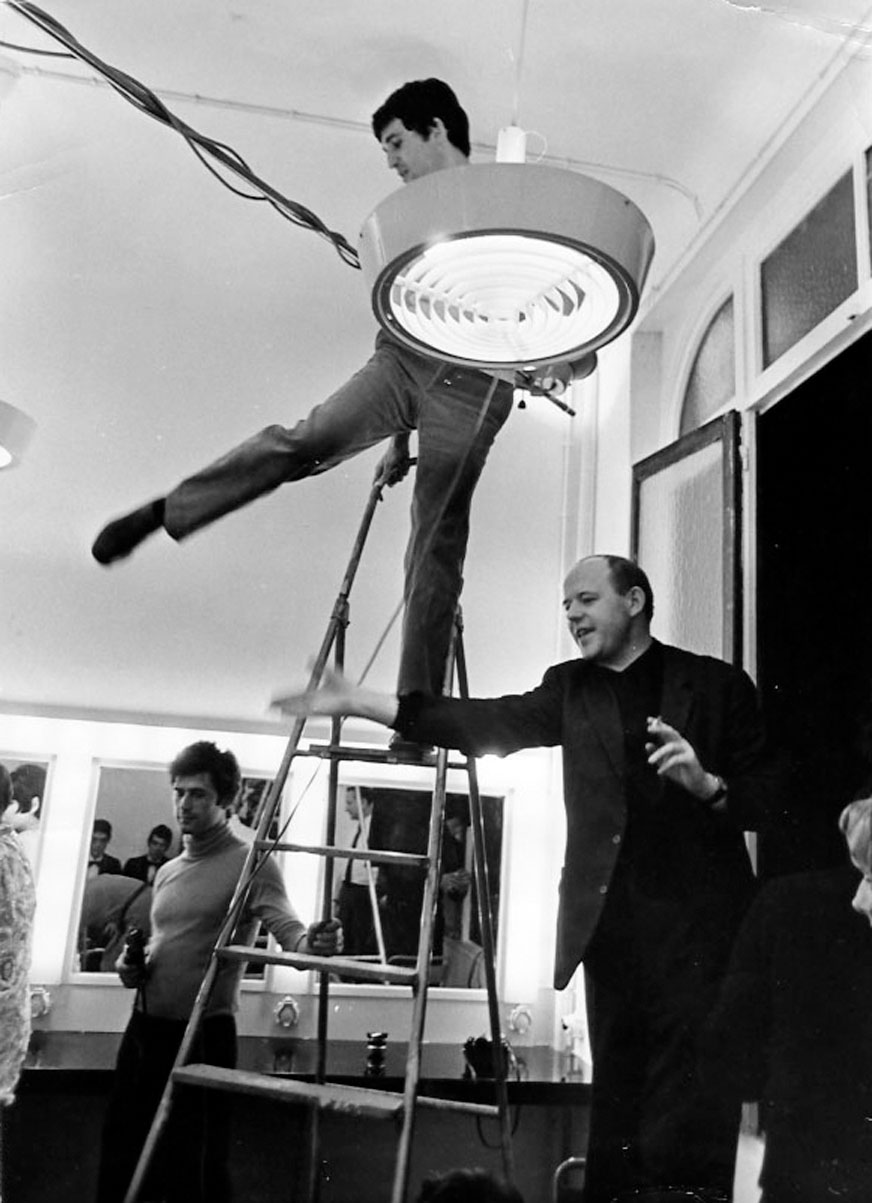
Making first projects for the campaign of the Prisunic department store, he begins collaboration with a new advertising agency M.A.F.I.A., established by Maïmé Arnodin and Denise Fayolle (Maïmé Arnodin, Fayolle International Associées). The agency, which stands out due to its high artistic level and innovative projects, invites as collaborators eminent graphic artists, designers, and photographers, e.g. Roland Topor, Michel Folon, Michel Quarez, Andrée Putman, and Peter Knapp.
Christain Bourgois and Dominique de Roux take over management of the publishing house 10/18 and propose a change of the graphic layout of its pocket publishing series. Cieślewicz designs a few dozen covers for 10/18.
1969
At the end of July, he quits as artistic director of Elle, but will continue to work on single projects for the magazine.
In September, he becomes artistic director of the M.A.F.I.A. advertising agency and will remain in this position until 1972.
Designs decoration for Helmut Newton’s photo shootout: Collection d’hivier 1970 (Elle no. 1211).
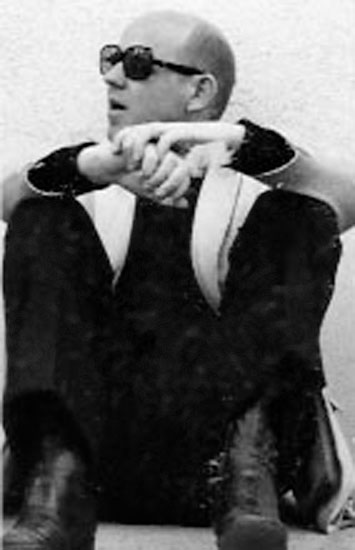
1970
During the symposium “Rencontre Internationale d’Artistes” in Vela Luka on Korčula Island (now Croatia), the team composed of Roman Cieślewicz, Zbigniew Parandowski, Jan Dzierzko, Alina Szapocznikow, and Ricard Porro design a tourist complex in nearby Plitvina.
Two issues of the avant-garde magazine Kitsch come out. The editors are Christian Bourgois, Roman Cieślewicz, Jacques Sternberg, and Roland Topor, who earlier collaborated in the Panique group.
Begins his collaboration with the Éditions Seuil; until 1972, he will design covers for the music quarterly published by them titled Musique en jeu.
Designs a uniform series of minimalist numbered covers for a series of monographs of contemporary artists, accompanying exhibitions held by the Centre National d’Art Contemporain (CNAC). Cieślewicz will also design for this institution, established in 1967, small brochures and posters for solo exhibitions, before CNAC moves in 1977 from 11 rue Berryer to its new premises in the place of the demolished trade halls in the centre of Paris.
Designs the decoration for a fashion photo shoothut: Collection homme-wear, Indreco (M.A.F.I.A. agency).
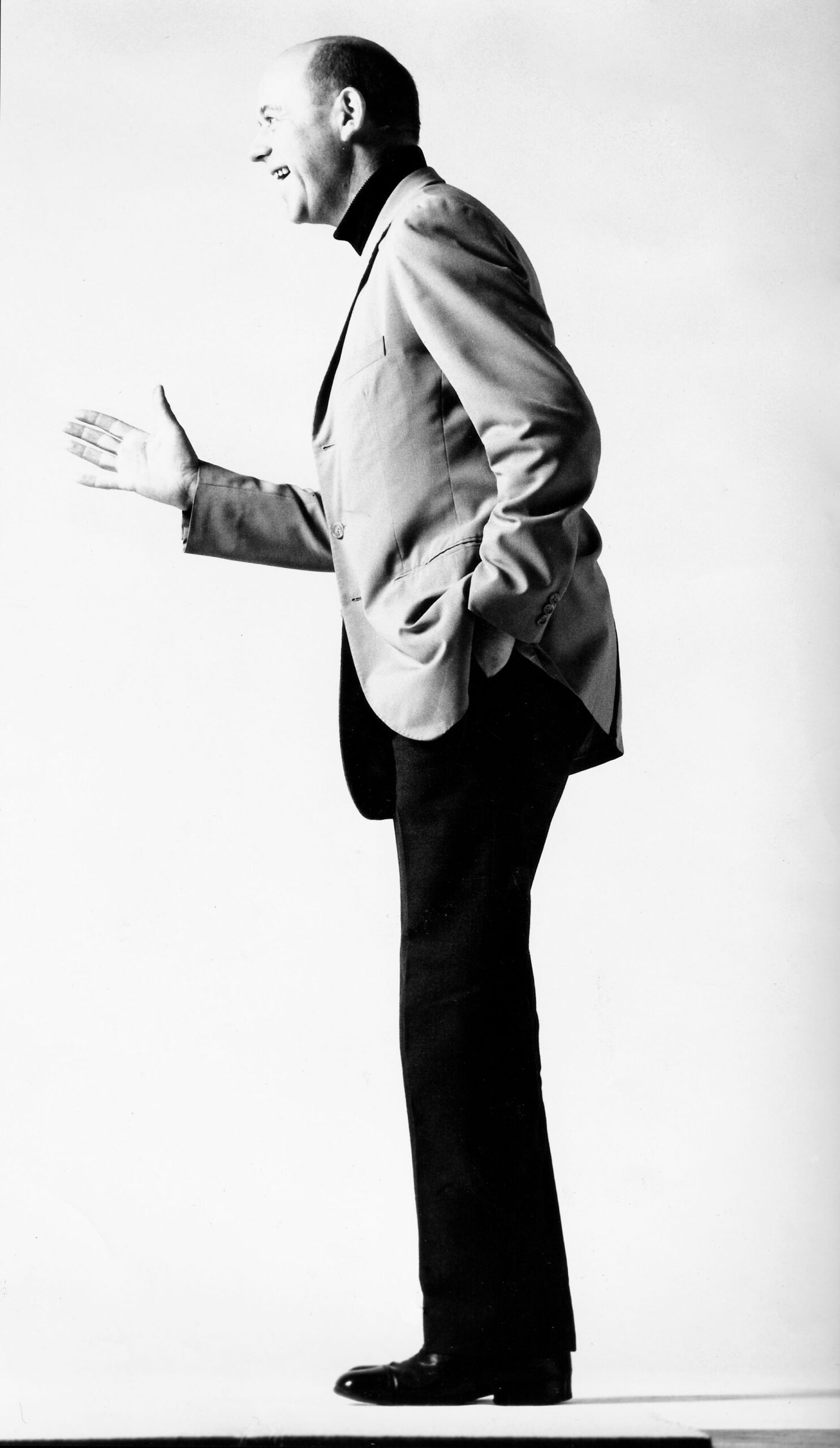
1971
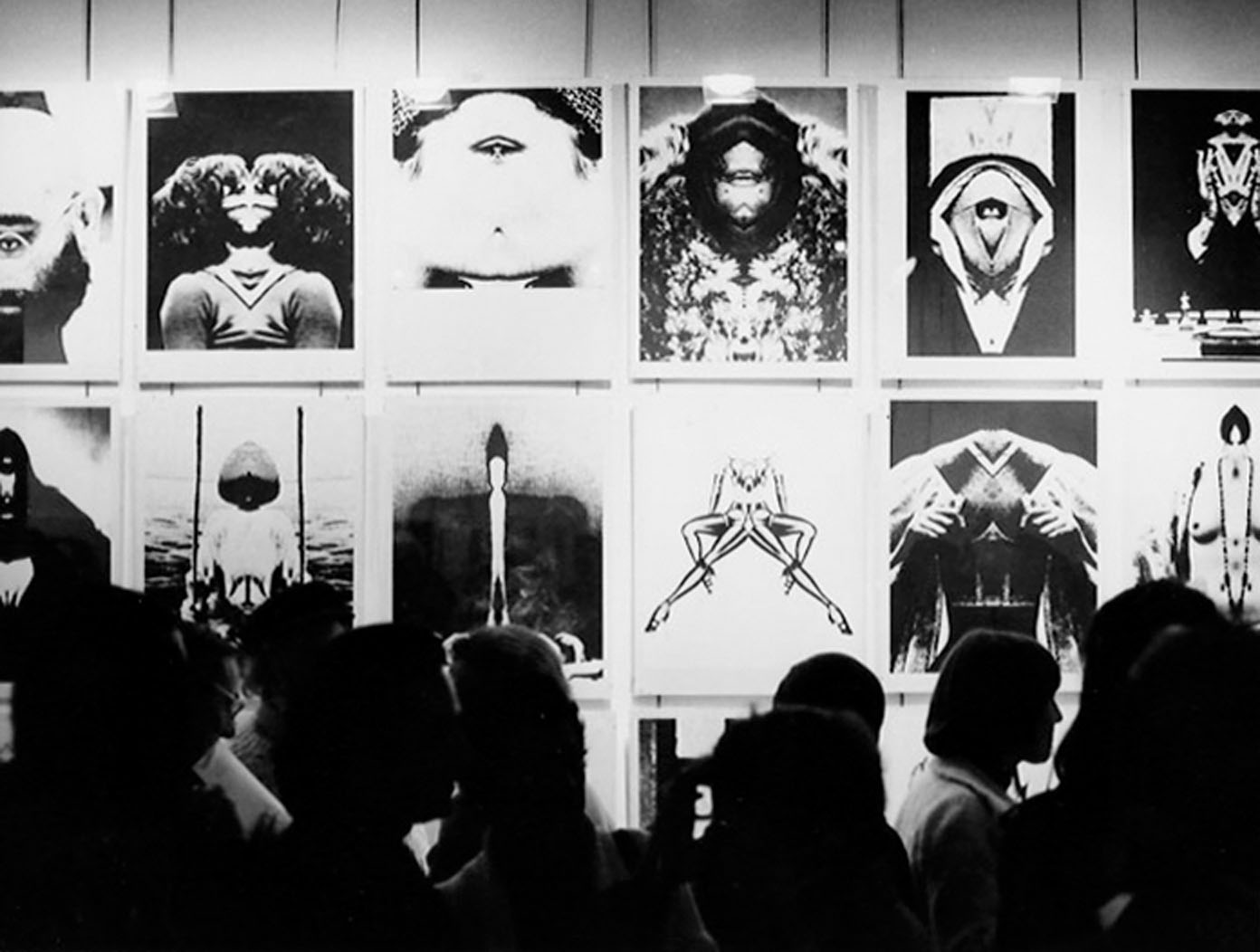
Begins a series of silkscreens Symmetrical Figures, which will dominate his way of visual thinking for the next few years. The distinctive designs (around 70) are created spontaneously in a small format using a very simple technique involving the combination of two symmetrical fragments of photographic portraits along a vertical axis. The series begins with a press advertisement for the French photo magazine Zoom, two posters under the identical title Zoom contre la pollution de l’oeil (Zoom against the pollution of the eye). This important visual commentary on a world drowning in a proliferation of mass-published images earned Cieślewicz a gold medal in the social poster category at the Fourth International Poster Biennale in Warsaw in 1972.
Once again, he designs the decoration for a photo fashion session: Les robes-bonbons-Hary Lans (Elle no. 1322; M.A.F.I.A. agency).
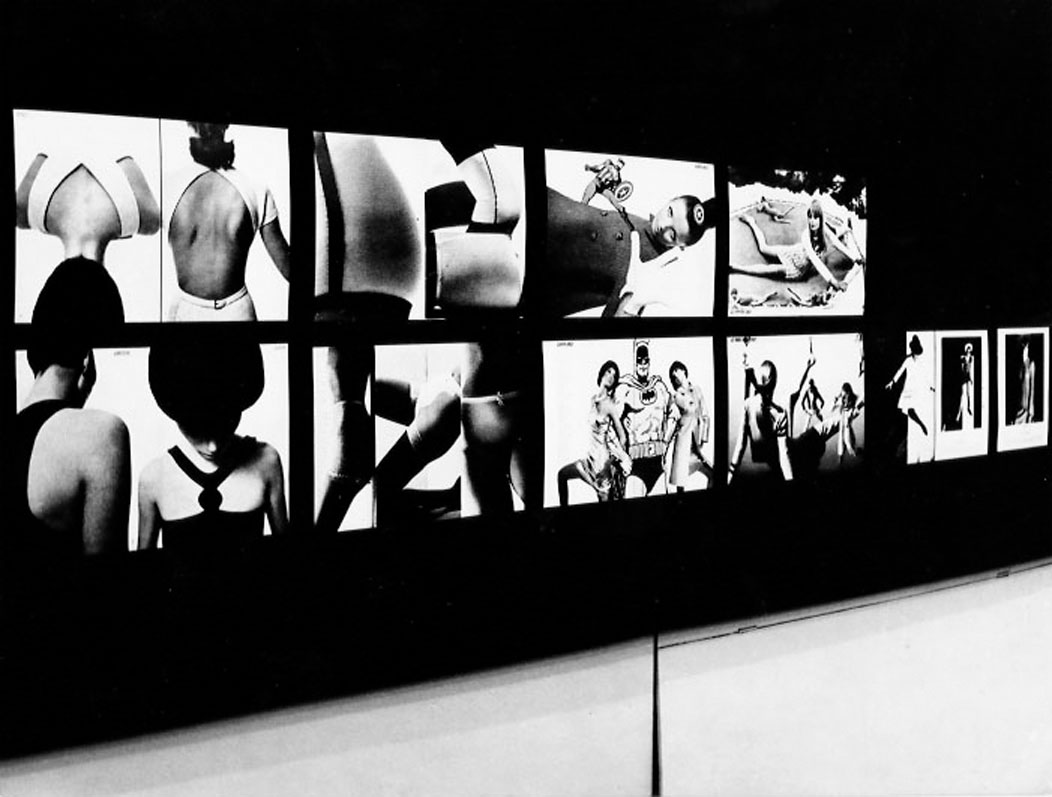
Muzeum Sztuki in Łódź launches a large solo exhibition of Cieślewicz, curated by Urszula Czartoryska. It displays for the first time posters and other works for the French publishers (e.g. illustrations for Elle, Vogue, and Opus International).
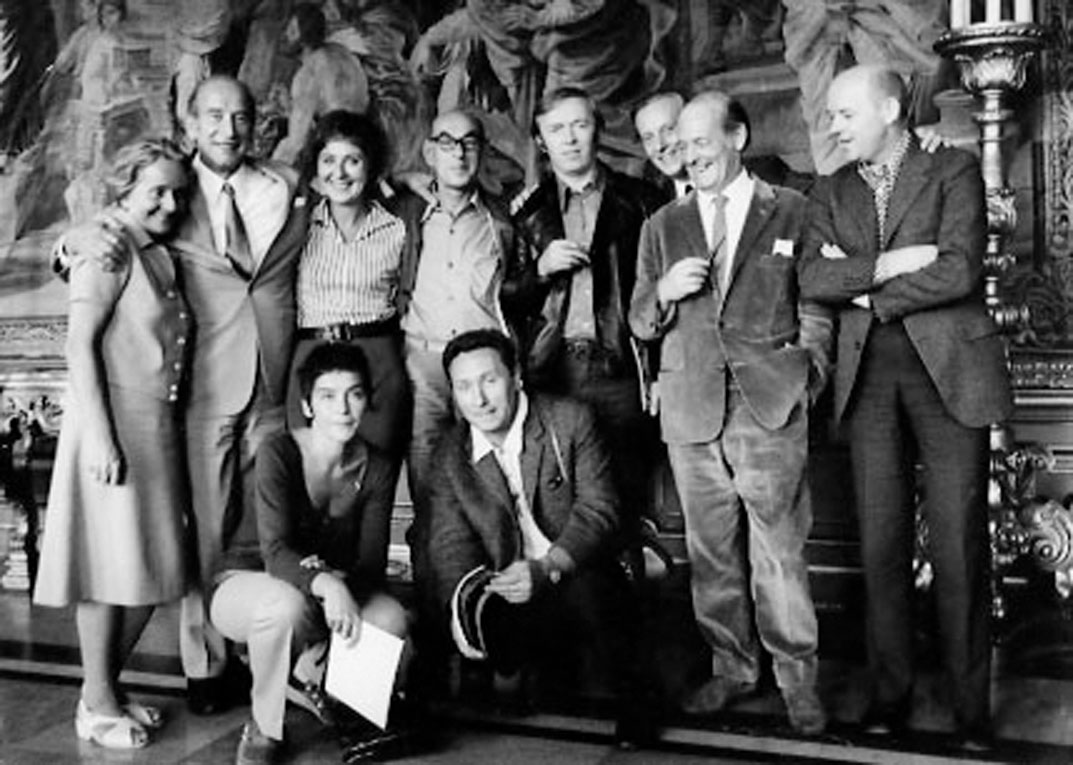
1972
On February 7, Roman Cieślewicz and Alina Szapocznikow are granted French citizenship. The official document attributes to the artists the professions of directeur bilingual and artiste sculpteur, respectively.
The Musée des Arts Décoratifs in the Louvre hosts his first major solo exhibition, “Roman Cieslewicz, graphismes”. MAD director François Mathey commissions from him the design of the poster and catalogue of the show held at the Grand Palais in Paris “Douze ans d’art contemporain en France 1960–1972”, highly controversial among French artists.
In 1972, Roman Cieślewicz decides on complete independence as a graphic artist.
1973
On March 2, Alina Szapocznikow dies after a long illness in a Praz-Coutant sanatorium (Haute Savoie).
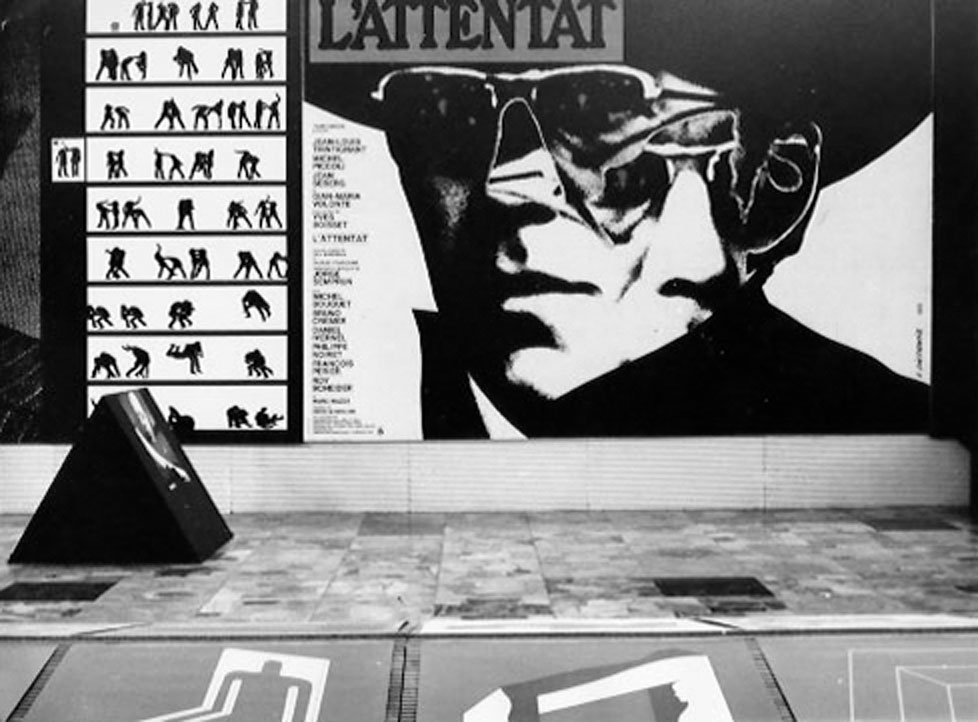
Based on police instructional photographs showing male silhouettes during combat, he designs a book for children without text Ne!, published jointly by Grafički Zavod Hrvatske and Galerija SC in Zagreb. A set of black and white photographic prints that are the embryo of this project are today in Cieślewicz’s archive at the IMEC.
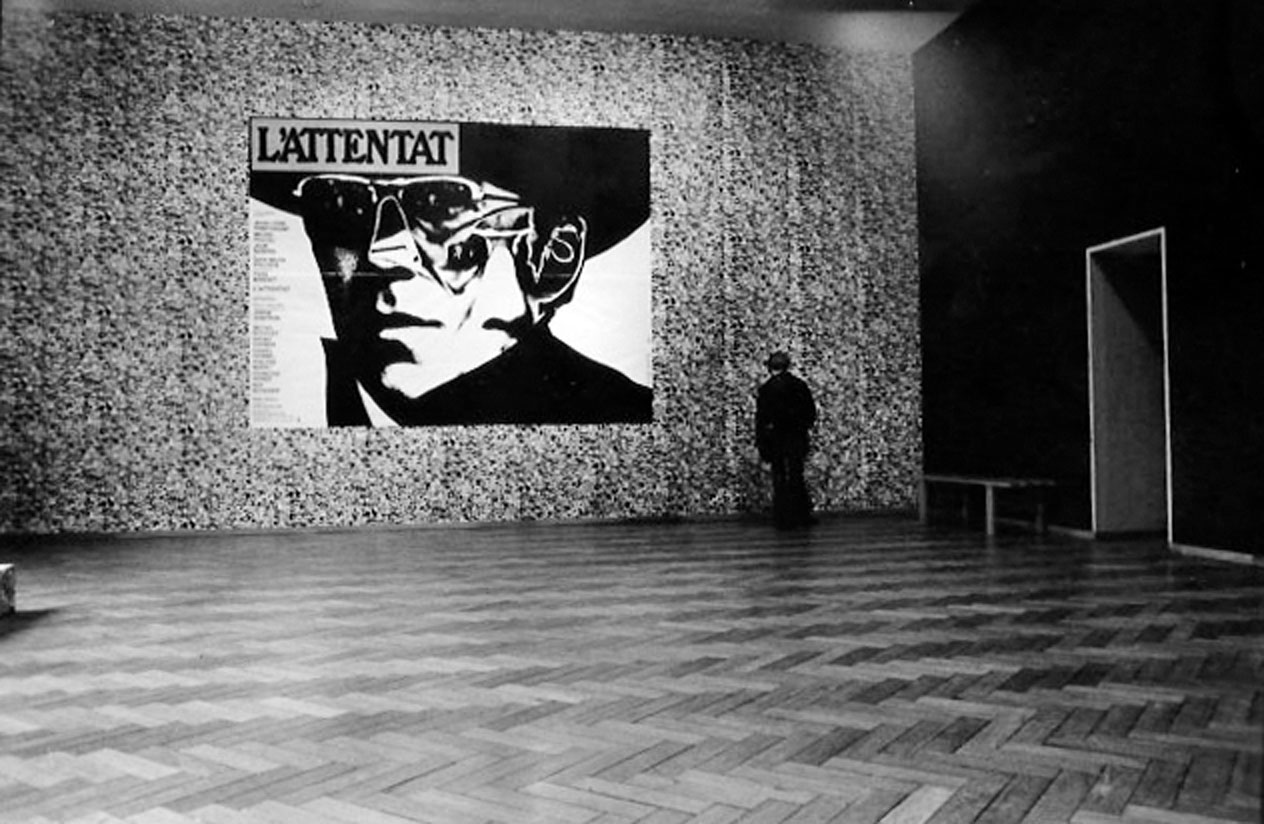
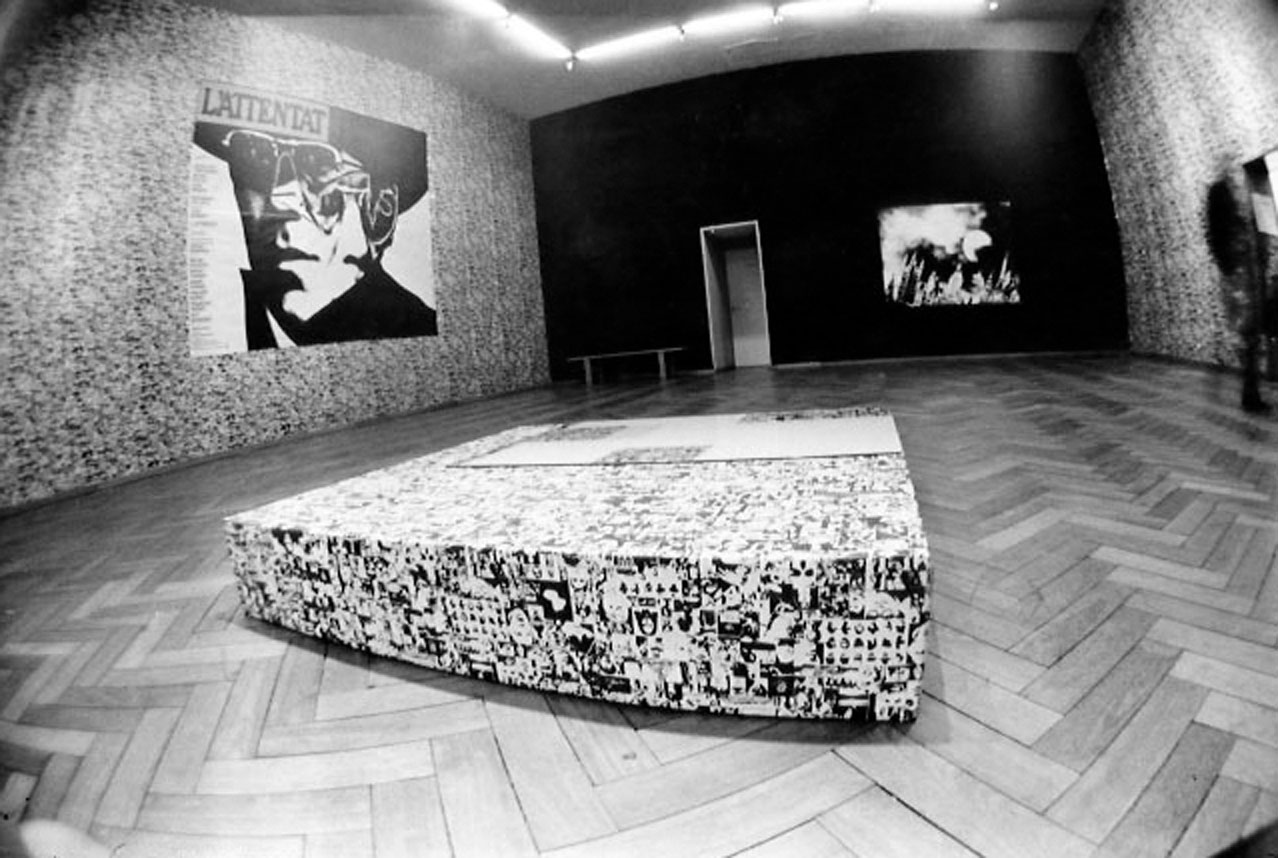
At the 1st International Film Poster Exhibition at the Cannes Film Festival, he receives a special jury prize for his poster for the film L’Attentat, directed by Yves Boisset. The same poster is also awarded a gold medal in the cultural poster category at the 5th Polish Poster Biennale in Katowice.
Becomes head of the Visual Forms Studio at the École National Supérieure des Arts Décoratifs in Paris (ENSAD); he will be in charge of it until 1975.
1974
At the Galerie l’Oeil de Boeuf in Paris he first presents 40 serigraphs from the Symmetrical Figures series.
With André François and Shigeo Fukuda he takes part in the exhibition of laureates of the 4th International Poster Biennale at the Museum of Posters in Wilanów. He displays posters and serigraphs from the Symmetrical Figures series.
1975
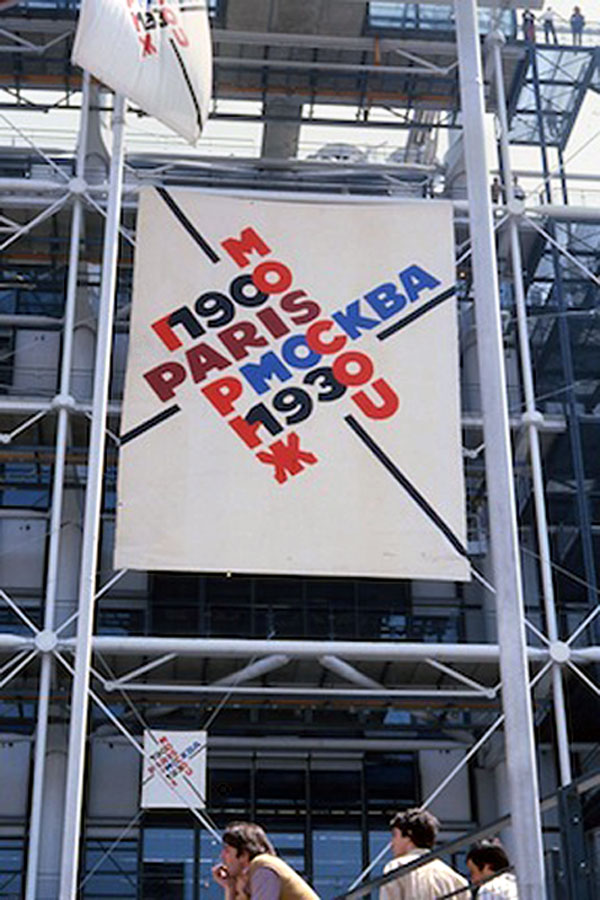
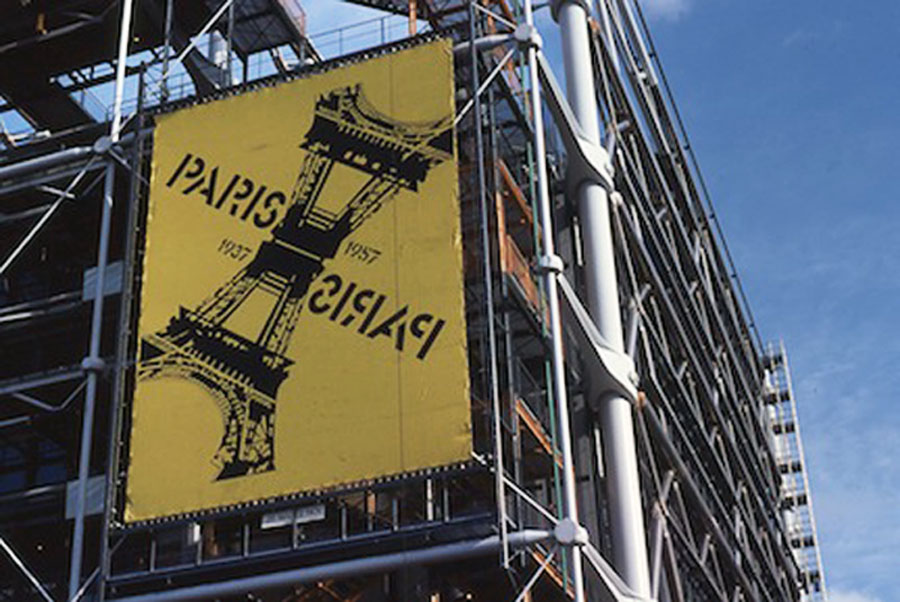
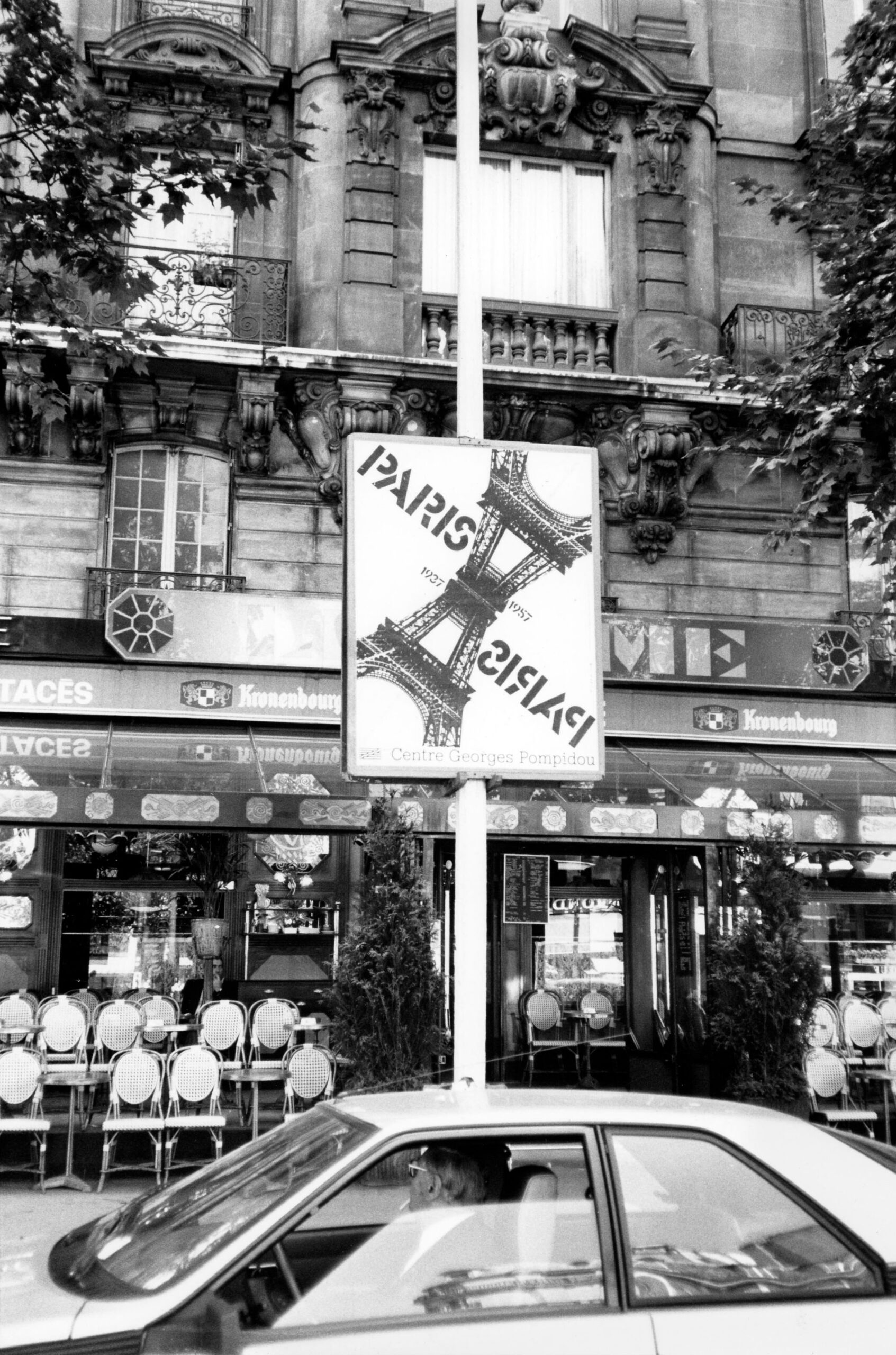
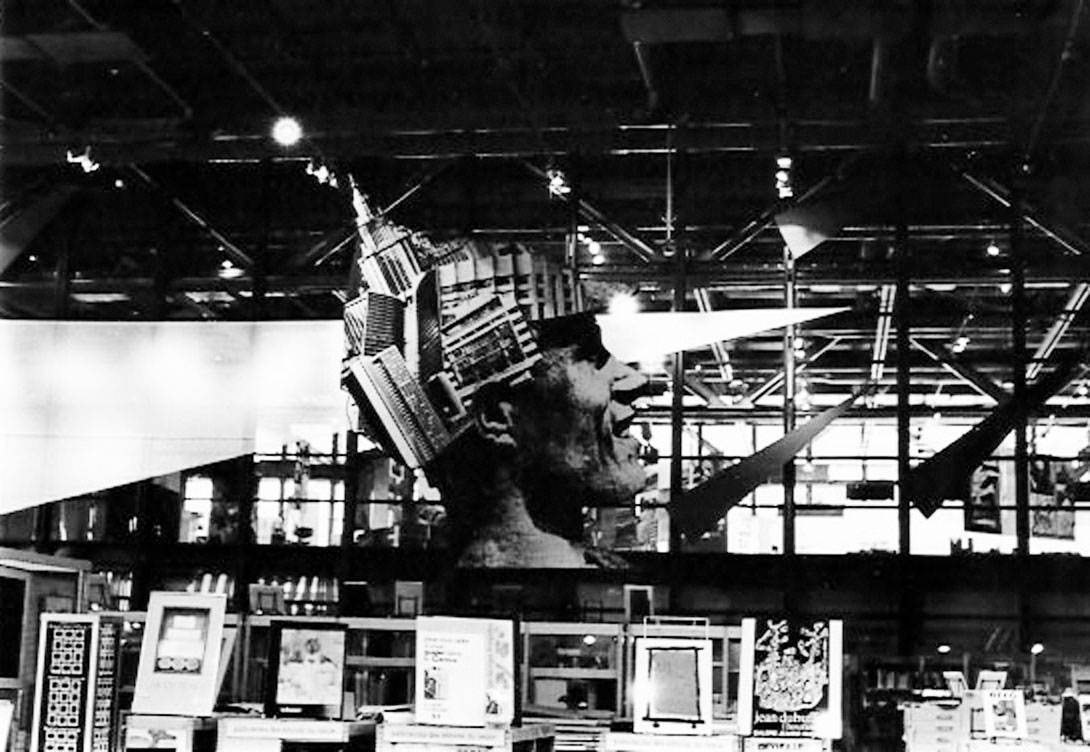
The Centre National d’Art et de Culture Georges Pompidou starts operation (the building will be open to the public in February 1977). When Pontus Hultén becomes director, Cieślewicz begins collaboration with the institution. He designs posters and printed matter accompanying exhibitions, creating a uniform system of visual signage (most often an invitation, poster, and catalogue). His first major in this respect is “Maïakovski, 20 ans de travail” (1975). Later, he would design catalogues for extensive shows: “Paris–Berlin 1900–1930” (1978), “Architecture en Allemagne 1900–1933” (1979), “Paris–Moscou 1900–1930” (1979), “Paris–Paris 1937–1957” (1981), “Les réalismes” (1981), “Présences polonaises” (1983), and “Design français” (1988).
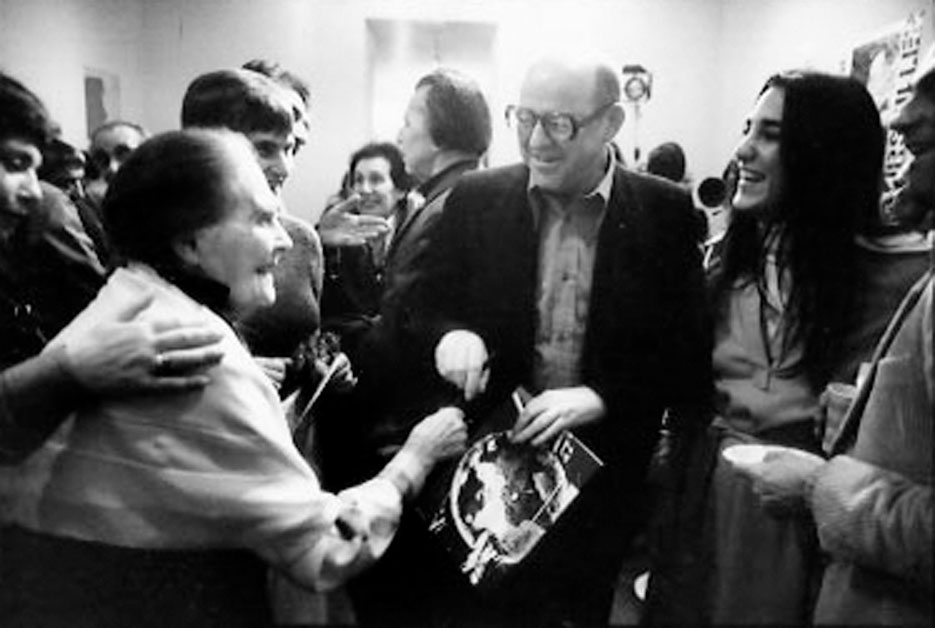
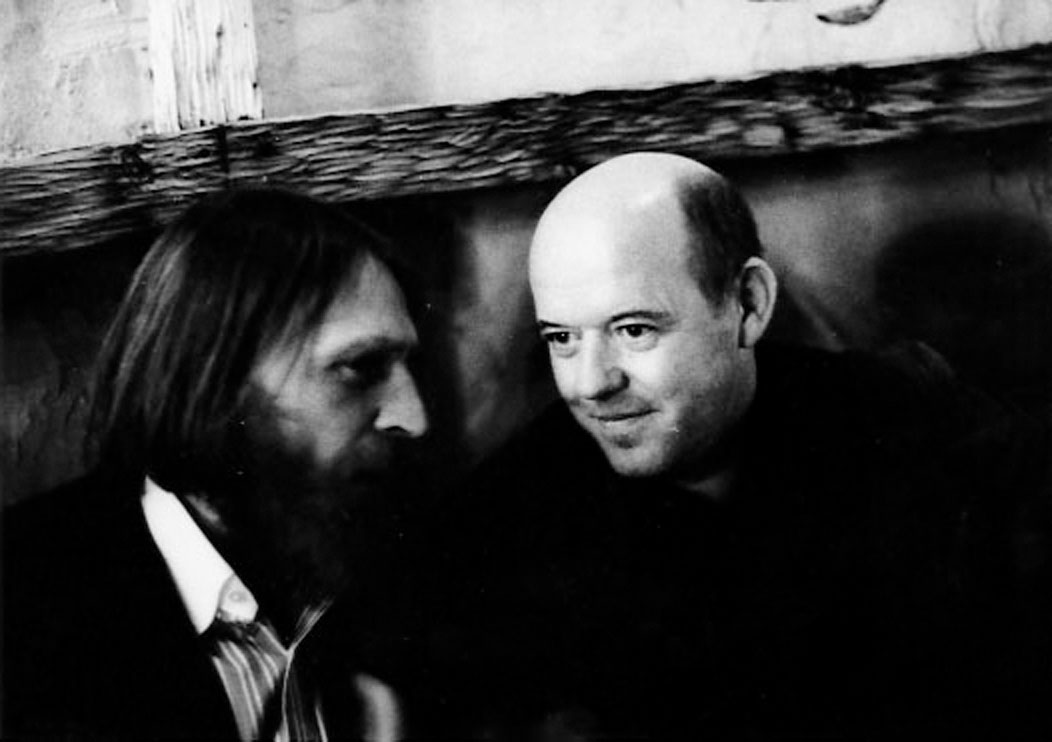
In collaboration with the Museum of Literature in Warsaw, he organises an exhibition in Paris of drawings by Bruno Schulz, one of his most important artists, whom he often refers to both in his work and in numerous interviews. Moreover, he designs a poster and a small catalogue with a reproduction of one drawing for the show “70 dessins de Bruno Schulz”.
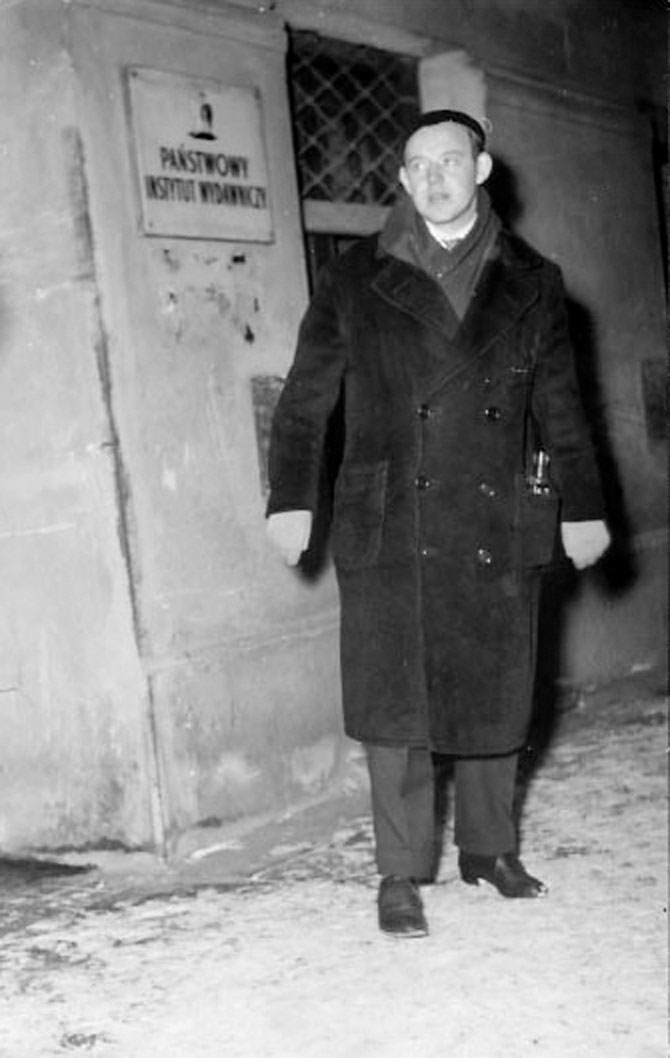
Commissioned by the Państwowy Instytut Wydawniczy publishers, he prepares 26 photomontage illustrations for Ann Radcliffe’s book The Mysteries of Udolpho. He leaves the convention of symmetry and plunges into colourful reproductions of old paintings. Once again, as with Cinnamon Shops, he offers his own interpretation of literature based on free associations.
Becomes head of the Graphics Studio for final year students at the École Supérieure d’Art Graphique (ESAG). He will be in charge of it until his death.
1976
His work on the illustrations for Radcliffe’s book gives rise to new photomontages that will make up an independent series Change of Climate. Unified in their character, often ironic or deeply philosophical in their subtext, they are at the same time extremely visually attractive. They tempt the eye with their colour and visual effect resulting from an unusual combination of two visions of the world, the one encapsulated in old painting and the contemporary one inscribed in advertising and press photography. In the following years, until ca. 1983, some 125-150 works from this series would be created and presented in smaller or larger sets at the artist’s numerous solo exhibitions. Many of these works would later be used by Cieślewicz in other commissioned projects, posters, catalogue and book covers, as well as press illustrations.
Most of the original photomontage models are now held in private collections.
Designs the first issue of the magazine Kamikaze. Revue d’information panique et de Roman Cieslewicz, published with the aid of Christian Bourgois and presented on June 8 in Le Rhinocéros bookstore in Paris. It is a newspaper completely designed by the author; its next issues will be published in 1991 and 1997. The publication partly refers to the assumptions and activities of the Panique group, yet it is a completely innovative and unusual project in which the author reacts to various current visual information spread by the media, reintroducing it but entirely on his own terms.
Sead Saračević, editor-in-chief of the Yugoslav magazine Start asks Cieślewicz to design a new graphic layout for the 200th issue of the periodical, to come out on September 22. Published by the Vjesnik publishing house, the bi-weekly media and cultural magazine has a circulation of 200,000 copies at this time and is growing rapidly. Cieślewicz will continue to work with it, e.g. as a design consultant and illustrator.
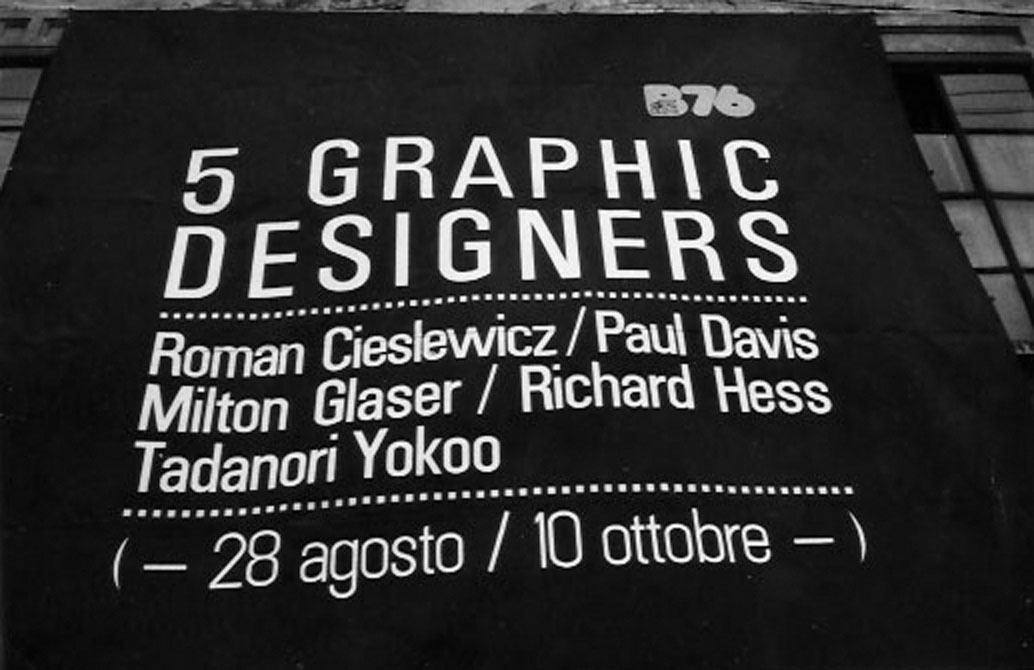
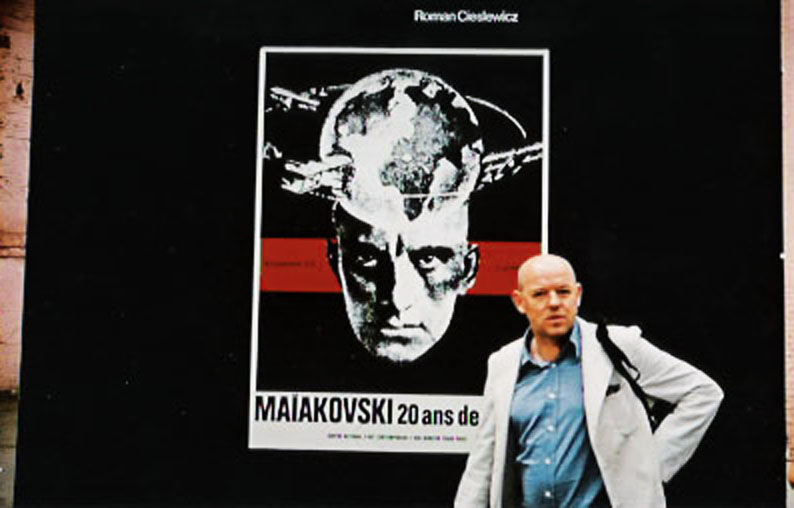
At the Venice Art Biennale, he takes part in a joint exhibition with four other graphic artists “Autentico ma contraffatto. Cinque graphic designers: Roman Cieslewicz, Paul Davis, Milton Glaser, Richard Hess, Tadanori Yokoo”.
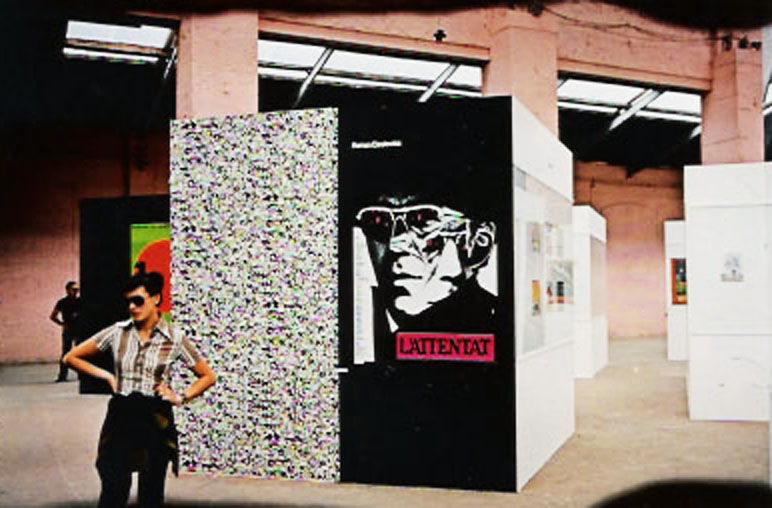
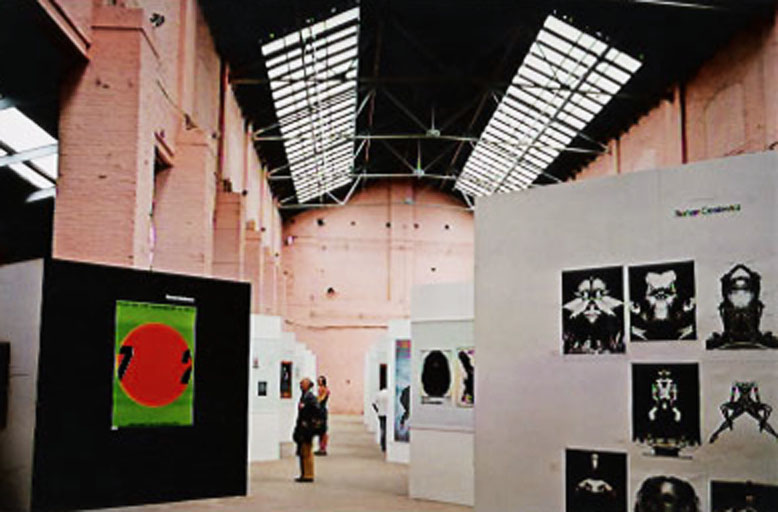
1977
The first presentation of a new series of photomontages Change of Climate at the show “Roman Cieslewicz, changement de climat” in the Galerie de L’Oeil de Boeuf in Paris.
1978
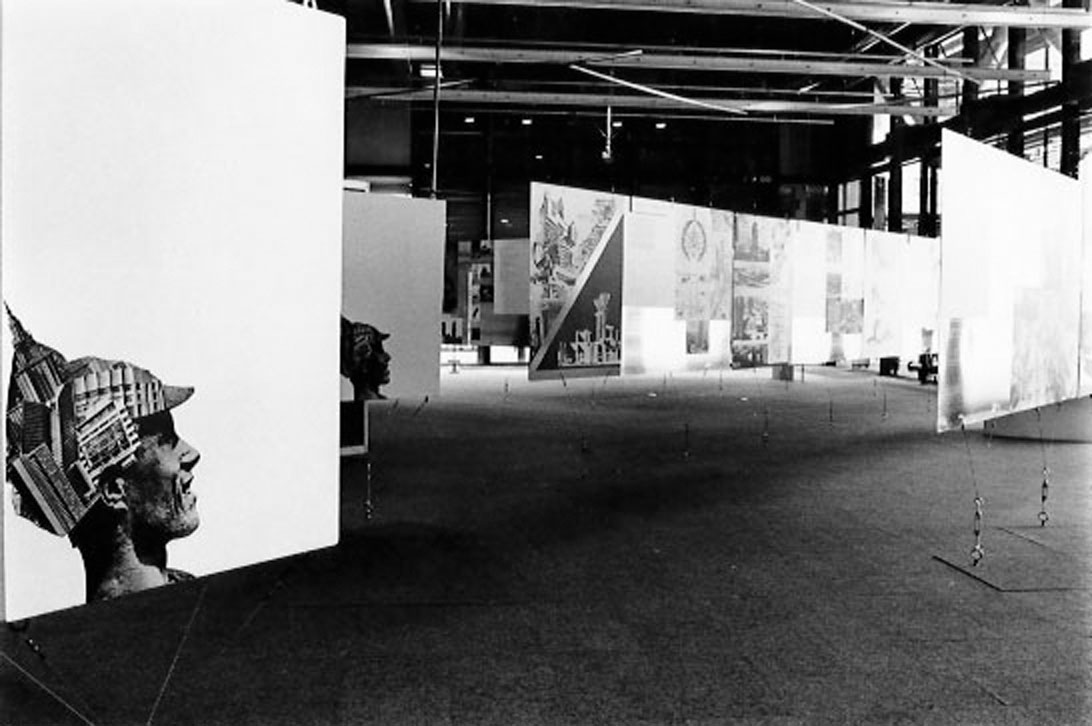
Designs visual identification for the show “L’Espace urbain en URSS 1917–1978” at the Centre Georges Pompidou (poster, invitation, and catalogue), and collaborates with Jean-Louis Cohen on the design of the exhibition space.
Designs a poster and catalogue for the Centre Georges Pompidou for a large thematic exhibition “Paris–Berlin, rapports et contrastes France–Allemagne 1900–1933”. For the first time, he is in charge of the graphic design of a catalogue of several hundred pages, arranging the extensive textual and visual material. This is Cieślewicz’s largest project this year.
Begins collaboration with the Éditions François Maspero. Until 1982 he would make use of photomontage to design covers for books of two series: Cahiers libres and Textes à l’appui.
In collaboration with the Museum of Literature in Warsaw he organises the exhibition “Les portraits dans l’oeuvre de Stanisław Ignacy Witkiewicz” in the Galerie Seine/Visconti in Paris. He furthermore designs the poster accompanying the show and a small catalogue.
1979
Designs the poster and catalogue for another thematic show in the Centre Georges Pompidou: “Architectures en Allemagne 1900–1933”. Like before, he makes use of a photomontage composition, which due to its form clearly references the art of the Constructivists.
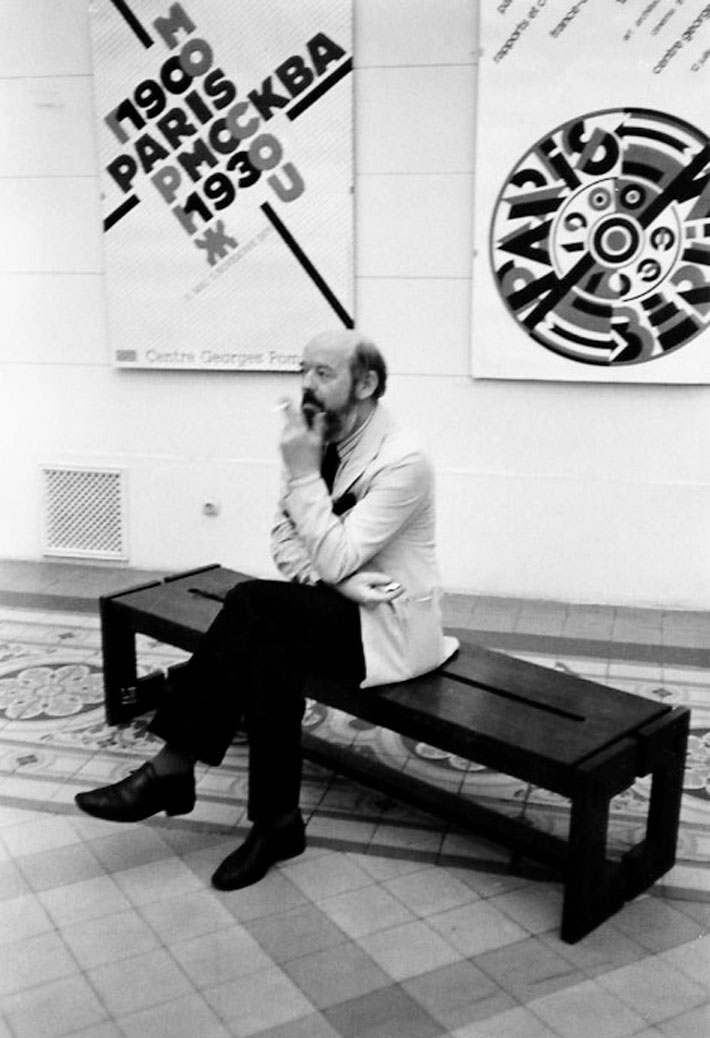
Designs the complete visual identification of the show “Paris–Moscou 1900–1930”, including its catalogue of a few hundred pages. That very year he receives the Grand Prix de l’Affiche de Musée, an award granted in Paris for the poster for this exhibition. The following year he receives an honourable mention in the cultural posters category at the 8th International Poster Biennale in Warsaw.
1980
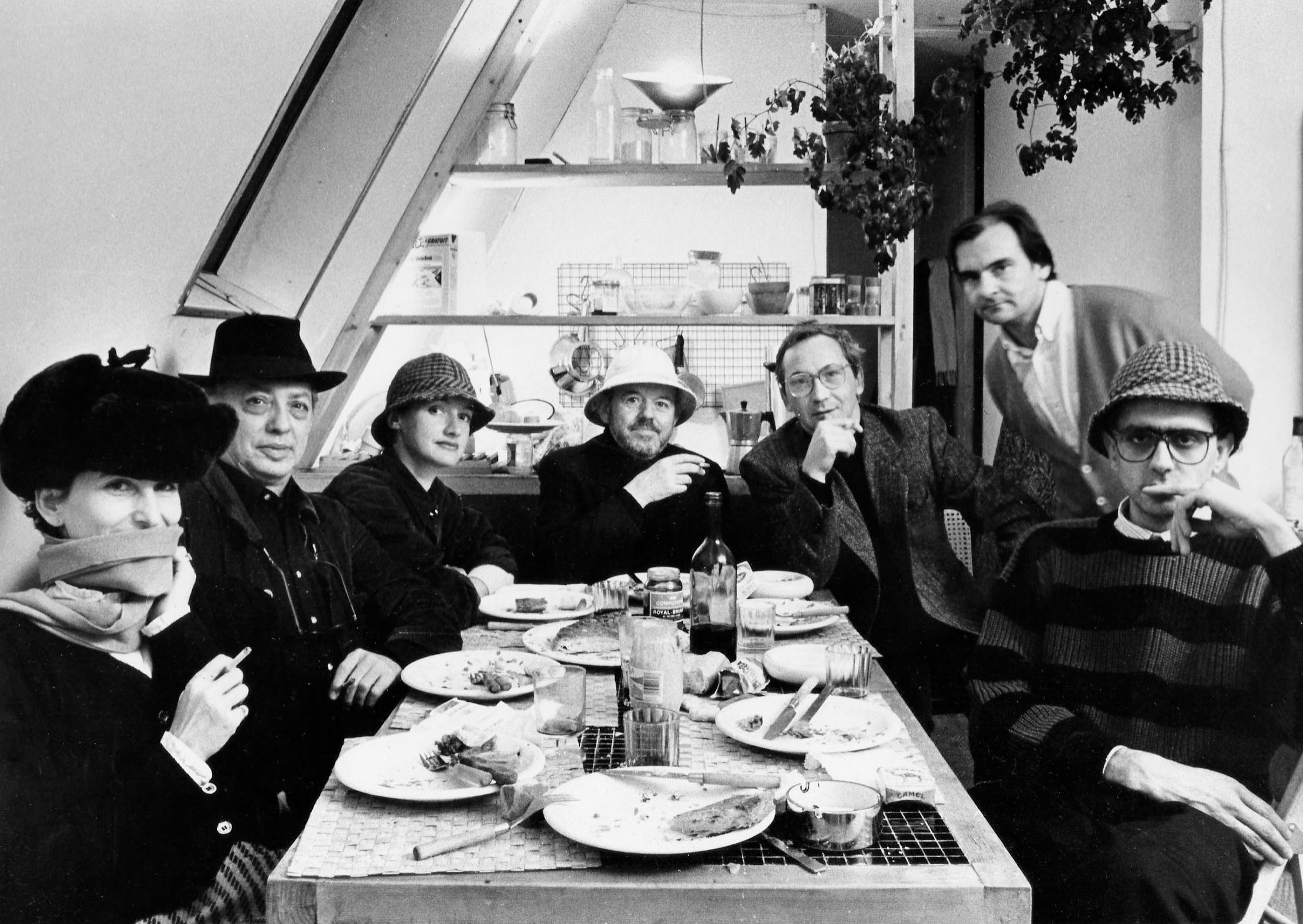
Designs the complete visual identification of a large thematic show “Les Réalismes 1919–1939”, including its catalogue of a few hundred pages.
Raymond Depardon, a French photographer, director of documentaries and cameraman, asks Cieślewicz, whose work he knows from e.g. the Zoom magazine, to design a poster for his first documentary Numeros zero. Over the next dozen years or so, Cieślewicz would design posters for several of Depardon’s subsequent films and a model for his album monograph of photographs, which did not come out in print.
Meets Chantal Petit (b. 1951), a French artist and painter.
1981
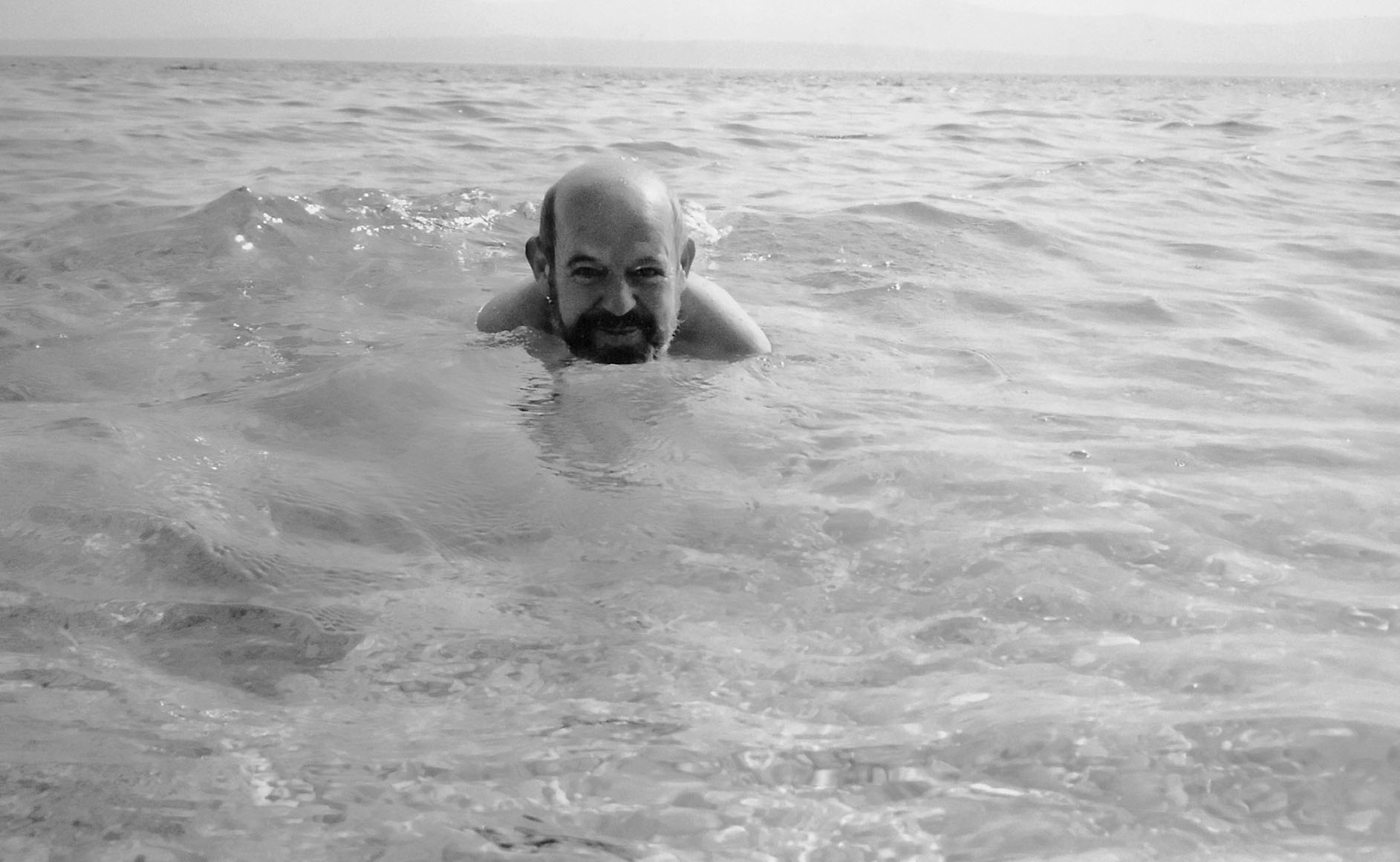
Works again on the complete visual identification of a large thematic show “Paris–Paris 1937–1957, créations en France”. Designs a poster resembling a series of symmetrical graphic works from the early 1970s, with a fragment of the Eiffel Tower doubled in a mirror reflection. The iconic symbol of Paris turned into a graphic sign, emblazoned on a fluorescent smooth background, is printed as a poster in three colour versions and on the catalogue cover.
Charles Jourdan, a global leader in the footwear industry, commissions a new advertising campaign from Ret D Ketchum, who announce a call and choose Cieślewicz out of the five submissions, accepting photomontage instead of photography. In the years 1981–1982, the graphic artist combines fragments of classical painting canvases with photographs of Jourdan’s shoe collections into 20 small-sized photomontages, later published as press ads.
Re-invited to update the layout of the Start magazine. He redesigned the masthead and introduced two new typefaces that he frequently used in his designs at the time: Glaser Stencil on the cover and Rockwell for article headlines. Erotic images of women continued to dominate the covers, helping the magazine maintain a high circulation.
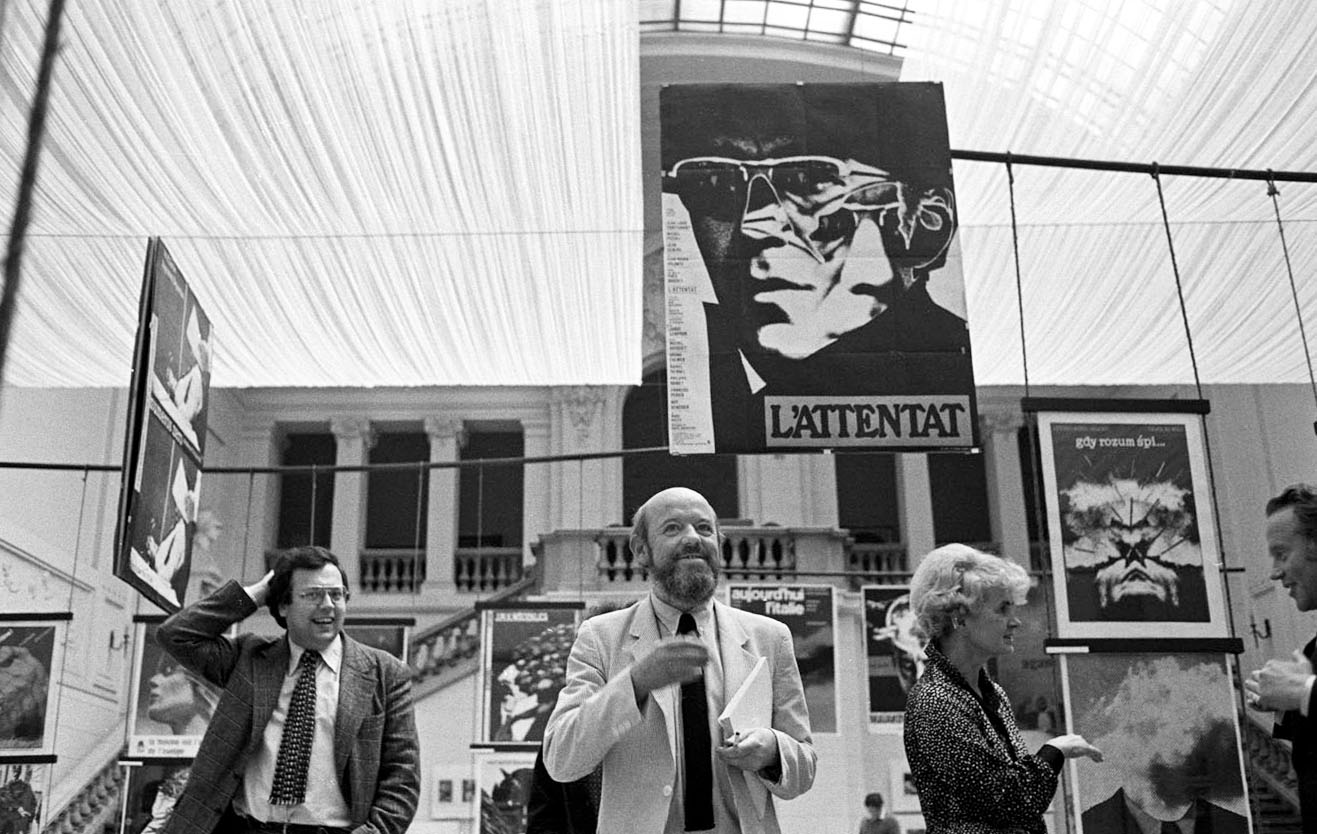
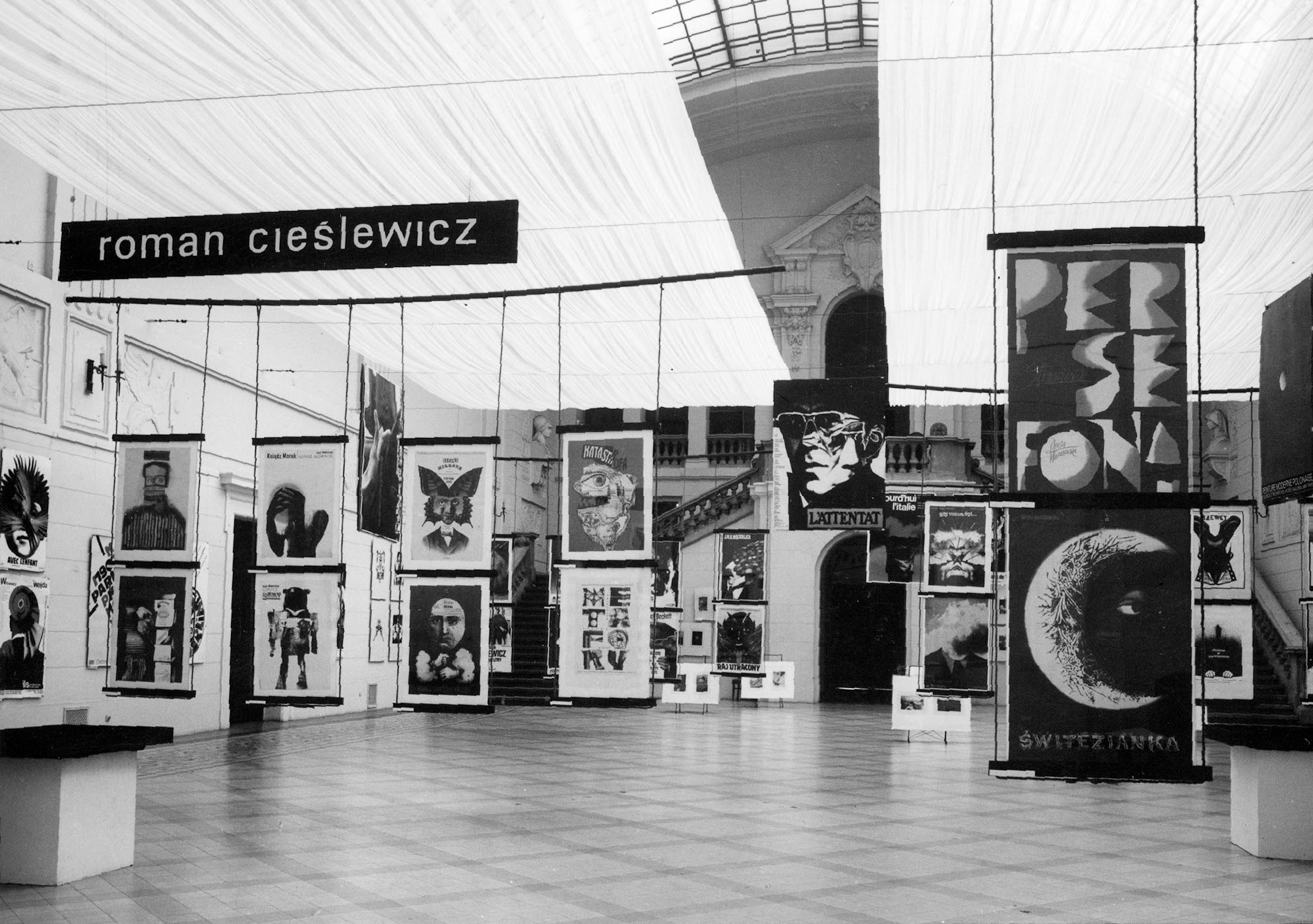
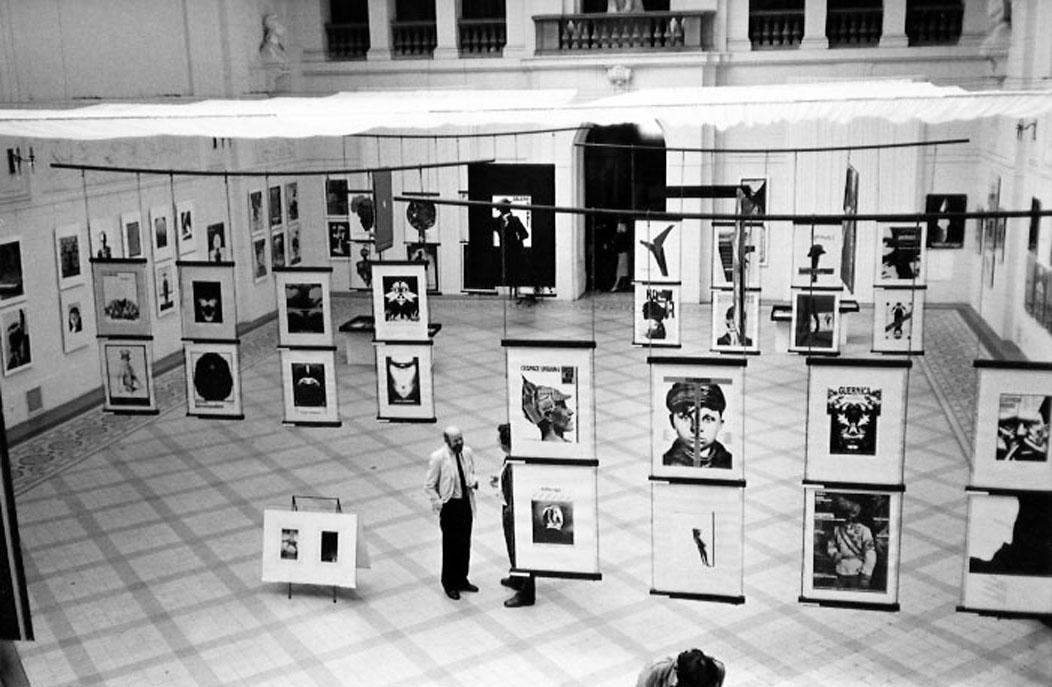
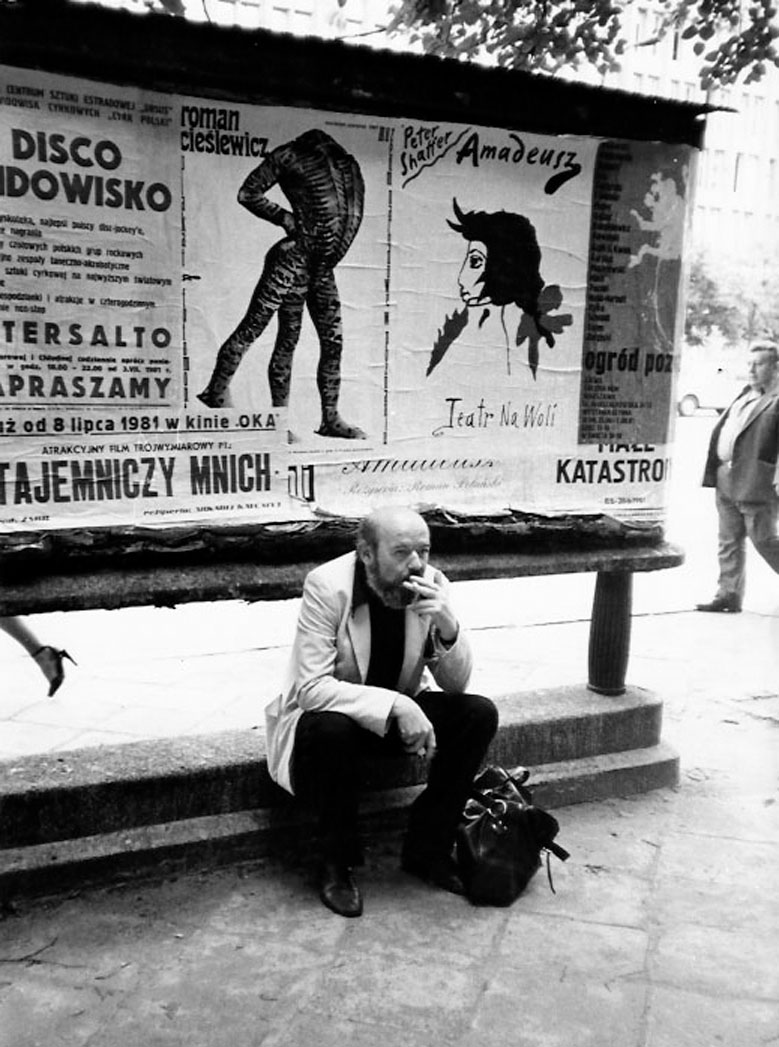
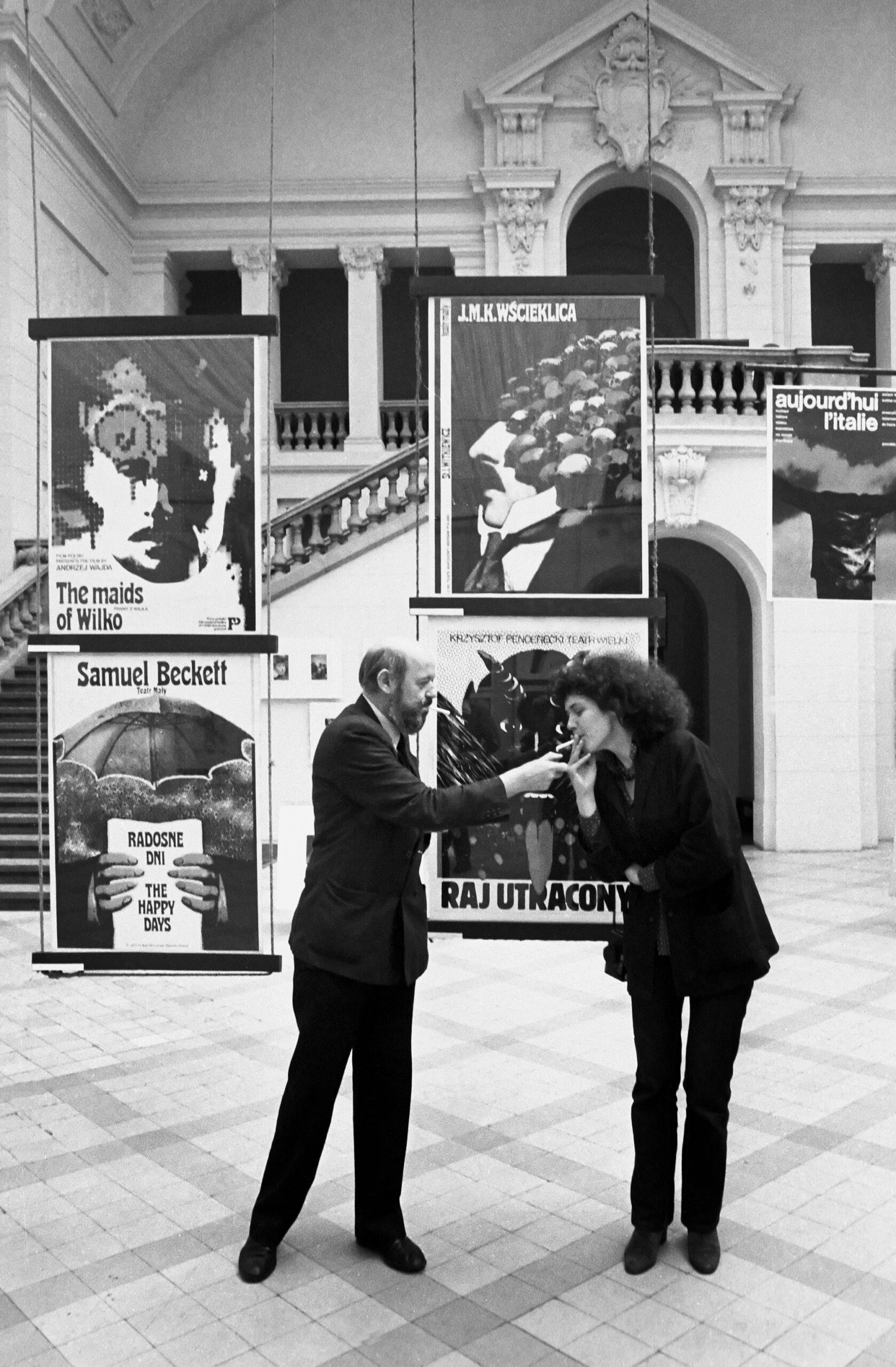
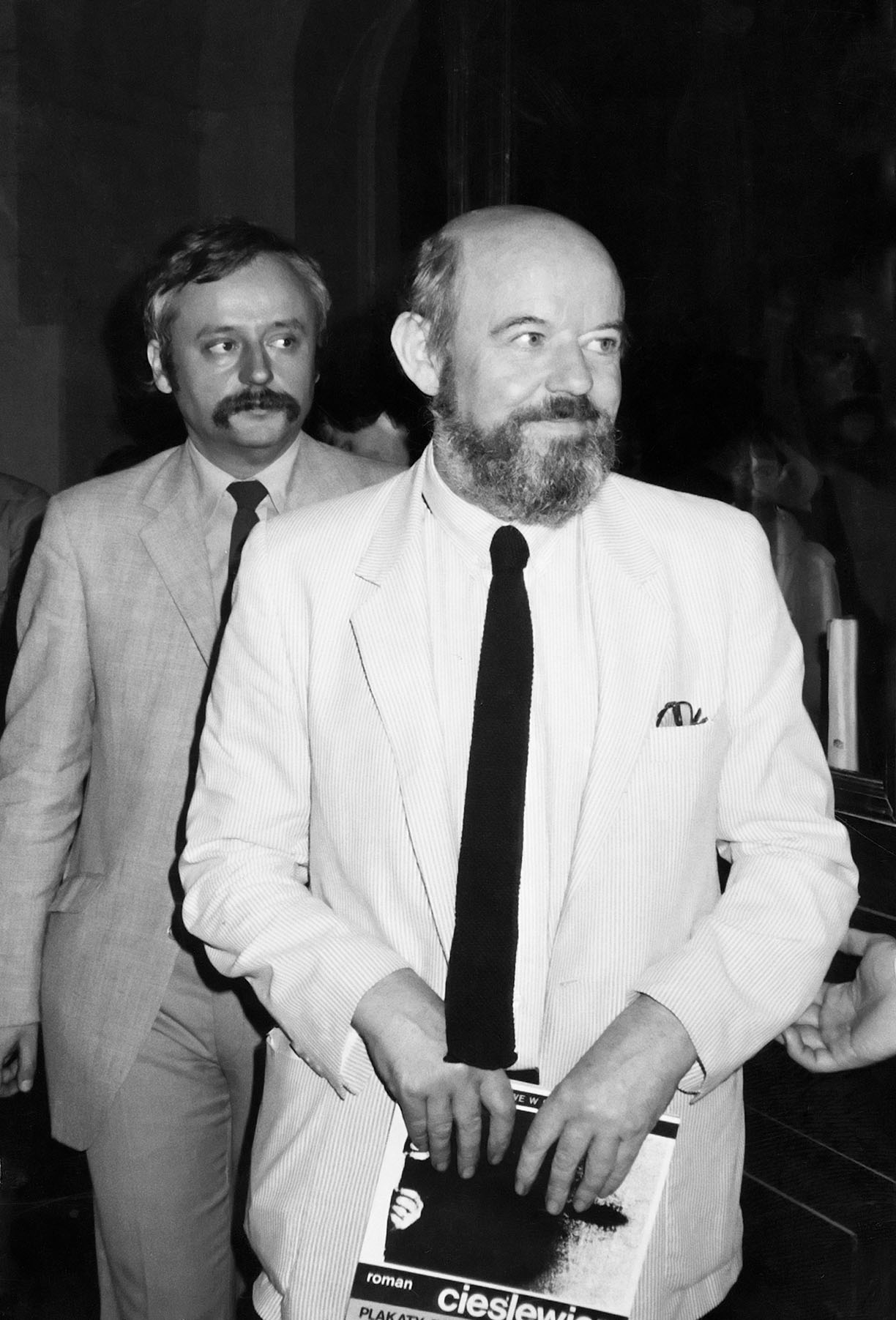
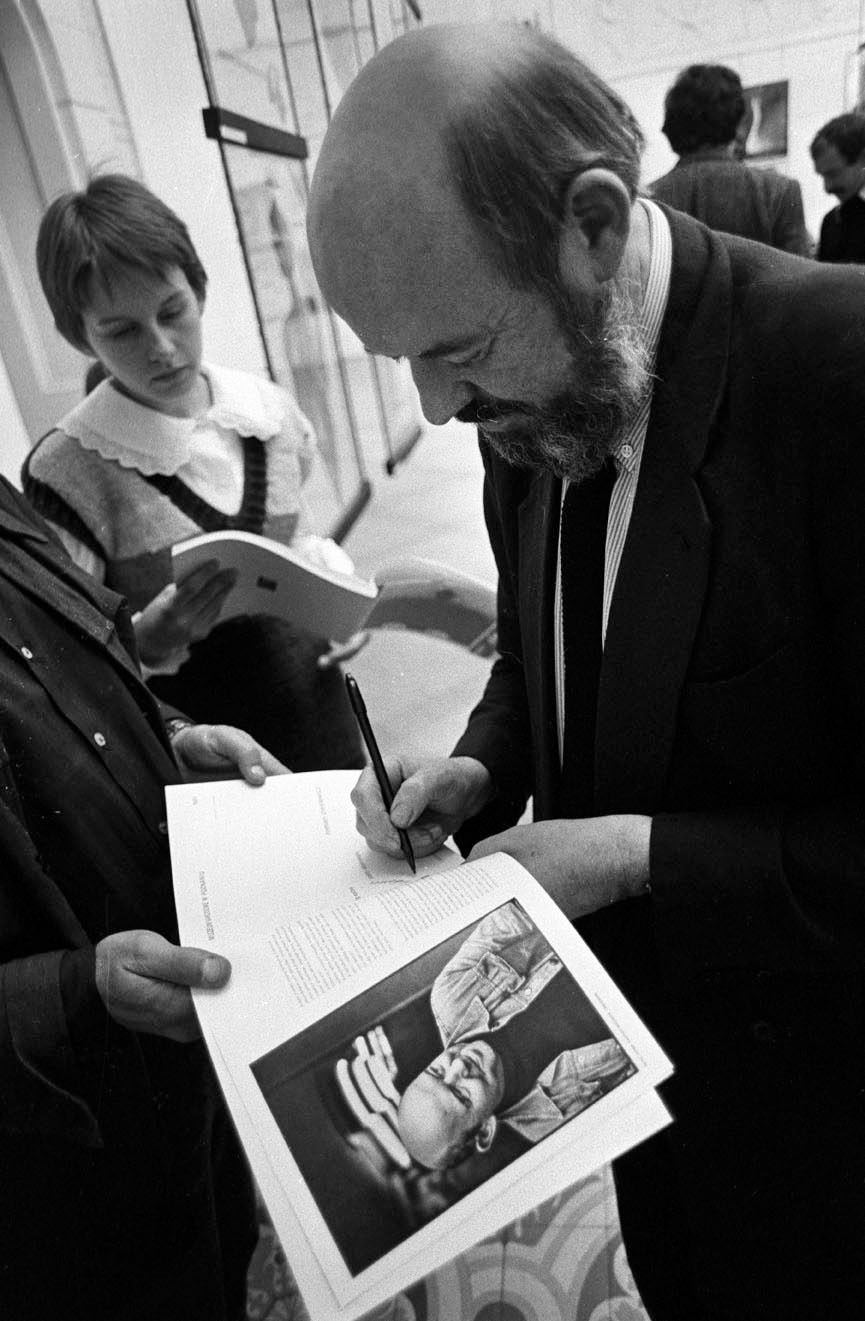
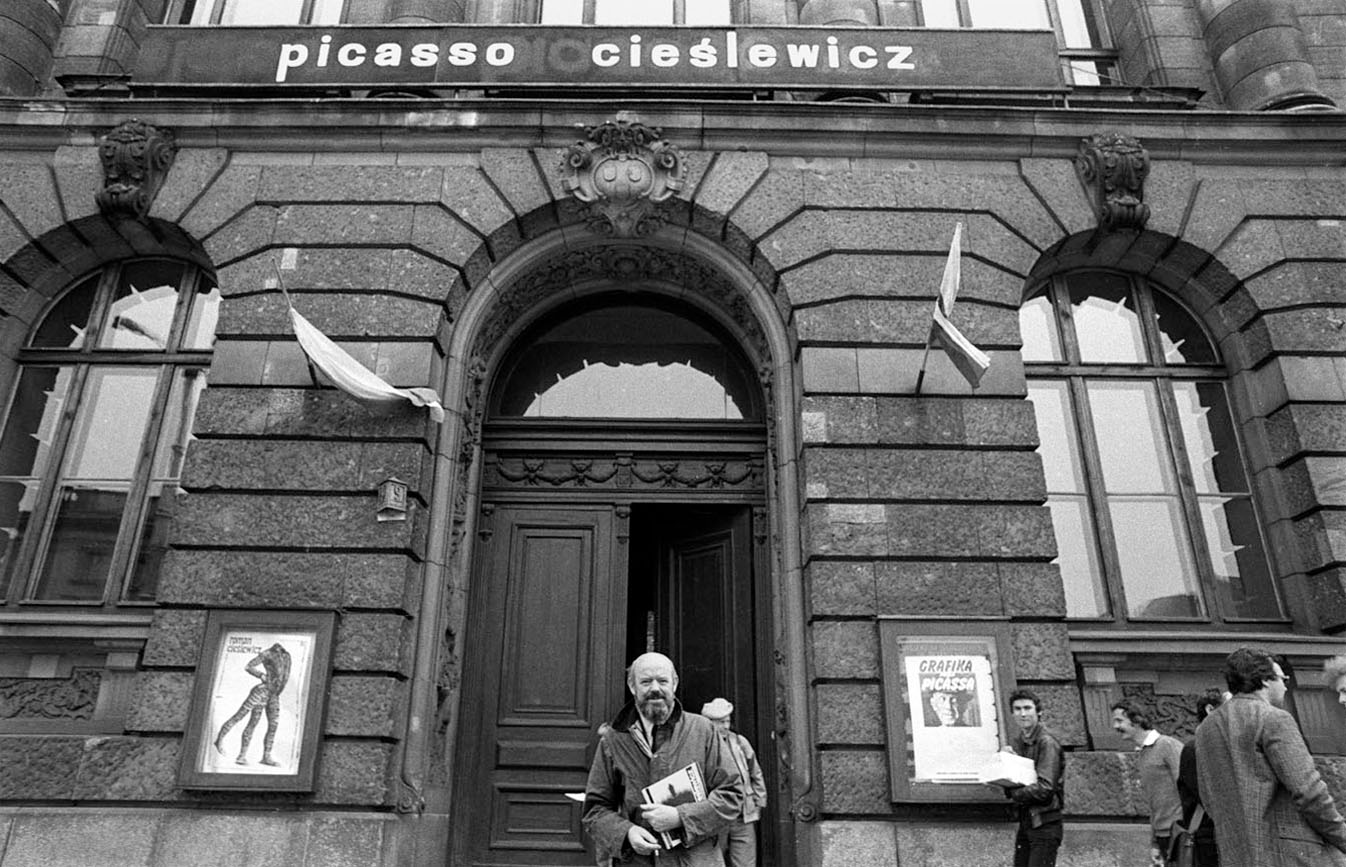
A large solo exhibition curated by Zdzisław Schubert opens at the National Museum in Poznań. From then on, thanks to the curator’s on-going contacts with Roman Cieślewicz, the local Poster Gallery regularly acquires the artist’s works, enlarging the collection of his posters, graphics, and prints.
1982
Designs 23 illustrations to the book published by the Éditions du Dialogue Miłujcie nieprzyjacioły wasze [Love Your Enemies], with texts chosen by Jacek Salij OP. The photomontages formally relate to the Climate Change series, but are thematically clearly linked to the book’s message.
Prepares the first collage illustrations for the popular science magazine for young people Phosphore, with which he will cooperate until 1987. Each issue has a theme, expressed also in the illustrations.
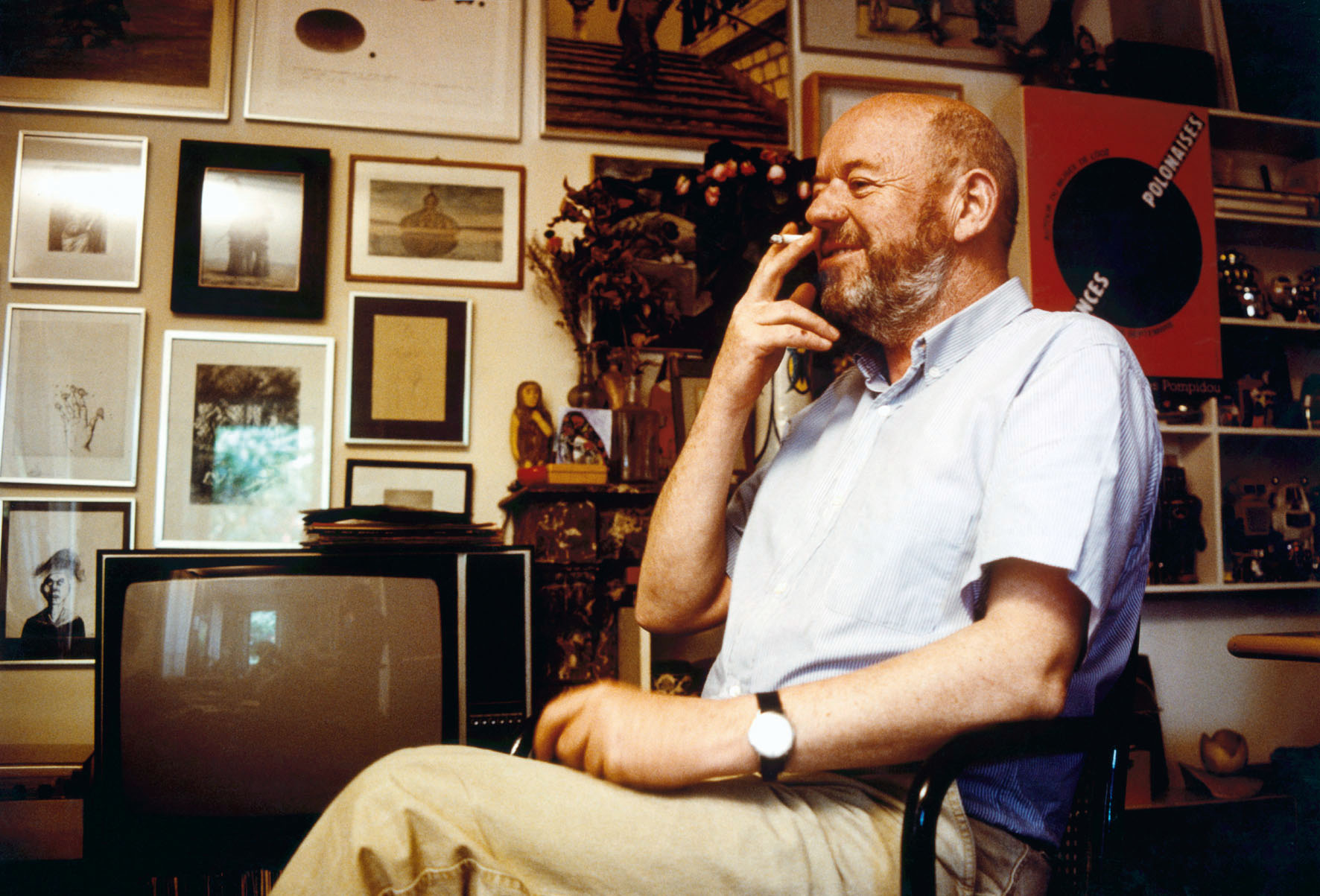
The exhibition “Roman Cieslewicz, collages” begins ongoing collaboration with the Galerie Jean Briance in Paris.
1983
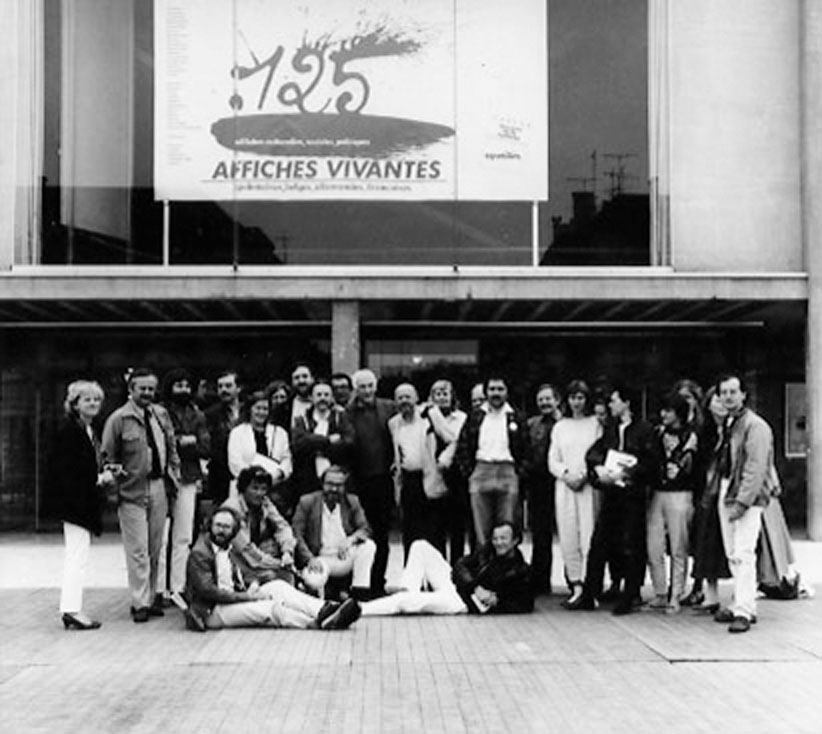
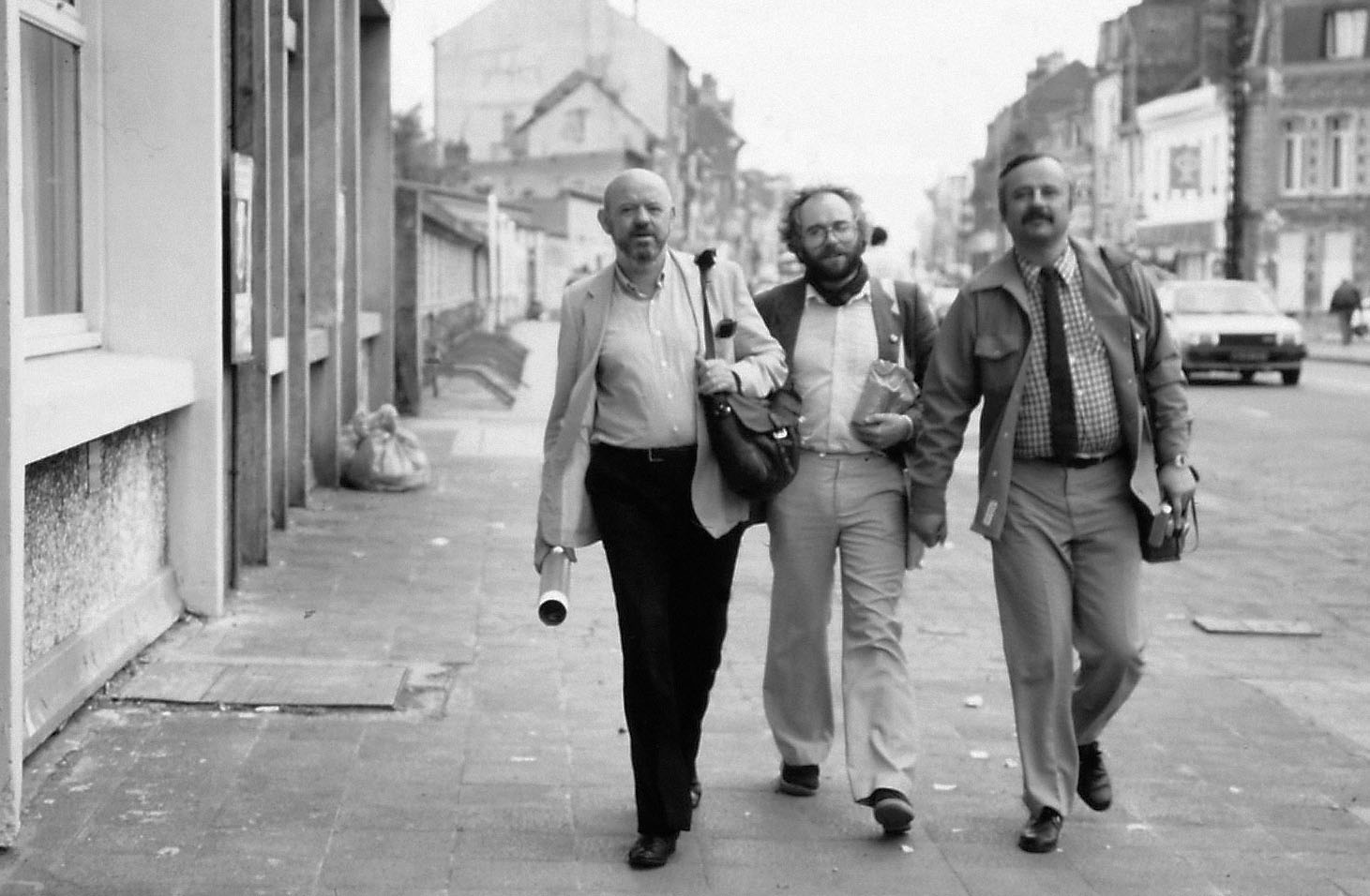
The Centre Pompidou in collaboration with the Muzeum Sztuki in Łódź holds a major exhibition “Présences Polonaises. L’art vivant autour du Musée de Łódź”. It is jointly prepared by Polish and French curators, e.g. Ryszard Stanisławski (then director of Muzeum Sztuki in Łódź) and Germain Viatte. The art of Witkacy and the Polish Constructivists forms the core of the exhibition, with selected contemporary artists as an important complement. Designed by Cieślewicz, the posters with a circle motif, printed in a large French format (150 × 100 cm) and hung on tall poles in front of the Centre Pompidou building, resembled semaphores directing viewers to the interior. The cover of the several-hundred-page catalogue this time did not repeat the composition of the poster but referred directly to the typographic designs of the Constructivist period, specifically the covers of magazines such as Praesens, Dźwignia, and Zwrotnica.
Completes a major advertising project, a 32-page advertising folder for the DAYN concern from Saudi Arabia. Made in collage technique, the individual foldouts, presenting the company’s areas of business activity, will later be shown in several solo exhibitions.
He starts collaboration with the Denoël publishing house, for whom he will design covers and book layouts until 1991.
He starts a decade-long collaboration with the French publisher Hazan, for whom he designs two series dedicated to the arts: Maîtres de l’art (mini-monographs of eminent artists) and Architecture (monographs of architects).
1984
Designs an advertising campaign of a unique exhibition “La France a du talent”, held at the Galeries Lafayette, the most renowned shopping mall at the Haussmann Boulevard in Paris.
Becomes chairperson of the French section of the Alliance Graphique Internationale (AGI).
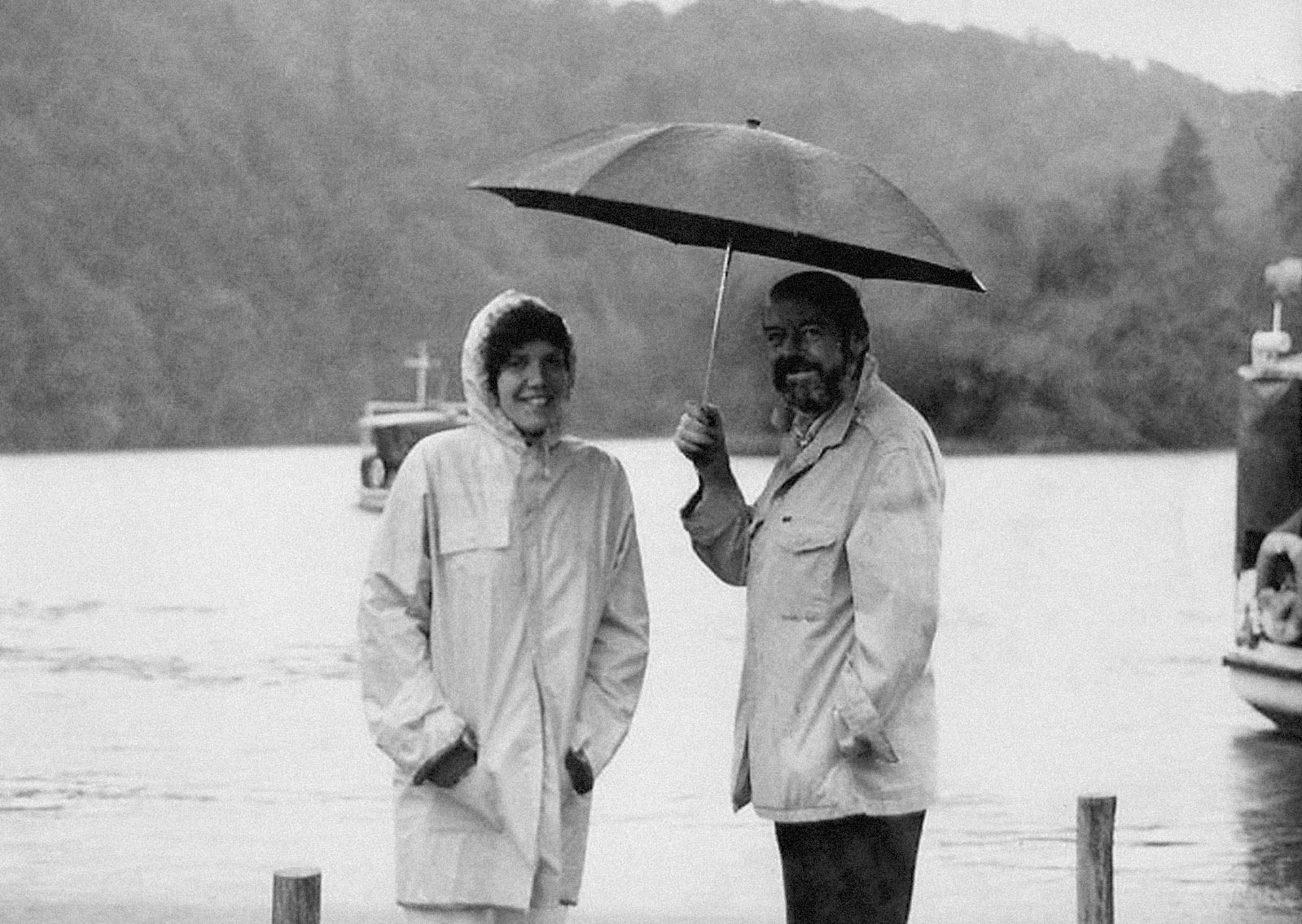
1986
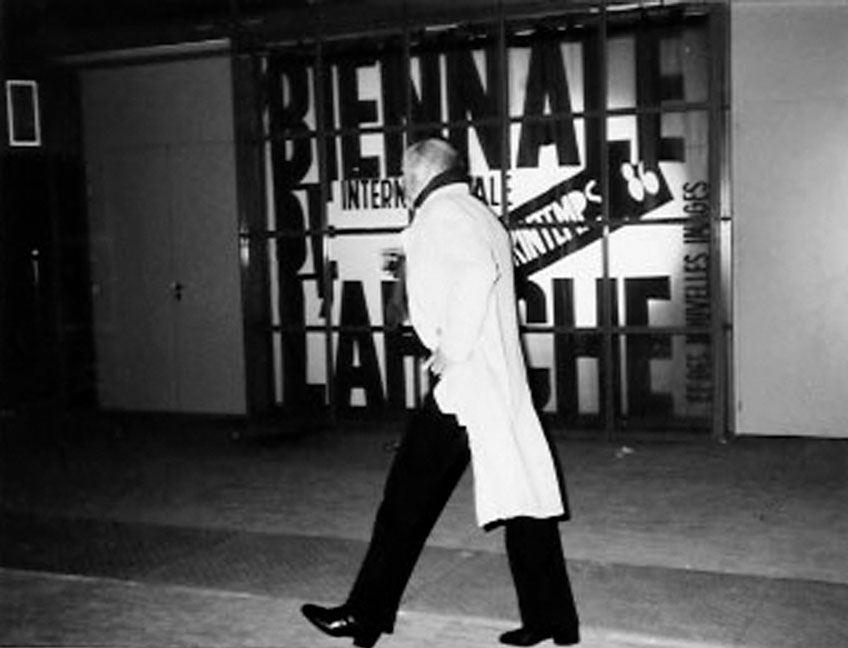
Between October 1986 and February 1987, he makes 32 photomontages of the series Pas de nouvelles – bonnes nouvelles. He jots down ideas from the newspapers he reads and the news he watches while in hospital. This time, he uses a completely different language, austere and simple, which augments his critical judgement of the present day. The juxtaposed unprocessed black and white photographs, formally reminiscent of the works in the first issue of Kamikaze, are first displayed in the Parisian Galerie Jean Briance in 1987. The exhibition is accompanied by a catalogue designed by Cieślewicz and published by Éditions Magik as part of the series Cahier Spécial.
Commissioned by the Louis Vuitton fashion house, he designs a few illustrations for the company’s annual report.
1987
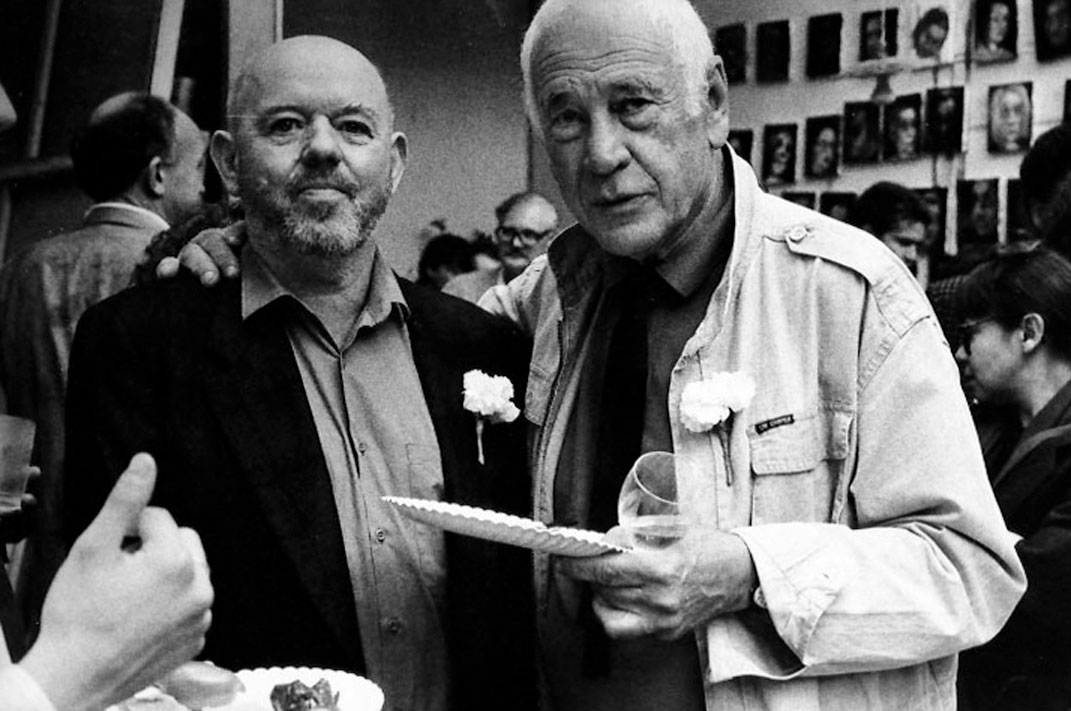
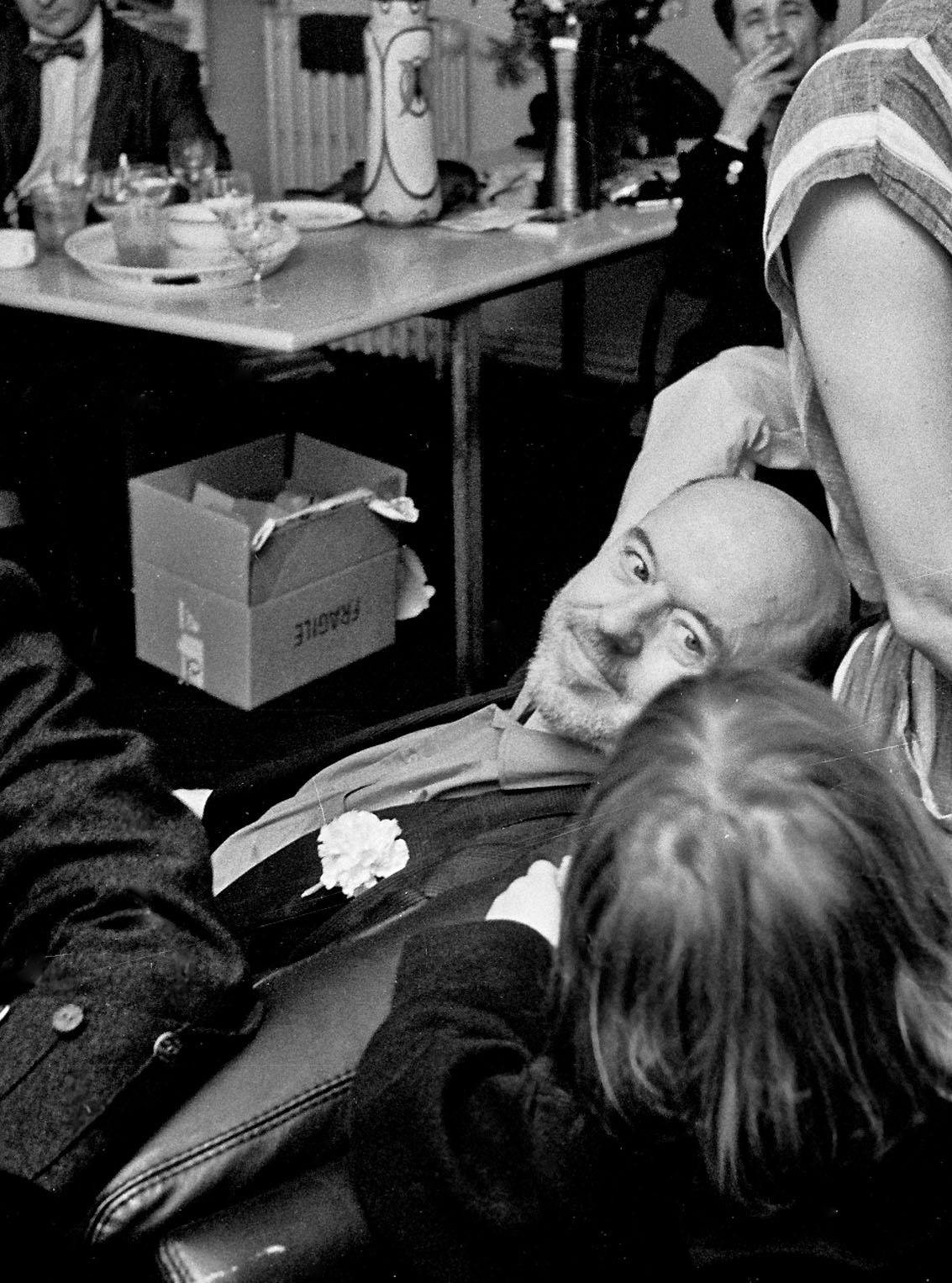
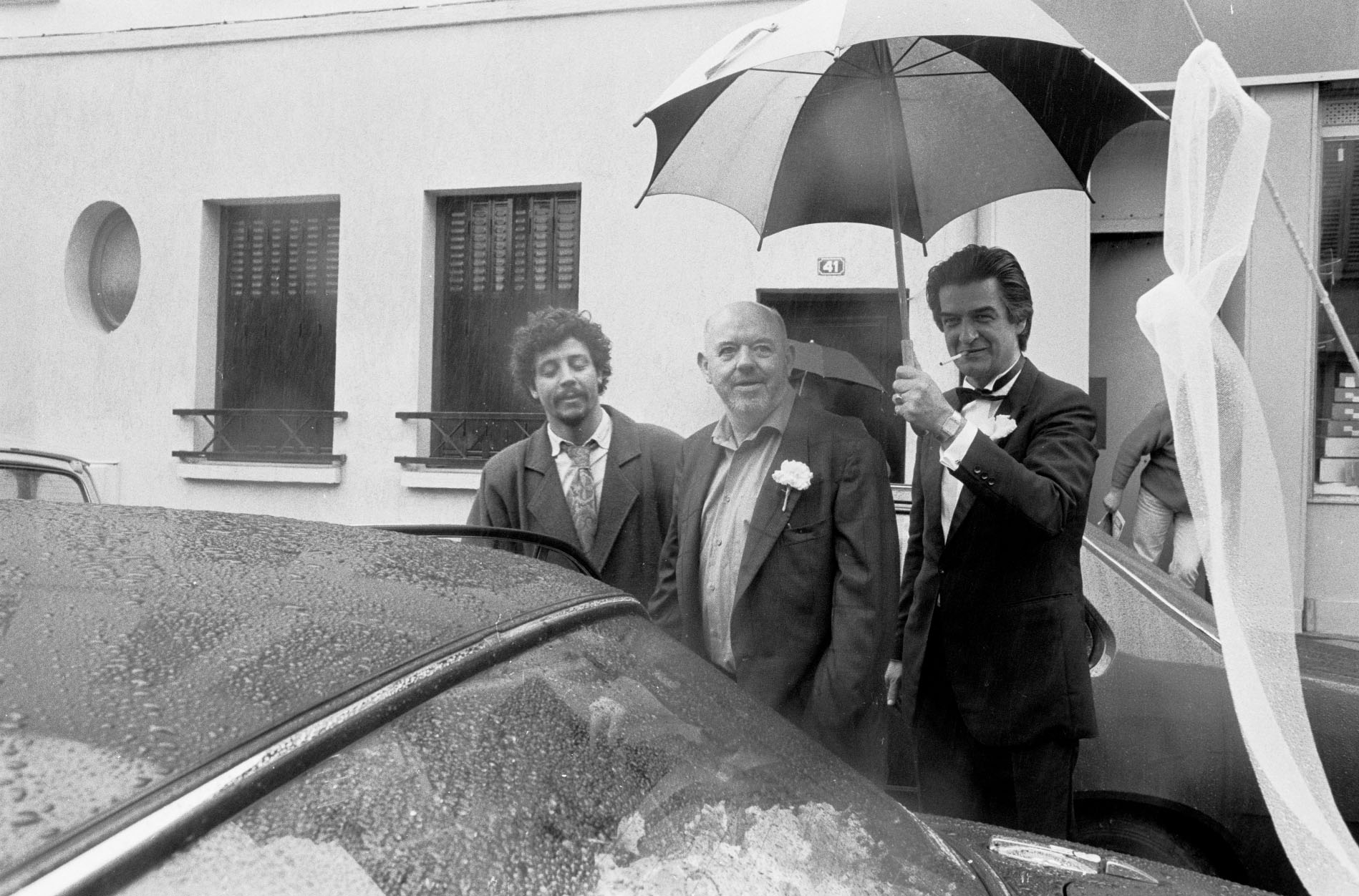
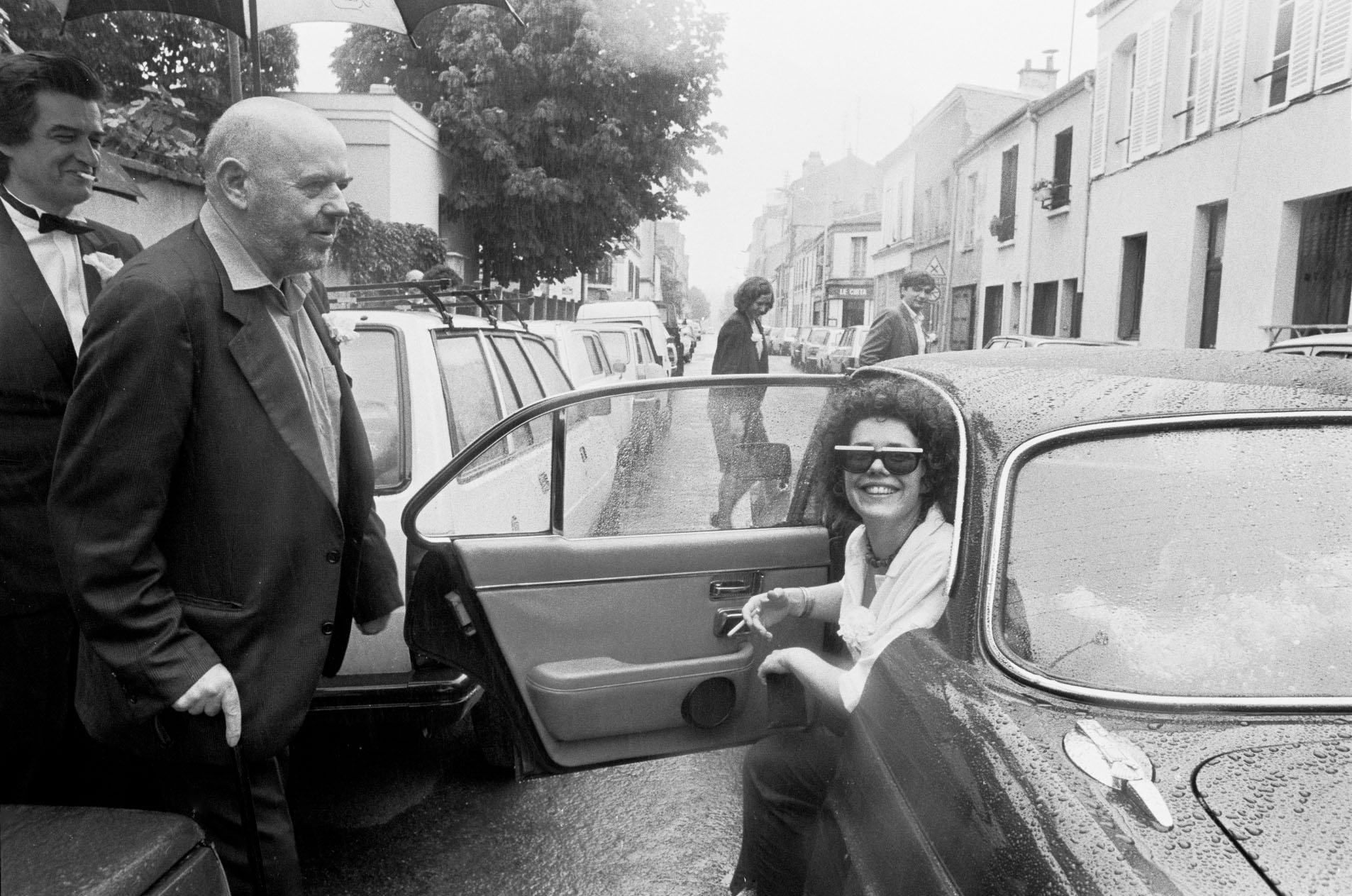
Roman Cieślewicz marries Chantal Petit.
1988
Accepting a commission from the Imprimerie Nationale, he designs 17 illustrations for the new edition of Anatol France’s book Les dieux ont soif, commemorating the bicentennial of the French Revolution. the revolution through photomontages combining photographs of wounded soldiers from the First World War with 18th and 19th century French paintings.
He creates a new layout and vignette, and in subsequent years also most of the covers of the science magazine VST (Vie Sociale et Traitements), which as of that moment became a bimonthly. He would regularly publish full-page illustrations with texts in the “Roman Collages” column, edited jointly with Vincent Pache.
1989
Commissioned by the National Assembly and the Ministry of Culture, he designs the decoration of the Assembly’s building for the bicentennial of the French Revolution: three representations of walking human figures, man, woman, and child, in the French national colours are projected successively on the columned, classical façade of the building topped by a tympanum.
Begins regular collaboration with the French weekly Révolution, published by the Société d’édition du journal Révolution (SEJR). Until 1994, he designs illustrations and a few covers of the weekly.
1990
The French minister of culture awards to Cieślewicz the Grand Prix national d’art graphique.
Commissioned by the culture department of Paris municipality, he designs the decoration of the city hall to commemorate Charles de Gaulle’s 100th birthday. Cieślewicz’s enlarged designs are projected onto the building’s façade during a few nights.
Starts a five-year collaboration with Libération daily. Publishes minimalist graphic commentaries to the current social, political, and cultural developments, most often not on commission but as a kind of personal diary. Not all so-called Petites images made at that time are published in the diary; they will be displayed in some of the artist’s solo exhibitions.
1991
The second issue of the artist’s own newspaper Kamikaze, commenting on the 1989 events comes out; the publisher is the Galerie du Jour Agnes B.
Designs the graphic concept and layout of the Champ d’Écoute bulletin with the vignette and several covers.
1992
Gets invited as an artistic advisor and illustrator to collaborate with the political and cultural magazine L’Autre Journal. Re-opened as a monthly, it had Agnès Cruz as artistic director at that time. The cover of the May issue, Quoi de neuf?, published also as a large-sized poster, would become of Cieślewicz’s the best recognised works.
1993
A major retrospective exhibition of Roman Cieślewicz is held at the Centre Georges Pompidou, the museum institution for which he has worked for years, shaping its visual image. The exhibition is accompanied by a catalogue prepared by Margo Rouard-Snowman in two language versions (French and English), which is also a monograph on the artist.
As two other exhibitions by French artists are taking place at the Centre Pompidou at the same time, Cieślewicz designs one common poster for all of them: Pierre Chareau architecte, Roman Cieslewicz graphiste, Roger Tallon designer industriel.
Invited by Alina Kalczyńska, he prepares a series of six serigraph miniatures titled La plénitude du cercle, sei serigrafie and a short text with reflections on the shape of a circle which has fascinated him since early youth. The above were published in the bibliophile series Incisioni originali di artisti polacchi a cura di Alina Kalczyńska.
Probably that very year Cieślewicz starts work on the visual and artistic concept of the special issue of Le Monde to mark the fifty years of the daily in 1994. Prepares a few different versions of the cover and the title pages of the individual sections and chooses illustrations by different artists and adapts a few of his own ones.
He creates over 300 collages from press cuttings, paper correspondence, leaflets, and other materials pasted on A4 size cardboard panels under the name Petites images. They are a kind of daily notes and records, although it is difficult to conclusively define their purpose. Part of them will be published by Semiose only in 2018 in the book Petites images Roman Cieslewicz, edited by Benoît Porcher.
1994
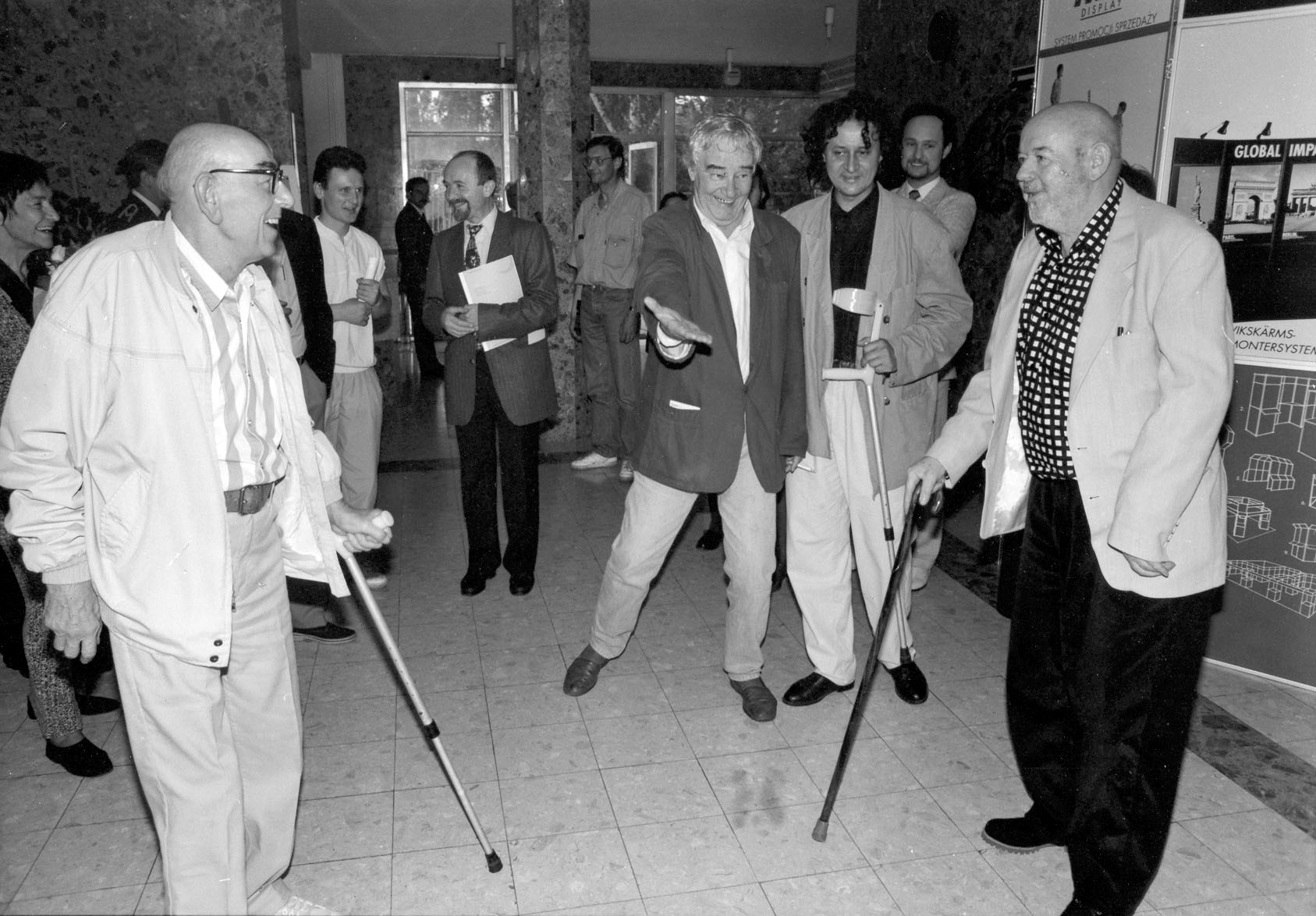
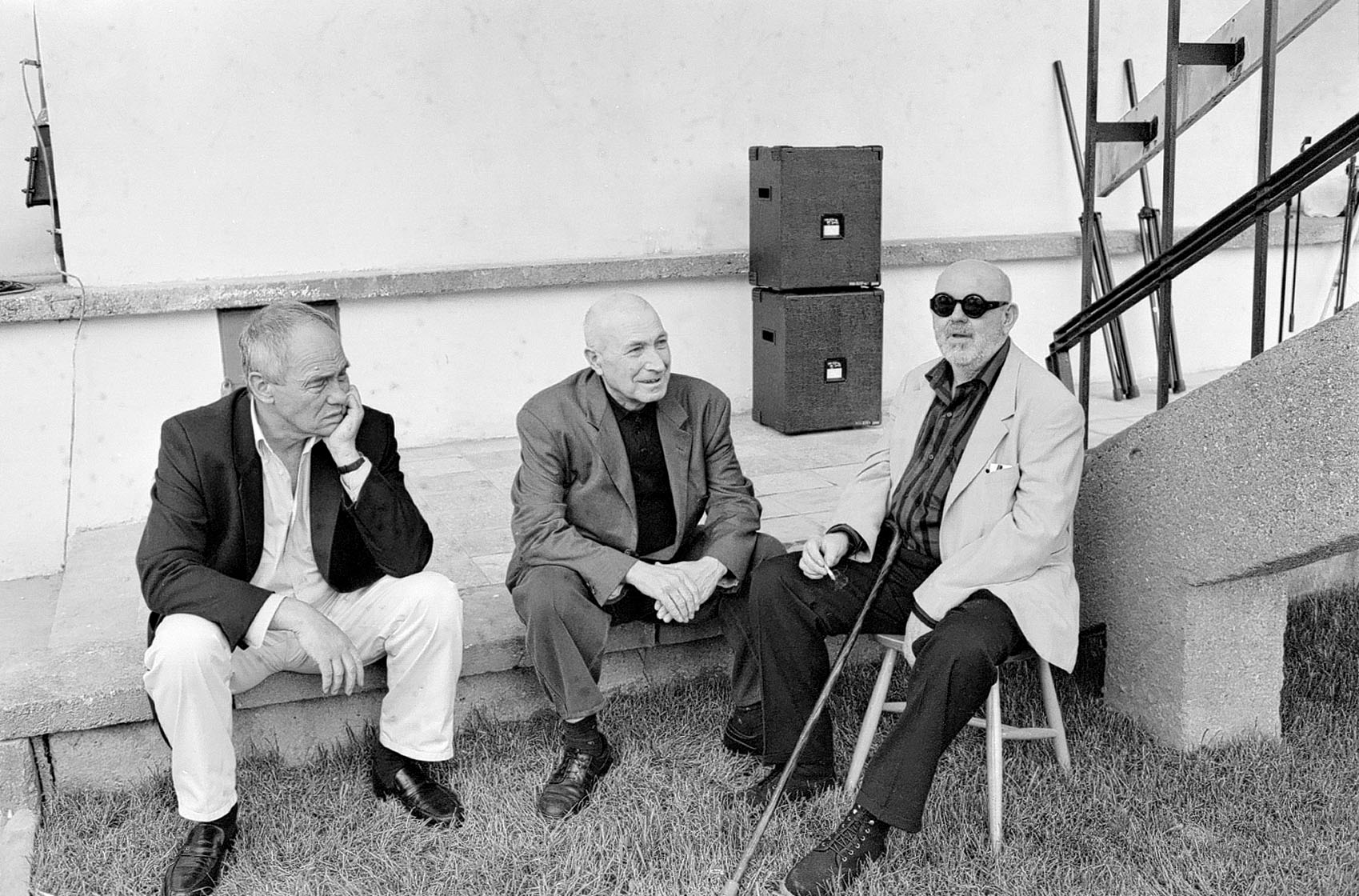
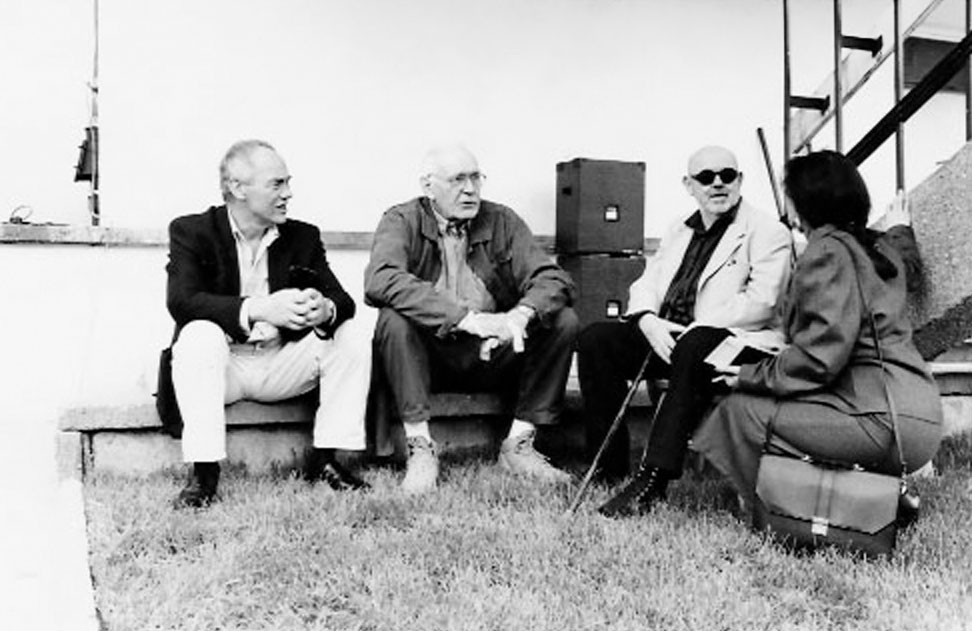
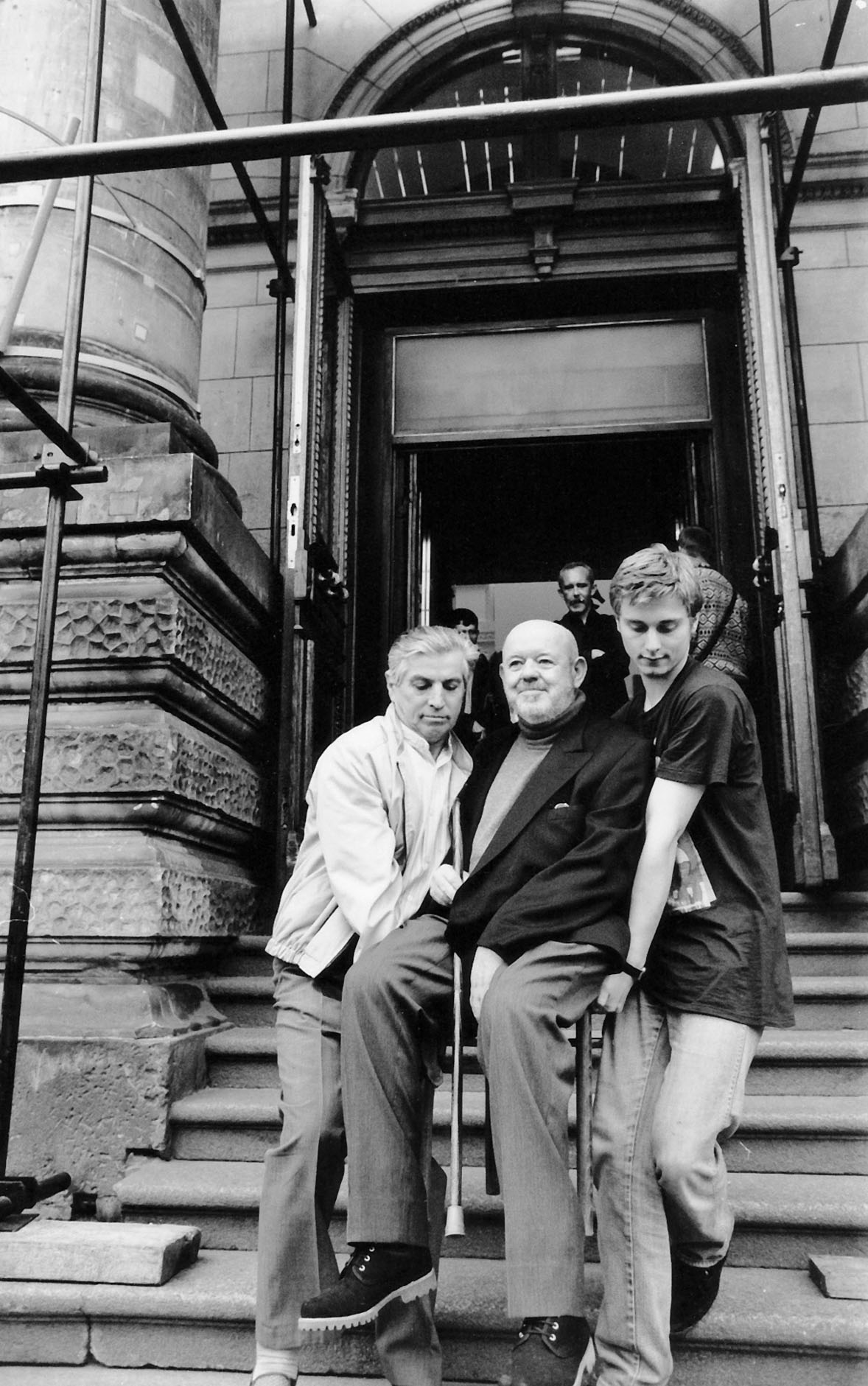
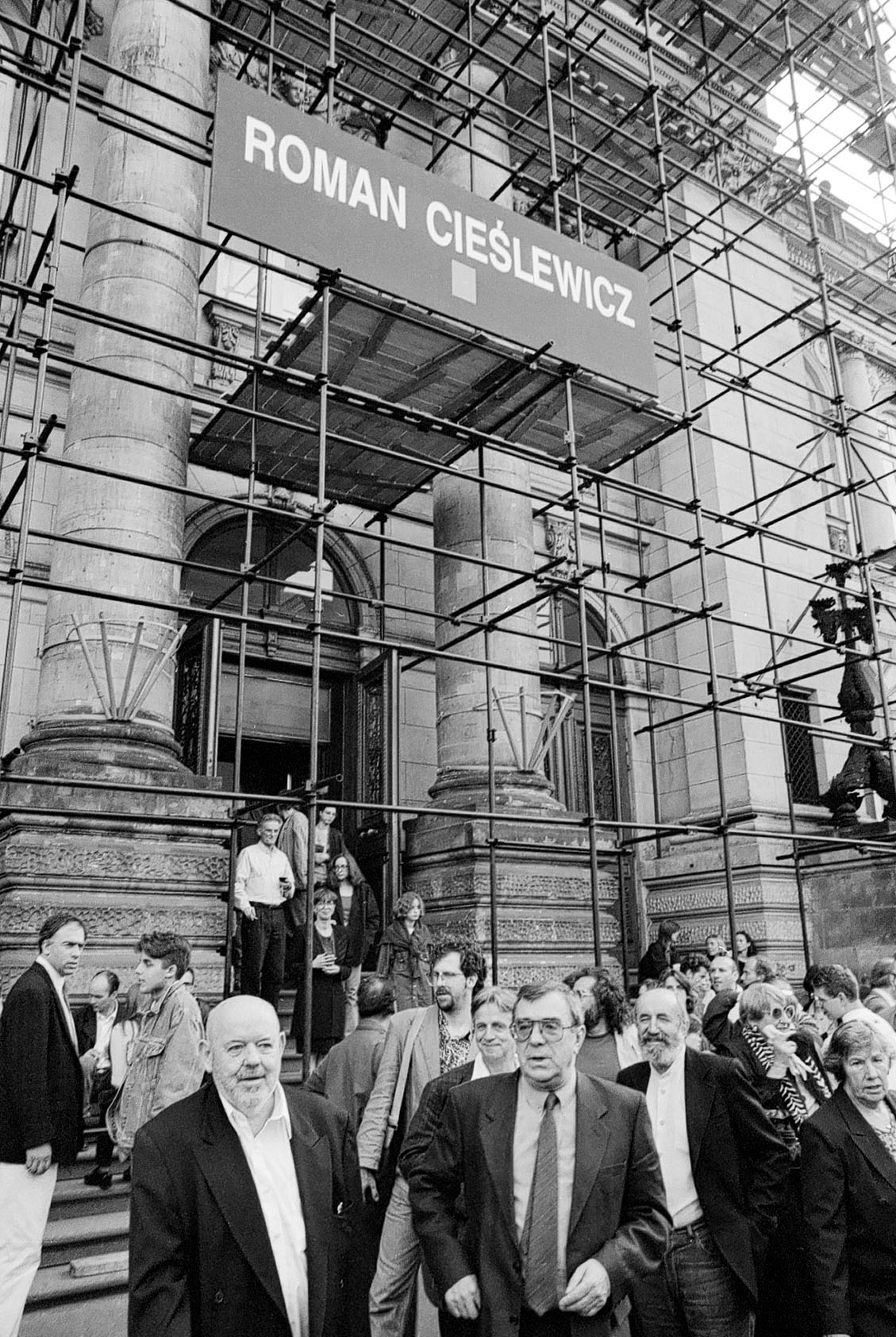
Between June 4 and July 17, the Zachęta Gallery in Warsaw holds a large monograph show “Roman Cieślewicz, retrospektywa”. Held earlier in Paris, it was prepared in collaboration with the Centre Pompidou, which loaned a number of works. It is part of the programme built around the International Poster Biennale. Cieślewicz’s poster accompanying the show a refers in terms of its composition to prints from the Symmetrical Figures series. A small catalogue with an identical composition on the cover and several texts by different authors does not provide an index of the works on display.
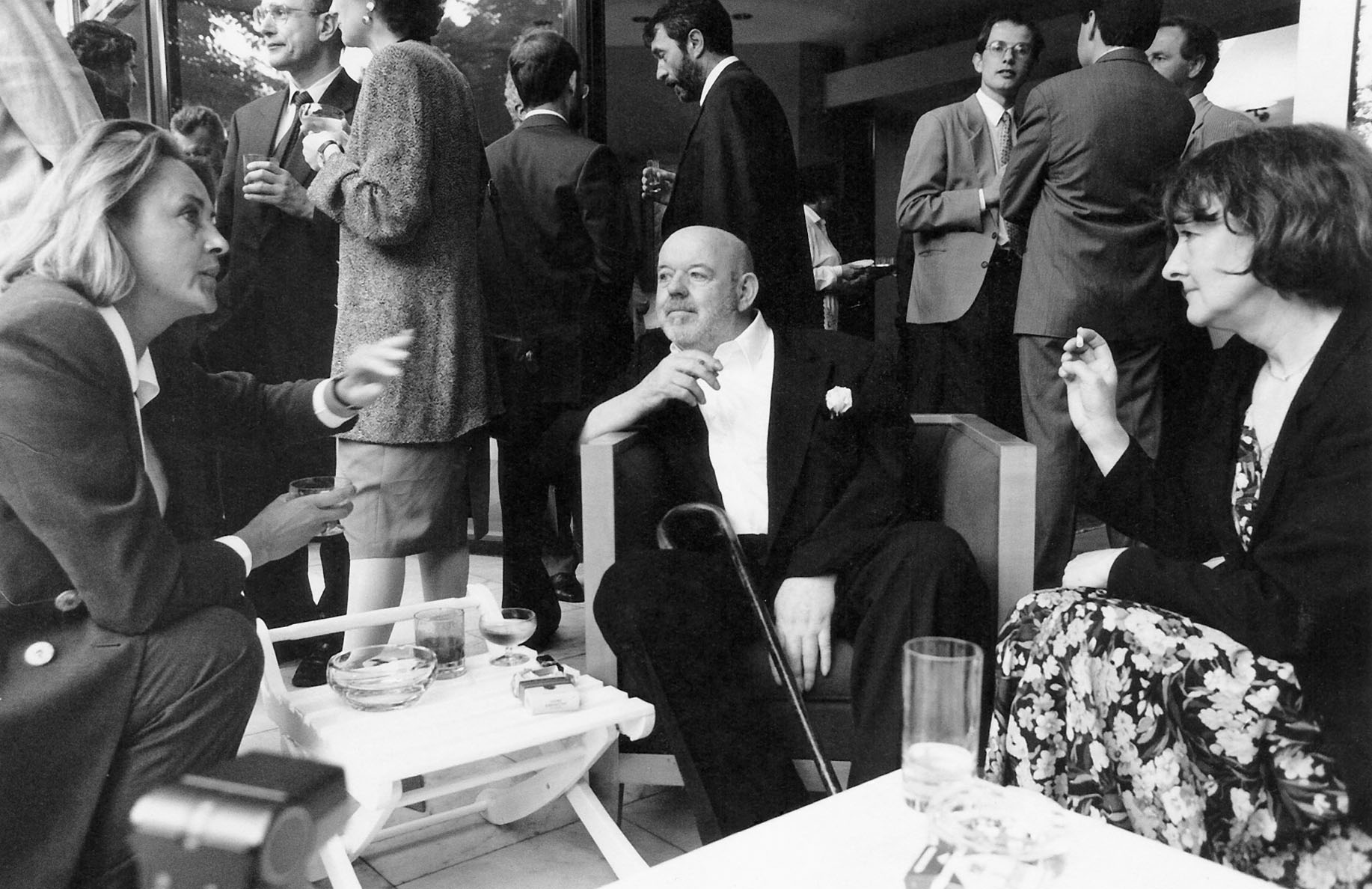
As a guest of honour of the International Poster Biennale, Cieślewicz meets many Polish graphic artists and friends, e.g. Henryk Tomaszewski and Waldemar Świerzy. His many interviews are widely disseminated by Polish press.
Works on the third issue of his own magazine Kamikaze, which like the previous two issues will be published by the Galerie du Jour Agnès B. in 1997, after the author’s death.
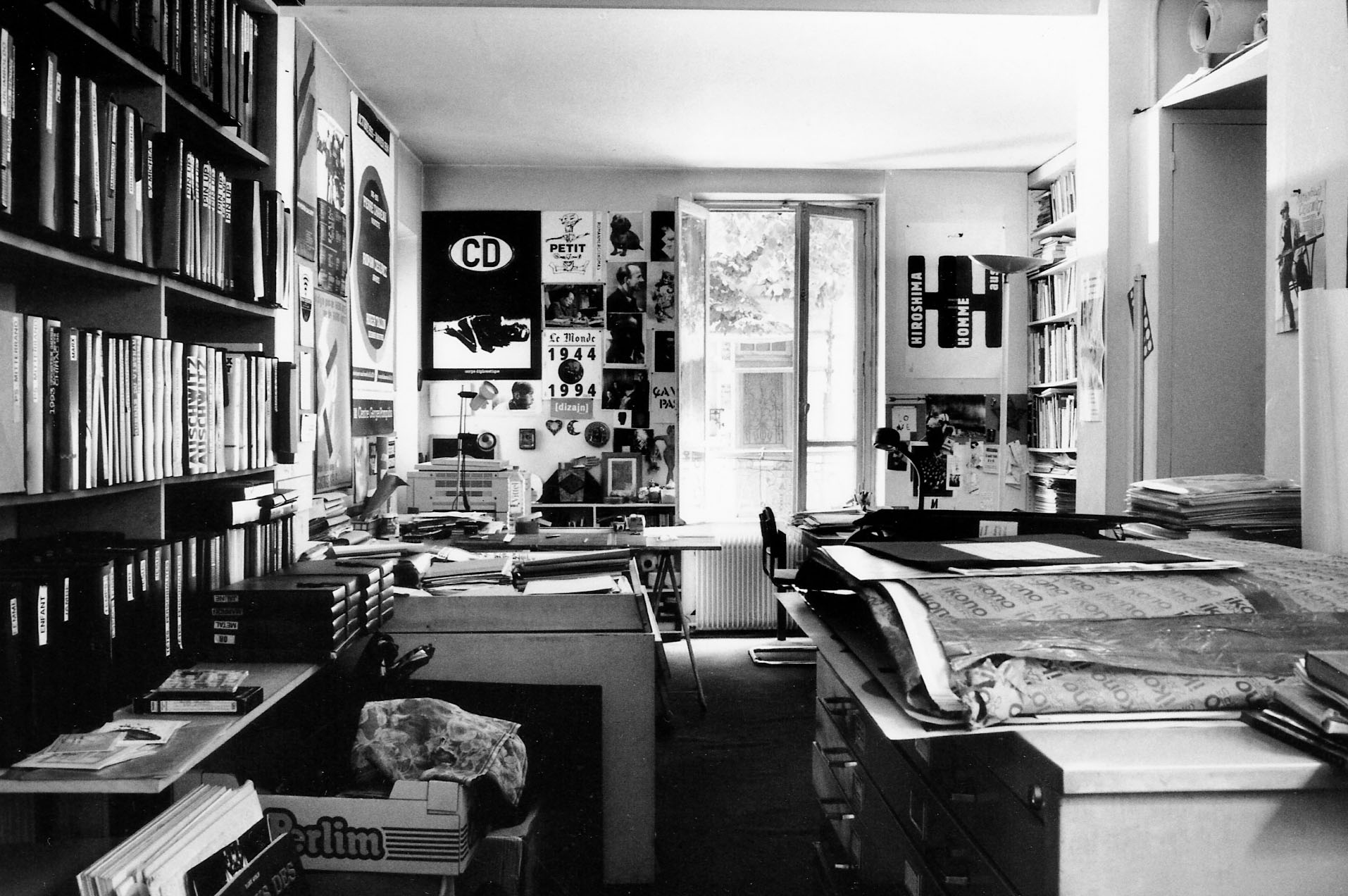
Between May 1994 and as late as September 1996, Wiadomości Kulturalne, a newly created leftist weekly dedicated to social and cultural issues, with Krzysztof Teodor Toepliz as editor-in-chief, publishes Cieślewicz texts in his column Independent unit edited by Roman Cieślewicz. He publishes graphic commentaries with short texts related to current events in Poland. A total of 120 drawings are published, also several months after the artist’s death.
Makes a series of ca. 25 collages whose title, Oséelisques, is his neologism referring to the words odalisque and osé (bold, risky). The photomontages with the eponymous oséelisques were created after merging clippings of photographs from erotic magazines with fragments of reproduced paintings. Their presentation, which will take place only after the artist’s death, at the show at the Galerii de France in Paris (29 November 1997 – 24 January 1998), will be accompanied by a catalogue designed by the artist.
1996
Roman Cieślewicz dies in Paris on January 21.